Gbajabiamila Reveals Desmond Elliot “Almost Cost Him Job” as Presidential Chief of Staff
Femi Gbajabiamila has revealed that lawmaker and actor Desmond Elliot nearly cost him his job as Chief of Staff to the President following a controversial political incident in the National Assembly.
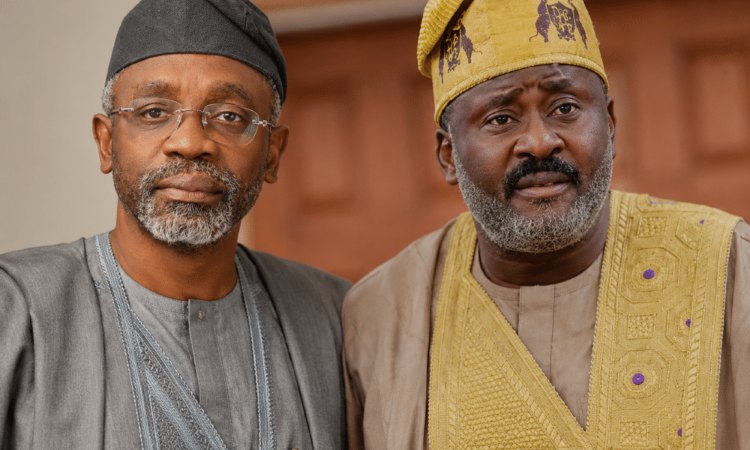
Former Speaker of the House of Representatives and current Chief of Staff to the President, Femi Gbajabiamila, has revealed a surprising political incident involving Lagos lawmaker and Nollywood actor Hon. Desmond Elliot, saying Elliot’s actions in the National Assembly nearly cost him his appointment as Chief of Staff.
Gbajabiamila disclosed a political conversation with colleagues in Abuja, where he reflected on behind-the-scenes tensions that followed his transition from Speaker of the House to one of the most powerful administrative positions in the Presidency.
According to him, the incident occurred during a heated legislative period in which Desmond Elliot, who represents Surulere Constituency II in Lagos State, made controversial remarks and actions that triggered national backlash and placed pressure on leadership within the House of Representatives.
The Incident That Sparked Political Backlash
Gbajabiamila explained that Elliot’s comments during a controversial plenary session widely circulated on social media at the time led to widespread criticism of the National Assembly.
The situation escalated quickly, drawing reactions from civil society groups, media commentators, and political stakeholders who demanded accountability from House leadership.
According to reports referenced by Vanguard Nigeria, the controversy placed Gbajabiamila in a difficult position as Speaker, forcing him to manage both internal discipline and external political pressure. Vanguardng
He reportedly admitted that the incident created tension within political circles and almost affected his standing during discussions about his later appointment as Chief of Staff to the President.
Gbajabiamila’s Reflection on Political Pressure
Gbajabiamila described the episode as one of the most challenging moments of his leadership in the House of Representatives.
He noted that leadership often involves dealing with the actions of colleagues, even when those actions are unplanned or outside one’s direct control.
“Sometimes, you are judged not only by your own decisions but by the actions of those you lead,” he reportedly said.
The former Speaker emphasized that political leadership in Nigeria requires constant crisis management, especially in environments where public sentiment is highly reactive.
Premium Times reported that Gbajabiamila’s comments reflect broader conversations about accountability and leadership responsibility within legislative institutions. Premium times
Desmond Elliot’s Role in the Controversy
Hon. Desmond Elliot, who transitioned from Nollywood actor to politician, has previously faced criticism over comments and positions he took during periods of national protest and public unrest.
At the time of the incident referenced by Gbajabiamila, Elliot was accused by critics of making statements that were perceived as insensitive to public concerns, leading to widespread backlash across social media platforms.
Channels Television previously reported that Elliot later apologized for remarks that were widely misunderstood or misinterpreted during the tense period. Channelstv
Despite the controversy, Elliot has remained an active member of the Lagos State House of Assembly and continues to serve his constituency.
Political Fallout and National Attention
The incident reportedly gained national attention and became a trending topic across Nigeria’s political and media landscape.
Social media reactions at the time were sharply divided, with some defending Elliot’s intentions while others criticized his statements as inappropriate for a public representative.
The controversy placed additional pressure on the leadership of the House of Representatives, requiring careful management to prevent escalation into a broader institutional crisis.
Gbajabiamila’s Career Transition
Gbajabiamila, who served as Speaker of the House of Representatives from 2019 to 2023, was later appointed Chief of Staff to the President, a role that places him at the center of executive coordination in the Nigerian Presidency.
His transition from legislative leadership to the executive arm marked one of the most significant political appointments in recent years.
Observers say his reflections on past controversies underscore the complexities of managing a diverse legislative chamber with members from different political, cultural, and professional backgrounds.
Reactions from Political Observers
Political analysts have weighed in on Gbajabiamila’s remarks, noting that they highlight the ripple effects of public statements made by elected officials.
According to analysts, legislative leaders often bear indirect responsibility for the actions of their colleagues, especially in highly visible political institutions like the National Assembly.
ThisDay reported that such reflections are common among senior politicians who have served in leadership positions, as they often revisit moments that shaped their careers.
Some analysts also argue that the incident demonstrates how quickly political controversies can escalate into national issues in Nigeria’s media environment.
Desmond Elliot’s Continued Political Career
Despite past controversies, Desmond Elliot has continued to maintain his political career in Lagos State politics.
He remains active in legislative duties and has focused on constituency development projects, youth engagement programs, and infrastructure advocacy within his district.
Supporters argue that Elliot has grown politically since the incident and has become more cautious in public communication.
Conclusion: Leadership, Accountability, and Political Lessons
Gbajabiamila’s revelation about Desmond Elliot highlights the interconnected nature of political leadership and the impact individual actions can have on broader institutional reputations.
While the incident reportedly created tension and nearly affected his political trajectory, Gbajabiamila ultimately moved forward to assume one of the most influential roles in Nigeria’s executive arm.
The story underscores the realities of Nigerian politics, where leadership involves navigating public scrutiny, managing internal disagreements, and maintaining institutional stability amid constant media attention.
As both men continue their political careers, the episode remains a reminder of how quickly political moments can shape perceptions and influence high-level appointments in government.