French Cities Calm Overnight After Curfews Imposed to Curb Violence, Prime Minister Says
French cities remained calm overnight after targeted curfews were imposed following violent protests and looting. Prime Minister Sébastien Lecornu says further restrictions may follow.
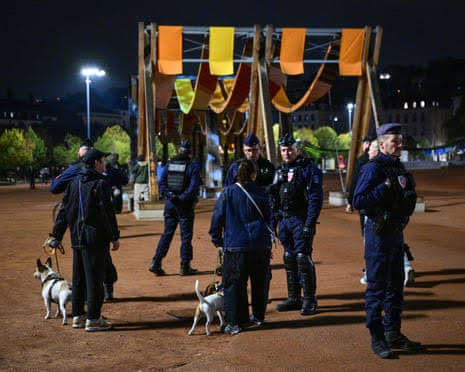
French cities remained largely calm overnight after authorities imposed targeted curfews in several urban areas following a weekend of violent protests, arson and widespread looting, Prime Minister Sébastien Lecornu said on Tuesday, October 20, 2026.
The French government is considering additional restrictions in areas where security concerns persist, as officials attempt to restore public order and reassure residents and businesses affected by the violence.
Lecornu said the curfews introduced on Monday had contributed to the relative calm, but warned that authorities would not hesitate to impose further restrictions where necessary.
“Targeted curfews have contributed to calm overnight,” the prime minister said in a statement posted on social media, adding that decisions on further measures would be made locally by regional prefects in coordination with mayors.
Police reported no major incidents during the night, offering temporary relief after some of France's most serious urban unrest in recent years. (Euronews)
The calm, however, has not ended concerns about renewed demonstrations, the scale of property damage or questions surrounding the authorities' preparedness for the violence.
Curfews imposed in Paris and other cities
The restrictions were introduced after demonstrations that began with concerns over deteriorating conditions in French high schools and expanded into a wider expression of public anger over the cost of living and the quality of public services.
Authorities introduced partial curfews in parts of Paris and several other cities, including Lyon, Lille, Bordeaux and Nice. The measures varied by location, with some restrictions applying specifically to minors and others covering designated areas during overnight hours.
In Paris, police restricted access to parts of the city centre, including the Place de la République and streets around the Les Halles shopping district. Demonstrations and gatherings were also prohibited in parts of the capital.
In Lille and nearby municipalities, overnight curfews were announced for Monday and Tuesday. Bordeaux and Nice also introduced restrictions intended to prevent further violence and protect businesses.
The government has stressed that the measures are localised rather than a blanket curfew across entire cities.
The restrictions followed an admission by Interior Minister Laurent Nuñez that police had lost control in some major urban centres during the weekend disturbances. (The Guardian)
Weekend violence leaves businesses and public buildings damaged
The unrest intensified on Saturday, October 17, when demonstrations across France descended into clashes, looting and arson.
Public buildings, including town halls, were targeted, while businesses and vehicles were damaged in several cities. In Limoges, a fire severely damaged the historic city hall, with the roof collapsing. In Marseille, demonstrators forced their way into the city hall before police intervened.
Lyon also suffered significant damage, including a fire at its tourism office.
The scale of the destruction raised concerns about public safety and the ability of security agencies to respond to rapidly moving groups of rioters.
The government has faced criticism for failing to anticipate the scale of the demonstrations and adequately protect vulnerable locations. Officials are now reviewing security arrangements and intelligence gathering to prevent a repeat of the violence.
Thousands arrested as police response comes under scrutiny
The disturbances have resulted in thousands of arrests and injuries among security personnel.
Reports published on Tuesday put the number of people taken into custody at more than 2,500, while nearly 1,000 police officers and gendarmes were reported injured during the unrest. Preliminary estimates also indicated that at least 3,000 businesses had suffered damage.
The figures underline the pressure facing French authorities as they attempt to restore order while protecting peaceful demonstrators' right to assemble.
Nuñez offered his resignation after acknowledging shortcomings in the security response, but President Emmanuel Macron rejected it, retaining the interior minister to oversee emergency measures.
Macron also called for greater transparency regarding failures in planning and intelligence gathering and directed authorities to improve policing tactics.
The government has defended the work of officers deployed during the demonstrations while acknowledging that security operations must adapt to groups that move quickly between locations.
Government seeks to prevent another wave of violence
Despite the overnight calm, the government remains concerned about further demonstrations. Protest groups have announced plans for fresh rallies on Saturday, October 24, raising the prospect of renewed confrontations.
Authorities are also examining the role of social media platforms in mobilising demonstrators and spreading information about protests.
The government scheduled additional emergency discussions, including meetings with representatives of major social media companies. (Euronews)
Officials are seeking to prevent online mobilisation from contributing to further disorder while responding to concerns about the spread of stolen goods through resale platforms.
The government has also pledged support for businesses affected by looting and vandalism. The financial consequences could be substantial, particularly for small retailers and independent traders whose premises were damaged or forced to close.
Business groups have criticised the state's handling of the crisis, arguing that the authorities failed to provide adequate protection during the worst of the violence.
Cost-of-living concerns remain unresolved
Although the immediate security response has focused on curfews and policing, the unrest has exposed broader social frustrations.
The demonstrations grew out of student complaints about poor school conditions and deteriorating educational standards before attracting people angered by rising living costs and concerns over public services, including healthcare, housing and welfare.
The combination of these grievances has complicated the government's response. Security measures may reduce opportunities for looting and street violence, but they do not directly resolve the economic and social concerns motivating peaceful demonstrators.
The unrest also comes roughly six months before France's 2027 presidential election, increasing political pressure on Macron's administration as it seeks to restore confidence in public institutions.
The government must therefore balance public safety, protection of private property and the right to peaceful protest while addressing demands for better public services and economic relief.
Conclusion
The relative calm reported across French cities on Tuesday offers a temporary reprieve after a weekend of serious unrest. Prime Minister Lecornu has credited targeted curfews with helping to prevent further overnight incidents and has left open the possibility of additional restrictions.
However, the planned demonstrations, extensive property damage and questions over police preparedness show that the crisis remains unresolved.
France's next challenge will be to maintain public order without unnecessarily restricting peaceful protest, while addressing the underlying grievances over education, living costs and public services.
Whether the overnight calm develops into lasting stability will depend on the effectiveness of security measures, the government's response to affected communities and its ability to prevent further violence in the days ahead.