France Closes Up to 500 Schools as Student Protests Intensify
France has closed or partially suspended classes in up to 500 high schools as student protests over overcrowding, teacher shortages and deteriorating facilities intensify.
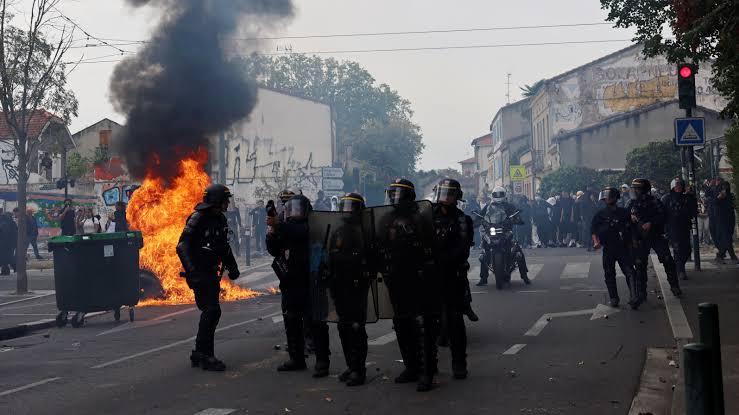
France has closed or partially suspended classes in between 400 and 500 high schools as a nationwide student protest movement enters its third week, with authorities citing security concerns following days of demonstrations, clashes with police and damage to school property.
Education Minister Édouard Geffray announced the closures ahead of another nationwide mobilisation planned for Tuesday, saying schools where security conditions could not be guaranteed would remain fully or partially shut. The affected schools represent roughly 10% to 13% of France's approximately 3,700 high schools.
The decision marks one of the most significant disruptions to secondary education in France in recent years and reflects the growing tension between students demanding better educational conditions and a government seeking to restore order.
Protests began over school conditions
The demonstrations began in the Paris suburbs in September, initially focusing on complaints about inadequate staffing and resources. The movement subsequently spread to cities and communities across France.
Students have raised concerns about overcrowded classrooms, teacher shortages, poorly maintained or unsafe school buildings, inadequate facilities and schedules they say place excessive pressure on them.
Some students have also complained about the absence of replacement teachers when staff are unavailable, while others have raised concerns about the country's university admissions system and the wider pressure placed on young people preparing for higher education.
The grievances have resonated beyond individual schools, turning the movement into a broader debate about the state of France's public education system.
According to Le Monde, more than 1,000 high schools were affected by strikes or protests on October 1, including more than 200 blockades.
Violence changes the government's response
While the initial demonstrations centred on educational conditions, incidents of violence and vandalism have increasingly dominated the national conversation.
The Education Ministry said 24 schools had been burned or ransacked since the protests began, while 78 education workers had been injured. Police have also reported clashes with protesters in several cities, including Paris, Lille and Toulouse.
The Interior Ministry said thousands of people had been arrested since the unrest escalated. Reuters reported that more than 5,000 people had been arrested by Monday, about 85% of them teenagers.
Police have used tear gas, batons and other crowd-control equipment to disperse demonstrators in some locations.
The security response has itself become controversial, with rights groups and opposition politicians accusing authorities of using excessive force against young protesters. Government officials, however, have defended the police response and argued that security forces are intervening to protect students and staff and prevent violence and property destruction.
Teenager seriously injured during protests
The escalating confrontation was underscored on Monday when a 15-year-old boy suffered catastrophic injuries after handling a police stun grenade during unrest in Lens in northern France.
According to Reuters, the teenager lost his hand and part of his lower arm. The incident occurred as protesters clashed with police and threw objects at security forces.
The incident is likely to intensify scrutiny of police tactics and increase pressure on authorities to prevent further injuries as another major demonstration approaches.
The government faces the difficult task of maintaining public order while addressing concerns that the security response could further inflame the student movement.
Teachers back student demands
The protests have also gained support from France's teachers' unions.
All major teachers' unions said they would join Tuesday's mobilisation, arguing that many of the complaints raised by students mirror concerns educators have expressed for years about inadequate resources and staffing.
The unions said students' demands were legitimate and connected to their own campaigns over shortages and working conditions.
The support gives the movement a broader social dimension, potentially transforming what began as a high-school protest into a wider education-sector mobilisation.
Education Minister Geffray has attempted to open dialogue with students and other stakeholders. Following talks with student representatives, however, protesters said they had not received concrete measures addressing their concerns and vowed to continue demonstrations.
Government faces wider political and economic pressure
The school protests come at a difficult moment for the French government as it attempts to advance a deficit-reduction budget for 2027.
France is already under pressure over its public finances, with concerns about borrowing costs and the size of the national deficit. Reuters reported that the country's 10-year bond yield briefly rose above 5% last week, reaching a level not seen for many years.
The education dispute therefore presents the government with competing pressures. Students and teachers are demanding greater resources, while policymakers are simultaneously under pressure to control public expenditure.
How the government responds could influence both the immediate protests and the longer-term debate over education spending.
More demonstrations expected
The closure of up to 500 schools is intended primarily as a precautionary security measure, rather than a permanent suspension of education.
Authorities have said they want a gradual return to normal lessons where conditions permit. However, organisers have called for another nationwide mobilisation on Tuesday, raising the possibility of further disruption.
With students continuing to demand better-funded and better-maintained schools, teachers supporting many of those demands and the government prioritising public order, France faces a delicate balancing act.
The immediate challenge is to prevent further violence and protect students, teachers and public property. The longer-term challenge is addressing the educational problems that triggered the protests in the first place.
For now, the closure of hundreds of schools is a visible sign of how a dispute over classrooms, staffing and school infrastructure has developed into a major national confrontation.