France Braces for National School Protests After Injuries and Mass Arrests
France faces nationwide school protests as students demand better education funding, while more than 6,100 arrests and serious injuries intensify tensions between protesters and police.
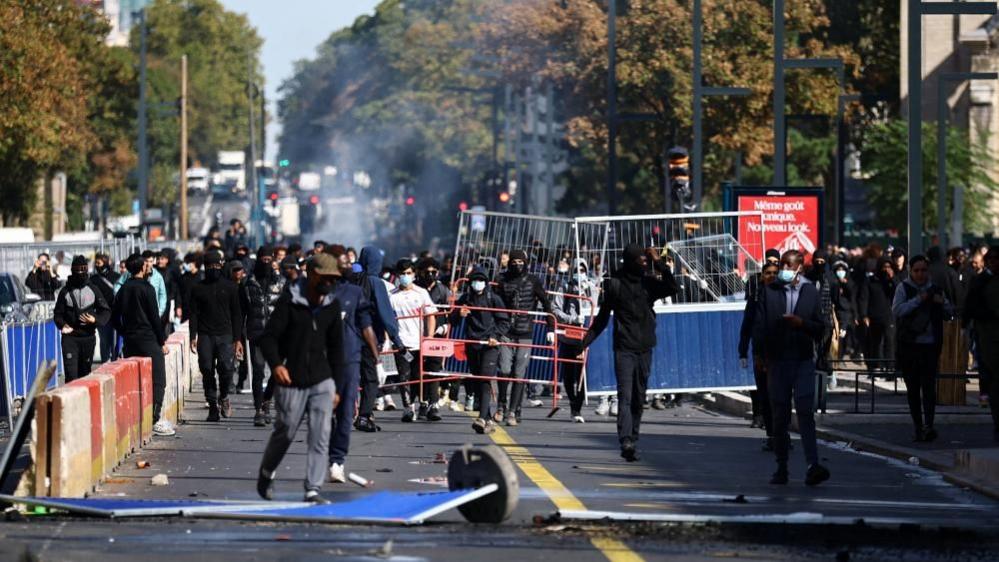
France has been gripped by a growing wave of high-school protests, with students, teachers and parents taking to the streets in a nationwide mobilisation over education funding, overcrowded classrooms, teacher shortages and deteriorating school facilities.
The demonstrations have intensified after serious injuries involving protesters and police and thousands of arrests, turning what began as a dispute over conditions in schools into a major national confrontation.
Tuesday's nationwide demonstrations became the largest day of action since the movement began in September, with tens of thousands of people joining marches across France. The Interior Ministry estimated that 86,000 people participated in demonstrations outside Paris during the morning, while thousands more marched in the capital.
Student protests spread across France
The protests began in mid-September at a high school in the Paris region, initially driven by complaints about teacher shortages and a lack of resources.
Students have since expanded their demands to include the renovation of ageing school buildings, smaller class sizes, better staffing, replacement teachers when educators are absent and changes to the length and organisation of the school day.
The movement has spread well beyond the Paris suburbs, with school blockades and demonstrations reported in cities including Marseille, Lille, Strasbourg, Nantes, Toulouse, Lyon and Rennes.
By Tuesday, the Education Ministry said lessons had been totally or partially suspended at 891 schools, demonstrating the scale of the disruption. Student organisers claimed that more than half of France's high schools were either blockaded or affected by the protests.
The government had already announced plans to close or partially shut hundreds of schools as a security precaution after protests resulted in damage to school property and injuries.
More than 6,100 arrests
The government's response has increasingly focused on public order as some demonstrations have turned violent.
France's Interior Ministry said more than 6,100 people had been arrested since the protests began, with the overwhelming majority being minors. The Justice Ministry said more than 1,800 people were facing prosecution, including 1,483 minors.
Police have used tear gas and other crowd-control measures during confrontations with protesters. In Strasbourg, Lyon and Rennes, Tuesday's demonstrations were marked by clashes, fires and the throwing of projectiles, while rallies in cities such as Marseille and Nantes were largely peaceful.
The scale of the arrests has become one of the most controversial aspects of the government's handling of the demonstrations.
Student groups, parents, teachers and rights organisations have accused authorities of using excessive force against young protesters. Government officials, however, argue that police intervention has been necessary where protests have developed into violence, vandalism or attacks on officers.
Teenager loses hand during protest
Tensions reached a new level on Monday when a 15-year-old boy lost his hand and part of his lower arm during a confrontation outside a high school in Lens, northern France.
The exact circumstances remain under investigation. Local authorities said a group of between 150 and 200 protesters had been throwing objects at police before riot officers intervened.
French prosecutors opened an investigation into the incident, while the police watchdog, the Inspectorate General of the National Police, was tasked with examining whether police action contributed to the teenager's injuries.
The incident followed another serious injury involving a student in Saint-Ouen-l'Aumône. A 14-year-old boy suffered severe facial injuries during a police intervention, according to French media reports.
The Education Ministry said 190 students had been injured since the beginning of the protests, while 78 education workers had also suffered injuries.
The injuries have increased pressure on both the government and police authorities to prevent further escalation.
Police defend response
French Interior Minister Laurent Nuñez defended the conduct of police officers, saying their response had been proportionate in almost all cases.
Authorities have argued that the protests have at times been overtaken by violent activity and that officers have a duty to protect schools, students, staff and public property.
According to the government, 715 police officers have also been injured during the unrest.
The government has also accused outside groups, including activists from the far left, of contributing to the violence. Those accusations have been rejected by political figures and activists who support the students.
The disagreement has further complicated attempts to separate the students' original education demands from the wider political confrontation surrounding the protests.
Government promises education reforms
Prime Minister Sébastien Lecornu has acknowledged that students have legitimate grievances and instructed ministers to develop responses to their demands.
Among the issues being examined are ensuring absent teachers are replaced, reviewing the length of the school day and improving ageing school infrastructure.
The government has also launched an online portal allowing high-school students to anonymously report problems in their schools and suggest changes.
However, student representatives and their supporters say promises are not enough and are demanding concrete commitments and increased investment.
Teachers' unions have also joined the mobilisation, arguing that many of the students' complaints reflect long-standing problems within France's education system.
Funding challenge complicates response
The protests come at a difficult time for France's public finances.
The government is under pressure to reduce its budget deficit and control rising debt at a time when borrowing costs have increased. Reuters reported that France's 10-year bond yield briefly climbed above 5%, its highest level in more than two decades.
That financial pressure makes it more difficult for the government to meet demands for substantial additional spending on education.
Students and teachers argue, however, that deteriorating school buildings, staff shortages and overcrowded classrooms require urgent investment.
The dispute has therefore developed into a wider argument over government spending priorities and the future of public services.
Protests become national political issue
The school demonstrations have also entered France's wider political debate.
With a presidential election approaching, politicians across the political spectrum have sought to respond to the unrest. The government's handling of the demonstrations is being scrutinised alongside wider concerns about inequality, public spending and the country's economic situation.
President Emmanuel Macron cannot seek a third consecutive term, making the protests an important issue for politicians positioning themselves ahead of the next presidential contest.
Despite the political tensions, the central demands of the student movement remain focused on education.
A difficult road ahead
The latest demonstrations show that the unrest is no longer confined to isolated school blockades.
The combination of mass arrests, serious injuries, police confrontations and nationwide mobilisation has created one of the most significant youth protest movements France has experienced in recent years.
For the government, the immediate challenge is maintaining public order while preventing further injuries. For students and teachers, the challenge is keeping attention focused on education reforms rather than allowing the movement to become dominated by clashes with police.
As France moves through another day of demonstrations, the outcome will depend partly on whether authorities can establish dialogue with students and translate government promises into measures that address the problems inside schools.
The protests have already forced education conditions to the centre of France's national conversation. Whether that pressure produces lasting changes to the country's education system remains to be seen.