Flamingos Return to Abuja With Historic FIFA U-17 Women's World Cup Trophy as Nigeria Celebrates Champions
Nigeria's Flamingos have returned to Abuja with the historic FIFA U-17 Women's World Cup trophy after defeating Japan 2-1 in Morocco, becoming the first African nation to win the competition.
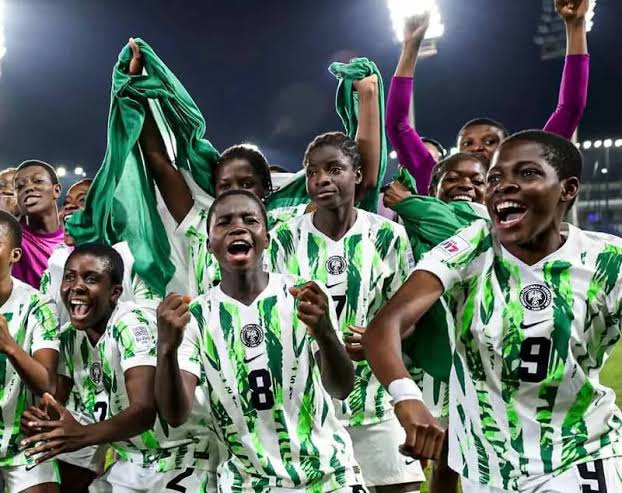
Nigeria's victorious U-17 women's national football team, the Flamingos, have returned to Abuja with the FIFA U-17 Women's World Cup trophy following their historic triumph over Japan in Morocco.
The young champions arrived at the Nnamdi Azikiwe International Airport early Monday morning, November 9, to a colourful reception featuring drums, dancing, cheers and celebrations from football supporters, officials of the Nigeria Football Federation (NFF) and other well-wishers.
Their homecoming came barely 48 hours after they defeated Japan 2-1 in Saturday's final in Rabat, Morocco, to win Nigeria's first-ever FIFA U-17 Women's World Cup title.
The victory also made Nigeria the first African country to win the competition and the first African nation to claim a FIFA Women's World Cup title at any age level.
The historic achievement has generated widespread excitement across Nigeria, with the players receiving congratulatory messages from political leaders, sports administrators and football enthusiasts.
For the Flamingos, returning home with the trophy represents the successful conclusion of a remarkable campaign that began with disappointment but ended with a place in international football history.
Flamingos Make History With Victory Over Japan
Nigeria secured the historic championship with a 2-1 victory over Japan in a fiercely contested final at the FIFA U-17 Women's World Cup in Morocco.
Awawu Bashiru opened the scoring for Nigeria in the 39th minute, giving the Flamingos an important advantage after a competitive opening period.
The Nigerian side subsequently extended its lead through Oluebube Umejiaku, whose goal proved decisive in securing the country's first title in the competition.
Japan fought back and reduced the deficit through Fuki Ito in the 80th minute, setting up a tense closing period.
However, the Flamingos maintained their defensive organisation and determination to protect their advantage until the final whistle.
The victory ended Nigeria's long wait for the trophy after several previous campaigns in which the country had demonstrated its strength in women's youth football without winning the ultimate prize.
It also established the Flamingos as pioneers of African success in the FIFA U-17 Women's World Cup.
Umejiaku's contribution extended beyond the final, as she was also recognised with the tournament's Golden Ball award for her outstanding individual performances.
Emotional Reception at Abuja Airport
The team's arrival in Abuja was marked by celebrations from supporters who gathered to welcome the players and their officials.
The delegation landed at approximately 5:50 a.m. aboard a Royal Air Maroc flight from Morocco, bringing home the trophy that had transformed their sporting journey into a historic national achievement.
Members of the NFF, supporters' groups and other well-wishers received the players with music, dancing and expressions of national pride.
The atmosphere reflected the significance of the achievement, particularly for Nigerian women's football, which has continued to produce talented players despite longstanding challenges involving funding, infrastructure and development opportunities.
Before leaving Morocco, the team had also received a special reception hosted by National Sports Commission Chairman Shehu Dikko and Director-General Bukola Olopade.
The celebrations are expected to continue in Abuja, with a trophy parade planned through parts of the Federal Capital Territory.
The proposed procession is expected to pass through Eagle Square, the Federal Secretariat, Julius Berger Roundabout, Wuse Market, Maitama, Asokoro and Apo.
However, the team's formal reception by President Bola Tinubu was postponed because of the president's schedule, with a new date yet to be announced in initial reports.
Tinubu Congratulates the Historic Champions
President Bola Tinubu has congratulated the Flamingos for their achievement, describing their victory as a proud moment for Nigeria and African women's football.
In a statement issued through his spokesperson, Bayo Onanuga, the president praised the players for their courage, discipline, determination and teamwork.
Tinubu recalled that the team had promised to return home with the trophy following their semi-final victory and commended them for fulfilling that promise.
He particularly acknowledged the contributions of Bashiru and Umejiaku, whose goals secured Nigeria's victory over Japan.
The president also praised the coaching crew, the NFF and the National Sports Commission for their roles in preparing the team for the competition.
He said the victory should inspire millions of young Nigerian girls to pursue their ambitions and demonstrate that dedication, hard work and opportunity can produce success at the highest level.
The president further reaffirmed his administration's commitment to grassroots sports development and expanding opportunities for young Nigerians, particularly girls, to discover and develop their sporting talents.
Busari Credits Determination, Discipline and Tactical Changes
Head coach Akeem (Hakeem) Busari has attributed the team's success to determination, discipline, dedication and tactical adjustments made throughout the tournament.
Speaking after the victory, Busari explained that the technical crew worked on improving the players' defensive organisation and mentality as the competition progressed.
He noted that the coaching staff studied the strengths of their opponents, particularly Japan's ability to win second balls and exploit spaces behind defensive lines.
The Nigerian team adjusted its approach to limit those opportunities, demonstrating tactical discipline and collective commitment during the final.
Busari also praised the players for refusing to allow early disappointment to derail their campaign.
According to the coach, the team's achievement was not accidental but the result of deliberate preparation, hard work and determination.
He urged young footballers to work towards their ambitions rather than simply dreaming about success.
From Opening Defeat to World Champions
The Flamingos' journey to the trophy was particularly remarkable because their campaign began with a 2-1 defeat to Poland.
The disappointing opening result placed Nigeria under pressure, but the players responded by improving their performances and winning their subsequent matches.
They progressed through the competition, overcoming several challenging opponents, including former champions North Korea, Mexico and Venezuela.
Their most impressive performance came in the semi-final, where they defeated Brazil 3-1 to secure a place in the final against Japan.
The victory over Brazil provided the confidence needed for the decisive encounter, which ultimately delivered Nigeria's first championship.
Before travelling to Morocco, the Flamingos had also demonstrated their quality at the regional level by winning the 2026 WAFU-B U-17 Girls Cup in Côte d'Ivoire.
They recorded five victories from five matches, scoring 17 goals and conceding just once.
That performance provided an indication of the team's preparation and attacking strength ahead of the global competition.
Nigeria Joins Exclusive Group in FIFA Youth Football
The Flamingos' achievement has also strengthened Nigeria's position in the history of international youth football.
Nigeria previously established itself as a dominant force in men's youth football, winning the FIFA U-17 Men's World Cup five times in 1985, 1993, 2007, 2013 and 2015.
Winning the women's edition now gives the country a place among nations that have claimed both the men's and women's U-17 World Cup titles.
Nigeria's triumph is also significant for African football because no country from the continent had previously won the FIFA U-17 Women's World Cup.
The achievement provides further evidence of the growing competitiveness of African women's football and offers encouragement to countries investing in grassroots development.
The NFF's acting General Secretary, Dr Emmanuel Ikpeme, described the achievement as magnificent and urged the players to continue developing their careers.
He encouraged them to progress from the U-17 national team to the Falconets, Nigeria's U-20 women's team, and eventually the senior Super Falcons.
Questions Over Financial Rewards for the Champions
Despite the historic achievement, questions have emerged over the financial rewards awaiting the players.
Unlike some major FIFA competitions, the U-17 Women's World Cup does not operate with a conventional prize-money structure for tournament winners.
According to reports by The Guardian, FIFA treats the competition primarily as a developmental tournament, covering participating teams' travel and accommodation rather than awarding cash prizes to champions.
However, individual sponsors, government authorities and football administrators can provide additional financial rewards.
The Flamingos had already received a $50,000 donation from Alhaji Saleh Ahmadu, a sponsor of the National Sports Commission, following their victory over Japan.
The development has renewed discussions about the need to recognise and adequately reward young Nigerian athletes who bring international honours to the country.
A New Beginning for Nigerian Women's Football
The Flamingos' return with the World Cup trophy represents more than a successful football campaign. It is an opportunity to strengthen the foundations of women's football in Nigeria.
The country must now focus on ensuring that the players receive the necessary support, professional development, education and exposure to continue progressing.
Maintaining the momentum will require investment in grassroots competitions, improved coaching, better sporting facilities and sustainable funding for women's football.
The NFF will also face the challenge of retaining the team's technical and developmental structures while preparing the players for the next stages of their careers.
For the young champions, however, their achievement has already secured them a permanent place in Nigerian sporting history.
By defeating Japan in Morocco, the Flamingos have delivered a world title that had previously eluded African women's youth football.
As they return to celebrations in Abuja, their historic trophy stands as a symbol of determination, teamwork and the possibilities available to young Nigerian athletes.
Nigeria has conquered the world at the U-17 women's level, and the Flamingos have given an entire continent a new reason to dream.