FIFA Rejects Iran’s World Cup Relocation Request
Mexico’s President confirms FIFA’s final decision not to relocate Iran’s 2026 World Cup matches from the U.S. to Mexico. Here’s why the move was rejected and how it affects fixtures.
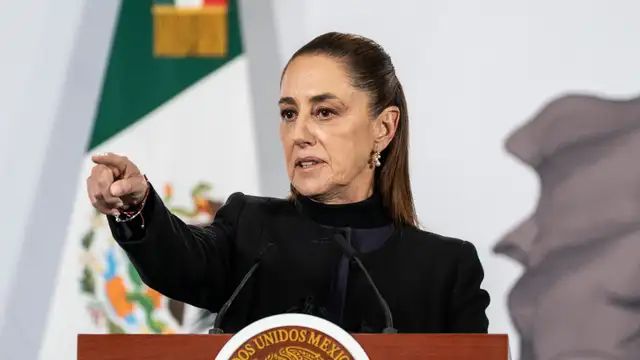
The build-up to the 2026 FIFA World Cup has taken a dramatic geopolitical turn after Mexico’s President, Claudia Sheinbaum, confirmed FIFA’s final decision on one of the most controversial issues surrounding the tournament: Iran’s request to relocate its matches.
Between April 10 and April 12, 2026, Sheinbaum publicly revealed that FIFA had officially rejected Iran’s appeal to move its group-stage matches from the United States to Mexico. The decision has far-reaching implications - not only for Iran’s participation but also for tournament logistics, global politics, and fixture scheduling.
The Decision: No Relocation Despite Mounting Pressure
Iran had formally requested that its matches in the 2026 FIFA World Cup be moved out of the United States, citing security concerns tied to escalating geopolitical tensions involving the U.S., Israel, and Iran.
However, FIFA ultimately ruled against the request. According to Sheinbaum, the governing body concluded that relocating the matches would be too complex and disruptive.
“FIFA ultimately decided that the matches cannot be moved from their original venues,” she stated during a press conference. (Al Jazeera)
This decision effectively means that Iran will play all its scheduled matches in the United States as originally planned.
Why Iran Wanted the Matches Moved
Iran’s request was rooted in security concerns. The country’s football federation argued that tensions with the United States - especially following military escalations- could pose risks to players, officials, and fans.
Reports indicated that Iran’s sports authorities had even restricted travel to countries considered hostile, further complicating participation in a tournament hosted partly on U.S. soil.
Mexico, as a co-host of the tournament, had expressed willingness to step in and host Iran’s matches if FIFA approved the change. (Reuters)
But despite these concerns and Mexico’s readiness, FIFA held firm.
Why FIFA Rejected Relocation
At the heart of FIFA’s decisions were logistical, commercial, and structural realities.
1. Tournament Logistics
The 2026 World Cup is the largest in history, involving 48 teams and multiple host countries - the United States, Mexico, and Canada. Every match venue, travel plan, and accommodation schedule have been meticulously planned years.
Altering Iran’s match locations would have required reshuffling stadium allocations, team logistics, and security arrangements across multiple cities.
FIFA deemed this “too complicated” at such an advanced stage of planning. (Businessday NG)
2. Broadcasting and Commercial Contracts
The World Cup operates on tightly structured global broadcasting agreements. Match locations are tied to time zones, advertising slots, and sponsorship deals.
Changing venues could disrupt television schedules and contractual obligations worth billions of dollars - a risk FIFA was unwilling to take.
3. Pre-Draw and Fixture Integrity
The tournament draw had already assigned Iran to Group G, with matches scheduled in specific U.S. venues. Any change would potentially affect competitive balance and fairness.
FIFA has historically resisted altering match locations after the draw, maintaining that consistency is crucial to the integrity of the competition.
Iran’s Fixtures: What Stays the Same
Iran is placed in Group G alongside Belgium, Egypt, and New Zealand. (Wikipedia)
Under the current schedule, all of Iran’s group-stage matches will take place in the United States, including:
- Matches in Los Angeles (SoFi Stadium)
- Matches in Seattle (Lumen Field)
These fixtures remain unchanged despite the controversy.
Potential Consequences of the Decision
While FIFA’s ruling brings clarity, it also introduces new uncertainties.
1. Participation Risks
Iran had previously hinted that its participation in the tournament could depend on FIFA’s response to the relocation request. (Reuters)
With the request denied, there is a possibility - however slim - that Iran could reconsider its involvement. If that happens, FIFA may need to identify a replacement team, potentially disrupting the group structure.
2. Heightened Security Measures
Given the geopolitical tensions, security is expected to be significantly tightened around Iran’s matches in the United States.
Authorities will likely coordinate at multiple levels - local, federal, and international - to ensure the safety of players and fans.
3. Political Undertones on the Global Stage
The decision underscores how global sporting events are increasingly intertwined with politics. The World Cup, traditionally seen as a unifying platform, now faces the challenge of navigating real-world conflicts.
Iran’s presence in the U.S. could become a symbolic focal point, attracting both diplomatic attention and public scrutiny.
Why the Decision Was Necessary
Despite criticism, FIFA’s decision reflects a broader need to preserve order in an already complex tournament.
The 2026 World Cup spans three countries, dozens of cities, and an expanded format. Allowing one team’s fixtures to be relocated could set a precedent for other nations facing political or security concerns.
Moreover, the logistical ripple effect of such a decision could jeopardize the entire tournament schedule.
In this context, FIFA’s stance can be seen as an effort to maintain stability, consistency, and fairness - core principles in global sports governance.
What This Means for the 2026 World Cup
The rejection of Iran’s relocation request highlights the evolving challenges of hosting a global event in a politically fragmented world.
For fans, the fixtures remain unchanged, ensuring continuity in planning and ticketing. For organizers, the focus now shifts to ensuring that the tournament proceeds smoothly despite underlying tensions.
For Iran, the decision presents a dilemma: proceed under potentially uncomfortable conditions or risk withdrawing from one of football’s biggest stages.
Conclusion
Mexico’s President, Claudia Sheinbaum, has effectively put an end to speculation surrounding Iran’s World Cup venue concerns by confirming FIFA’s final decision.
While the ruling preserves the integrity and logistics of the tournament, it also exposes the delicate intersection of sports and geopolitics. The 2026 FIFA World Cup will not only be a celebration of football but also a test of how global events can navigate political tensions without losing their unifying spirit.
As the countdown to kickoff continues, all eyes will be on how Iran and FIFA manage the implications of this high-stakes decision.