FIFA President Gianni Infantino Opens Door to 64-Team World Cup Expansion
FIFA President Gianni Infantino has indicated that football's governing body is open to discussing a 64-team FIFA World Cup, sparking fresh debate over the future of the global tournament.
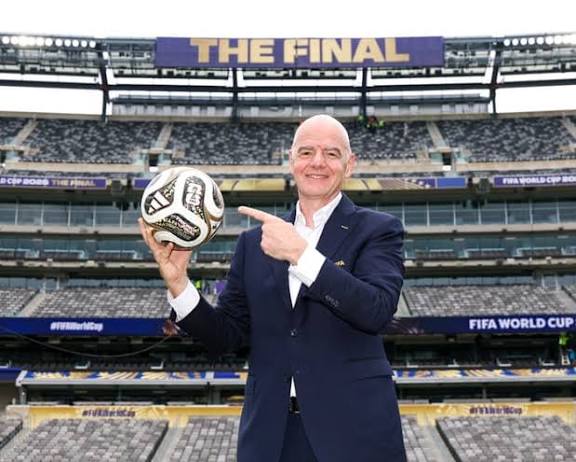
FIFA President Gianni Infantino has reignited debate over the future of international football after indicating that the world governing body is willing to consider expanding the FIFA World Cup to 64 teams in the future.
The proposal, which would represent the largest expansion in the tournament's history, comes even before the first edition of the newly expanded 48-team FIFA World Cup has been played. The 2026 tournament, jointly hosted by the United States, Canada and Mexico, will be the first to feature 48 participating nations instead of the traditional 32-team format.
Speaking during discussions about the future of the competition, Infantino acknowledged growing interest from football stakeholders around the world in making the tournament even more inclusive.
While emphasising that no formal decision has been made, the FIFA president said football's governing body remains open to evaluating proposals that could increase global participation and further develop the sport.
"The role of FIFA is to listen to ideas and consider opportunities that help football grow worldwide," Infantino said, adding that any proposal would undergo careful assessment before being adopted.
Proposal Sparks Global Debate
The possibility of a 64-team World Cup has immediately divided opinion across the football community.
Supporters argue that expanding the tournament would allow more nations to compete on football's biggest stage, particularly countries from Africa, Asia, Oceania and the Caribbean that have historically found qualification difficult.
They believe broader participation would accelerate football development in emerging nations by providing greater exposure, investment and competitive experience.
Several football administrators have also suggested that expanding the competition could strengthen FIFA's objective of making football a truly global sport rather than one dominated by traditional powers from Europe and South America.
However, critics warn that another expansion could dilute the quality of competition while placing additional physical demands on players who already face congested club and international schedules.
Former players, coaches and football analysts have questioned whether increasing the number of teams would reduce the competitiveness of the early stages of the tournament.
Some also fear that an even larger World Cup could extend the duration of the competition significantly, creating logistical and financial challenges for host nations.
2026 Expansion Yet to Be Tested
The discussion comes before the debut of the expanded 48-team format at the 2026 FIFA World Cup.
The tournament will feature 12 groups of four teams, with 104 matches scheduled across the United States, Canada and Mexico - the largest World Cup ever organized.
The expansion from 32 to 48 teams was approved by FIFA in 2017 as part of efforts to provide greater continental representation.
Africa will benefit significantly from the changes, with the continent receiving nine guaranteed qualification places and one possible additional playoff berth.
Asia, CONCACAF and Oceania will also see increased representation, while Europe and South America retain the largest number of elite competitors.
Football experts say FIFA is likely to closely evaluate the success of the 2026 edition before making any decision regarding further expansion.
Financial Incentives
A larger World Cup would almost certainly generate increased commercial revenue for FIFA through broadcasting rights, sponsorship agreements, hospitality packages and ticket sales.
The World Cup remains FIFA's primary source of income, generating billions of dollars during every four-year cycle.
Additional participating nations would also expand television audiences and create new commercial opportunities in emerging football markets.
Analysts believe financial considerations will inevitably play a role alongside sporting factors if FIFA formally studies a 64-team competition.
Impact on Smaller Nations
For many developing football nations, the prospect of additional qualification slots represents an unprecedented opportunity.
Countries that have consistently fallen short during qualifying campaigns could finally earn a place on football's biggest stage.
African football administrators have long advocated increased World Cup representation, arguing that the continent's growing talent pool deserves broader participation.
Several Asian and Caribbean football associations have also welcomed discussions about expanding opportunities for their national teams.
Challenges Ahead
Despite the enthusiasm among some member associations, implementing a 64-team World Cup would require significant planning.
FIFA would need to review qualification systems, tournament scheduling, stadium capacity, accommodation, transportation infrastructure and player welfare concerns.
The international football calendar would also need adjustment to accommodate a larger competition without creating conflicts with domestic leagues and continental tournaments.
Host countries would face increased logistical demands, including additional stadiums, training facilities, security arrangements and volunteer requirements.
Decision Remains Some Distance Away
Infantino stressed that the proposal remains at the discussion stage and has not been approved by FIFA's governing bodies.
Any formal expansion would require extensive consultation with FIFA's member associations, continental confederations, clubs, broadcasters and commercial partners before implementation.
For now, FIFA's immediate focus remains the successful organization of the historic 2026 World Cup, which itself represents the biggest structural change in the competition's nearly century-long history.
Whether the World Cup eventually grows to 64 teams remains uncertain, but Infantino's comments have ensured that the conversation about football's future is likely to continue for years to come.
As global interest in football continues to expand, FIFA faces the challenge of balancing inclusivity, commercial growth and competitive integrity while preserving the prestige that has made the World Cup the most celebrated sporting event on the planet. (FIFA)