FG Sets Up Committee to Tackle High Aviation Taxes, Implement ECOWAS Mandate
Nigeria has inaugurated an aviation oversight committee to address high taxes, fees and charges and implement ECOWAS rules aimed at reducing air travel costs across West Africa.
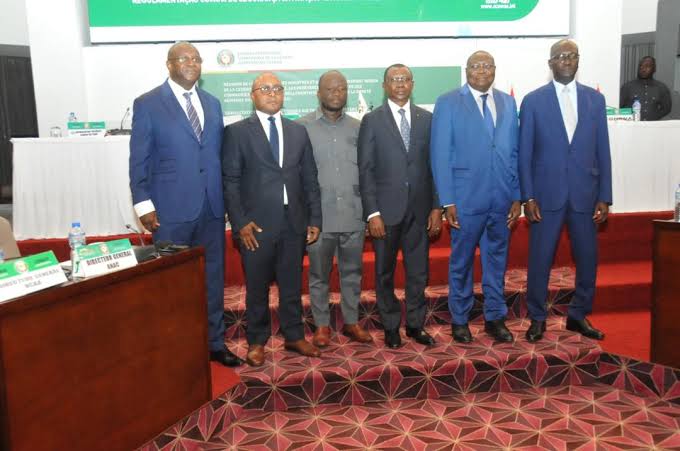
The Federal Government has inaugurated a new committee to address Nigeria’s high aviation taxes, charges and fees while implementing a regional policy designed to make air travel more affordable across West Africa.
The National Air Transport Economic Oversight Committee (NATEOC) was inaugurated at the headquarters of the Nigeria Civil Aviation Authority (NCAA) in Abuja on Wednesday, October 14, 2026. It will coordinate Nigeria’s implementation of the Economic Community of West African States (ECOWAS) Supplementary Act on aviation charges, taxes and fees.
The initiative comes amid persistent concerns from airlines and industry stakeholders that the cumulative cost of aviation-related taxes and charges makes operating in Nigeria expensive and contributes to high ticket prices for passengers.
According to Punch, the committee is expected to monitor compliance, identify gaps in existing regulations, recommend policy adjustments and develop a roadmap for implementing the regional agreement.
The Director-General of Civil Aviation, Chris Najomo, said the committee would serve as Nigeria’s primary national coordinating platform for fulfilling its obligations under the ECOWAS policy.
Najomo, who was represented at the inauguration by the Director of Air Transport Regulation, Olayinka Babaoye-Iriobe, stressed that the task goes beyond monitoring. It requires translating regional commitments into practical measures that can be implemented within Nigeria’s aviation regulatory framework.
The development could have important implications for airlines, passengers, airport operators and government agencies that collect aviation-related charges.
Why the Federal Government Is Acting on Aviation Taxes
Nigeria’s aviation industry has repeatedly raised concerns about the burden of multiple taxes, levies and administrative charges imposed at different stages of air transport operations.
Airlines face costs associated with airport services, air navigation, regulatory oversight and other government-related obligations. When these expenses accumulate, operators may pass some of the additional costs to passengers through higher fares.
The problem is particularly significant in a market where airlines must also contend with fuel expenses, aircraft maintenance, foreign-exchange exposure, insurance and other operational costs.
The inauguration of NATEOC is intended to provide a coordinated approach to reviewing these charges rather than leaving different institutions to address the issue independently.
In its report on the inauguration, Radio Nigeria Lagos said the committee would work to identify regulatory gaps and recommend measures aimed at reducing air travel costs and promoting competition across West Africa.
However, the committee’s creation does not mean that aviation taxes have already been reduced. Its immediate responsibility is to assess compliance, develop implementation measures and coordinate the institutions involved.
ECOWAS Supplementary Act at the Centre of the Reform
The committee’s mandate is anchored in ECOWAS Supplementary Act A/SA.2/12/24, adopted by the regional bloc’s Authority of Heads of State and Government during its 66th Ordinary Session in Abuja on December 15, 2024.
The instrument establishes a common regional policy on aviation taxes, charges and fees. Its broader objectives include improving transparency, making air travel more affordable and supporting fair competition among operators in the ECOWAS market.
The policy is important because inconsistent charges across countries can increase the cost of operating regional routes and complicate commercial planning for airlines serving multiple West African destinations.
Effective implementation would require member states to examine their existing laws, regulations and administrative practices to determine whether these align with the regional agreement.
For Nigeria, this means reviewing relevant legislative and regulatory provisions and identifying measures needed to incorporate the policy into the national aviation system.
The ECOWAS Commission’s work on regional fiscal directives and supplementary acts highlights the importance of national implementation, publication and coordination in turning regional agreements into enforceable domestic measures.
The aviation policy therefore forms part of a broader regional effort to strengthen cooperation and improve consistency in economic regulation among member states.
Committee to Develop Implementation Roadmap
One of NATEOC’s principal responsibilities will be to develop a practical roadmap for implementing the Supplementary Act.
According to the NCAA, the committee will assess Nigeria’s compliance, identify implementation gaps, recommend policy adjustments and monitor progress towards meeting regional obligations.
Its responsibilities also include reviewing relevant legal and regulatory provisions, ensuring the necessary official publication in the national gazette and collaborating with regional institutions.
The committee is expected to ensure that implementation conforms to the International Civil Aviation Organization’s guidance, including ICAO Document 9082, which addresses airport and air navigation service charges.
This legal and technical review will be important in preventing conflicts between the regional agreement and Nigeria’s existing regulatory framework.
At the inauguration, Mary Tufano-Eche, the NCAA’s Director of Legal Services and Company Secretary, urged members to pay close attention to the legal provisions underpinning the agreement.
The challenge will be to translate the policy into clear, workable requirements for the agencies and operators affected by it.
Key Aviation Agencies and Ministries Involved
The committee brings together representatives of institutions responsible for aviation regulation, airport management, air navigation, public finance and international relations.
These include the NCAA, Federal Airports Authority of Nigeria (FAAN), Nigerian Airspace Management Agency (NAMA), the federal ministries responsible for aviation, foreign affairs and finance, and the Nigeria Revenue Service.
The inclusion of these organisations is significant because aviation charges may involve different authorities, each operating under separate legal and administrative arrangements.
Coordination among them will be necessary to establish which charges fall within the scope of the ECOWAS agreement, identify duplication and determine what changes are required.
The NCAA has also emphasised the importance of sustained engagement with domestic airline operators and the International Air Transport Association (IATA).
Industry participation could help policymakers understand how individual charges affect airline costs and how proposed changes might influence competition, route development and ticket prices.
What the Reform Could Mean for Passengers
For passengers, the central question is whether the committee’s work will eventually translate into more affordable flights.
If the implementation process leads to lower or more transparent charges, airlines could benefit from reduced operating expenses. Depending on the scale of any changes and wider market conditions, this could ease pressure on ticket prices.
Greater transparency could also help passengers and operators understand how aviation-related fees are calculated and why particular charges appear in the cost of air travel.
Nevertheless, lower taxes would not automatically guarantee cheaper tickets. Airfares are affected by several variables, including fuel prices, exchange rates, aircraft availability, maintenance costs, demand and competition between airlines.
Any benefit from changes to aviation charges would therefore depend on the specific measures adopted and how operators respond.
The committee’s work could also support regional connectivity if implementation makes it more commercially attractive for airlines to operate routes within West Africa.
Implementation, Not Inauguration, Will Determine Success
The Federal Government’s decision to inaugurate NATEOC signals a move towards a more coordinated response to concerns about aviation costs and regional compliance.
But the real test will be the committee’s ability to produce a clear implementation timetable, resolve legal and administrative obstacles, and secure cooperation among the agencies responsible for aviation charges.
Stakeholders will also be watching for concrete recommendations, official regulatory changes and evidence that Nigeria is meeting its ECOWAS obligations.
For airlines and passengers, the expected benefits will depend on whether the process results in practical changes rather than remaining an administrative exercise.
With the committee now inaugurated, attention shifts to its roadmap and the measures the Federal Government will adopt to align Nigeria’s aviation system with the regional policy.
Ultimately, successful implementation could improve transparency, strengthen competition and help address one of the cost pressures affecting air travel in Nigeria. However, meaningful results will depend on sustained action by the NCAA, government agencies and the wider aviation industry.