FG Deploys 40 Special Guards to Protect Lagos-Calabar Coastal Highway from Vandals
The Federal Government has deployed 40 Coastal Highway Guards to protect the Lagos-Calabar Coastal Highway from vandalism, illegal occupation, hawking and other unauthorised activities.
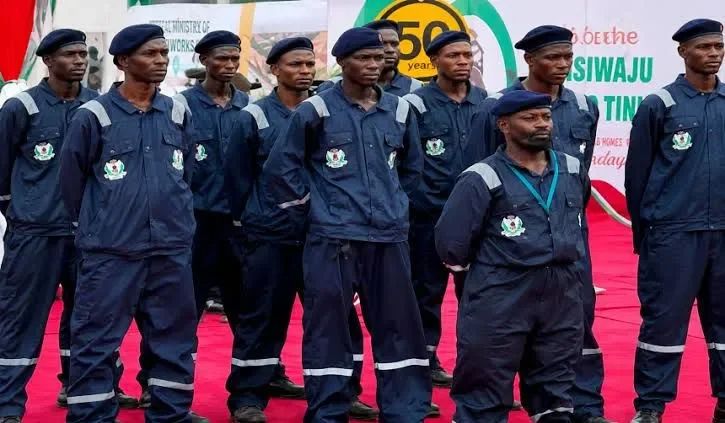
The Federal Government has inaugurated a dedicated security outfit, known as the Coastal Highway Guards, to protect the ongoing Lagos-Calabar Coastal Highway project from vandalism, illegal occupation and other activities capable of undermining the massive infrastructure investment.
The initiative, launched on Sunday, August 9, 2026, by the Minister of Works, David Umahi, began with the deployment of 40 officers tasked with maintaining a continuous security presence along sections of the strategic coastal corridor.
The development comes amid growing concerns over the repeated theft and destruction of construction materials and newly installed infrastructure along the highway.
Why the Federal Government deployed the guards
The Federal Ministry of Works said the special security arrangement became necessary following repeated incidents of vandalism along the highway.
Umahi said some individuals had been removing construction materials, breaking perimeter fencing, stealing steel reinforcement rods and occupying sections of the road corridor.
The minister expressed concern that public resources were being spent on infrastructure only for criminals and unauthorised users to damage or remove parts of the project.
He said the situation could no longer be tolerated, particularly as the Lagos-Calabar Coastal Highway is being developed as a major national transportation and economic corridor.
During a late-night inspection with members of the National Assembly, Umahi said people were found sleeping on the highway, highlighting what he described as unacceptable activities along a major superhighway project. (Vanguard News)
What the Coastal Highway Guards will do
The 40-member team has been given a broad mandate that goes beyond simply guarding construction materials.
The guards are expected to maintain a visible and continuous presence along the highway, identify and report suspicious activities, monitor incidents of vandalism and help prevent unauthorised occupation of the road.
They will also enforce restrictions against hawking, loitering, motorcycles and commercial tricycles, commonly known as Okada and Keke, on the coastal highway.
Authorities said the guards will also tackle activities such as indiscriminate parking, illegal U-turns, illegal grazing and refuse dumping where these threaten the road's safety or infrastructure. (THISDAYLIVE)
Where offenders are apprehended, they are expected to be handed over to appropriate security agencies for further action.
Retired General Shodunke to lead team
The Coastal Highway Guards will be led by retired General Adekunle Shodunke, who will coordinate the activities of the new security unit.
The team will also work with existing security agencies, particularly in Lagos State, to ensure that its operations complement rather than duplicate conventional policing and other security responsibilities.
The Federal Government has described the initiative as a full-time security assignment, rather than an empowerment programme.
Umahi stressed that the primary purpose of the deployment is to protect national assets and ensure that the substantial investment in the coastal highway is not undermined by criminal activity or unauthorised use. (The Guardian Nigeria)
Guards receive training and tracking equipment
The security arrangement also includes measures intended to improve accountability among the guards.
Earlier preparations for the deployment involved the profiling of all 40 personnel and documentation of their guarantors.
The guards were trained by the Nigeria Police Force and equipped with motorcycles, helmets, walkie-talkies, flashlights and other operational equipment.
Tracking devices have also reportedly been installed on their motorcycles so authorities can monitor their movements and ensure that the vehicles are used strictly for official duties.
This tracking mechanism is significant because it gives supervisors an additional means of monitoring patrol operations and ensuring that government-provided equipment is not diverted for personal use.
The personnel have also been warned to operate with discipline, integrity and professionalism.
Protecting a 750-kilometre national asset
The security initiative covers a project of enormous geographical and economic significance.
The Lagos-Calabar Coastal Highway is planned as a 750-kilometre, 10-lane highway, connecting Lagos State with Cross River State through Ogun, Ondo, Delta, Bayelsa, Rivers and Akwa Ibom states.
The project is being executed by Hitech Construction Company Limited under the supervision of the Federal Ministry of Works.
Beyond providing a major transportation route, the Federal Government expects the highway to stimulate economic activity by improving connectivity between coastal communities and major commercial centres.
Its location also means that protecting the road during construction is essential because sections of the corridor pass through areas with significant commercial, residential and environmental activity.
Vandalism could increase project costs
Repeated vandalism creates more than a security problem. It can also increase the financial burden of infrastructure projects.
According to the Federal Controller of Works in Lagos, Olufemi Dare, manhole covers and directional road signs installed along the highway have been stolen or damaged.
He said the government had sometimes replaced damaged or stolen facilities only for them to be targeted again.
The repeated replacement of infrastructure consumes public funds that could otherwise be directed towards construction, maintenance or other public projects.
The deployment of dedicated guards is therefore intended to protect completed sections of the project while ensuring that construction continues without unnecessary losses.
Government seeks stronger protection of infrastructure
The Federal Government has also called on the Nigeria Security and Civil Defence Corps (NSCDC) to strengthen its protection of critical national infrastructure.
The Works Ministry has indicated that protecting government projects requires cooperation between specialised units and established security agencies.
The minister also disclosed that ongoing projects under the ministry had been opened to scrutiny by anti-corruption agencies, adding another layer of oversight to the management of public infrastructure.
Concerns and expectations
The new security arrangement comes as the Lagos-Calabar Coastal Highway continues to attract significant public attention because of its cost, design, route and expected economic impact.
While the government insists that the highway can transform transportation and economic activity along Nigeria's coastline, stakeholders have continued to raise questions about aspects of its alignment.
The Guardian reported that the pan-Yoruba organisation Afenifere has urged the Federal Government to ensure that the highway fully integrates Ondo State's 100-kilometre Atlantic coastline.
For the government, however, protecting the sections already under construction remains an immediate priority.
Conclusion
The deployment of 40 Coastal Highway Guards marks a significant step by the Federal Government to protect the Lagos-Calabar Coastal Highway from vandalism, illegal occupation and activities that could compromise its safety.
With the guards equipped, trained and placed under the leadership of retired General Adekunle Shodunke, authorities hope to establish stronger surveillance along the route.
The success of the initiative will ultimately depend on effective coordination with other security agencies, professional conduct by the guards and cooperation from communities along the corridor.
As construction progresses, safeguarding the highway will remain essential to ensuring that Nigeria's major coastal infrastructure investment delivers its intended transportation and economic benefits.