FG Cuts Trade Ministry Budget Despite Investment Boom, Raising Questions Over Nigeria’s Growth Strategy
A sharp budget cut for Nigeria’s trade ministry exposes tensions between fiscal restraint and the country’s ambition to drive jobs, exports, and industrial growth.
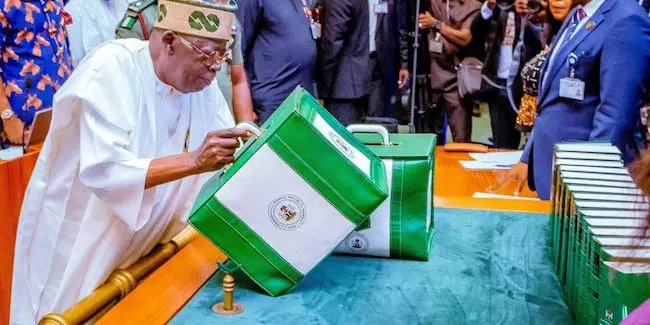
The Federal Government’s decision to slash the 2026 budget of the Federal Ministry of Industry, Trade and Investment by nearly a quarter is emerging as one of the most consequential economic signals ahead of the new fiscal year. At a time when Nigeria is recording a rebound in foreign investment and a historic trade surplus, the reduction has sparked debate about whether fiscal tightening is colliding with the country’s long-term growth ambitions.
According to figures in the 2026 Appropriation Bill, the ministry’s total allocation has been reduced to ₦87.44 billion, representing a 22.92 percent drop from the ₦110.07 billion approved in 2025. The decline is even more striking when viewed against the ₦126.57 billion allocation in 2024, pointing to a sustained contraction in funding for one of the ministries most central to economic diversification.
For an economy still grappling with inflation, unemployment, and fragile industrial capacity, the cut raises fundamental questions: can Nigeria truly leverage rising investment and trade momentum while spending less on the institutions designed to support them?
Fiscal Tightening Meets Economic Reality
Government officials describe the reduction as part of a broader fiscal rebalancing effort, aimed at containing deficits and prioritising debt sustainability. Yet the structure of the cut suggests that growth-enabling spending is bearing the brunt.
While personnel costs rose slightly to ₦26.44 billion in 2026 from ₦25.63 billion in 2025, and overheads edged up to ₦5.60 billion, capital expenditure fell sharply. Capital votes dropped to ₦55.40 billion from ₦79.14 billion the previous year, accounting for most of the overall reduction.
This matters because capital expenditure under the trade ministry directly supports industrial parks, export infrastructure, trade facilitation systems, and SME development programmes, areas that translate policy into tangible economic outcomes.
A Paradox of Growth: Rising Investment, Falling Support
The timing of the budget cut appears paradoxical. Data cited by Vanguard shows that foreign investment into Nigeria surged in the first nine months of 2025, with combined Foreign Direct Investment (FDI) and Foreign Portfolio Investment (FPI) approaching $14 billion already exceeding total inflows recorded in all of 2024.
At the same time, Nigeria posted a ₦12 trillion trade surplus in the first half of 2025, buoyed by a 21 percent increase in non-oil exports to $12.8 billion. These figures suggest that policy reforms, currency adjustments, and improved trade engagement are beginning to yield results.
Against this backdrop, reduced funding for the very ministry tasked with sustaining and scaling these gains risks slowing momentum. Economists warn that without adequate public investment, private capital alone may not deliver the infrastructure and institutional depth needed for inclusive growth.
Impact on SMEs and Job Creation
Perhaps the most immediate economic risk lies in the impact on small and medium-sized enterprises (SMEs), which account for the majority of jobs in Nigeria. The Small and Medium Enterprises Development Agency of Nigeria (SMEDAN), a key agency under the ministry, saw its headquarters allocation cut to ₦28.59 billion in 2026 from ₦40.13 billion in 2025.
This reduction comes even as SMEDAN has set ambitious targets: registering at least 250,000 new businesses in 2026 and seeking approval to onboard an additional one million enterprises. The agency is also exploring the creation of a microfinance bank, pending Central Bank of Nigeria approval, to directly disburse funds and improve oversight.
Budget constraints could slow these initiatives, limiting access to finance, business formalisation, and capacity-building support for millions of entrepreneurs operating at the margins of the economy.
Trade Infrastructure and Competitiveness at Risk
Beyond SMEs, reduced capital spending may weaken Nigeria’s competitiveness under the African Continental Free Trade Area (AfCFTA). The Ministry of Industry, Trade and Investment has consistently highlighted Nigeria’s leadership role in AfCFTA implementation, positioning the country as a hub for regional trade and manufacturing.
However, leadership in continental trade requires sustained investment in logistics, export processing zones, standards enforcement, and digital trade systems. The Oil and Gas Free Zones Authority of Nigeria (OGFZA), for example, received ₦13.29 billion for 2026, down from ₦18.98 billion in 2025—potentially limiting expansion and modernisation efforts in strategic zones.
For exporters, weaker infrastructure translates into higher costs, delays, and reduced competitiveness, undermining the very trade surplus Nigeria is currently celebrating.
What This Means for the Wider Economy
For ordinary Nigerians, the implications are indirect but significant. Reduced funding for trade and industry affects job creation, price stability, and income growth. If SMEs struggle to scale and exporters face bottlenecks, unemployment pressures could intensify, while inflationary risks persist due to supply constraints.
Analysts argue that while fiscal discipline is necessary, cutting growth-oriented spending during a fragile recovery could prove counterproductive. Without complementary investment in productive sectors, rising foreign capital inflows may remain volatile, skewed toward short-term portfolio investments rather than long-term industrial development.
A Strategic Crossroads
The 2026 budget cut places Nigeria at a strategic crossroads. The government appears to be betting that policy reforms and private capital can compensate for reduced public spending. Whether that bet pays off will depend on execution, regulatory stability, and the ability to crowd in—not crowd out—investment.
As Nigeria seeks to transform trade gains into broad-based prosperity, the challenge will be ensuring that fiscal restraint does not undermine the foundations of sustainable economic growth.
Sources
- Vanguard: https://www.vanguardngr.com/
- BusinessDay Nigeria: https://businessday.ng/
- SMEDAN: https://smedan.gov.ng/
- AfCFTA Secretariat: https://www.afcfta.africa/