Farage’s Rivals Rule Out Standing in Clacton By-Election as Political Boycott Deepens
Britain's major political parties have ruled out contesting the Clacton by-election triggered by Nigel Farage, calling the vote a political stunt as the Reform UK leader faces scrutiny over his finances.
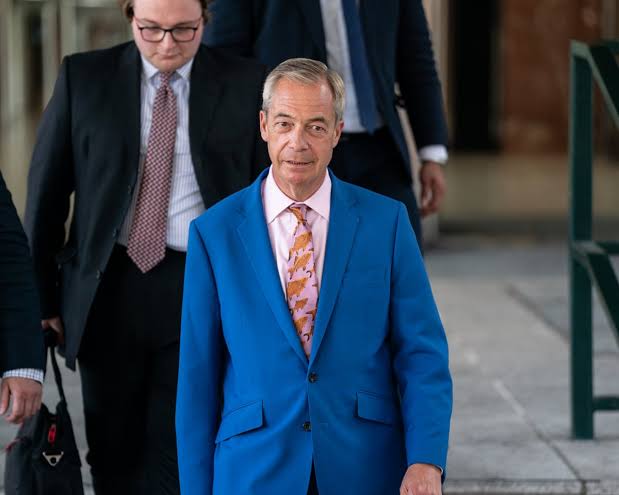
Britain's major political parties have announced they will not field candidates in the upcoming Clacton by-election, leaving Nigel Farage facing the prospect of little or no serious opposition after he resigned his parliamentary seat to seek a fresh mandate from voters.
The decision by the governing Labour Party, the Conservatives, the Liberal Democrats, the Green Party and several smaller political groups mark an extraordinary development in British politics and has transformed what Farage hoped would become a high-profile political battle into an unusual contest that critics have described as a publicity exercise.
Farage, the leader of Reform UK, resigned as Member of Parliament for Clacton earlier this week, saying he wanted voters not Westminster investigations, to judge his conduct amid growing scrutiny over his financial affairs and undeclared gifts.
Farage Frames Vote as 'People Versus the Establishment'
Announcing his resignation, Farage described the by-election as an opportunity for the people of Clacton to decide whether he deserved to continue representing them in Parliament.
He argued that the contest would become a "people versus the establishment" election, accusing political opponents, sections of the media and Westminster institutions of attempting to undermine both him and Reform UK.
Farage has denied any wrongdoing and insists the ongoing investigations into his financial declarations are politically motivated.
The Reform UK leader has repeatedly stated that the best way to resolve questions surrounding his conduct is through a direct vote by his constituents rather than allowing parliamentary inquiries to continue without public input. (Reuters)
Rival Parties Reject Invitation
Instead of accepting Farage's challenge, Britain's largest political parties have collectively refused to participate in the by-election.
Labour described the contest as an unnecessary distraction designed to divert attention from the parliamentary investigation into Farage's finances.
The Conservative Party also declined to nominate a candidate, with party leader Kemi Badenoch reportedly describing the by-election as a "fake" contest that should not be legitimised.
The Liberal Democrats, Green Party and Restore Britain likewise announced they would boycott the election, arguing that Farage should allow parliamentary processes to conclude before seeking another electoral mandate.
The coordinated boycott means Farage may face only satirical candidate Count Binface unless additional independent or smaller-party candidates enter the race before nominations close.
Financial Scrutiny Remains Central
The byelection comes as Farage remains under investigation by Parliament's standards authorities over allegations relating to undeclared financial support.
The inquiry focuses on claims that Farage failed to properly declare substantial gifts and financial assistance linked to wealthy businessman Christopher Harborne, among other matters.
Farage has consistently rejected allegations of misconduct, maintaining that he has complied with parliamentary rules and that the investigation represents part of a broader campaign against him.
He has also dismissed suggestions that the resignation was intended to distract from the inquiry, insisting instead that democratic accountability requires voters to decide his political future.
Reform UK Sees Political Opportunity
Despite criticism from rival parties, Reform UK officials have defended Farage's decision.
Senior party figures argue that the refusal of Labour and the Conservatives to contest the seat demonstrates their fear of confronting Reform UK at the ballot box.
Party officials claim the boycott effectively acknowledges Reform UK's growing electoral strength, particularly in constituencies where immigration, economic concerns and public services remain dominant campaign issues.
Supporters believe another convincing victory in Clacton would reinforce Farage's position as one of Britain's most influential opposition politicians ahead of future national elections. (Financial Times)
Critics Question the Strategy
Political analysts remain divided over whether Farage's gamble will ultimately benefit him.
Some observers argue that winning an election without meaningful opposition would provide little evidence of renewed public confidence.
Others suggest the boycott removes Farage's preferred political narrative of defeating the traditional parties directly.
Critics also note that even if Farage comfortably retains the seat, the parliamentary investigation into his financial declarations will continue independently of the election result.
Should the investigation eventually conclude that parliamentary rules were breached, Farage could still face disciplinary measures regardless of the by-election outcome.
Clacton Voters Divided
Residents in Clacton have expressed mixed reactions to the unusual political situation.
Some voters welcomed the opportunity to reaffirm their support for Farage, arguing that elected representatives should answer directly to constituents.
Others questioned the necessity of an expensive by-election, particularly when most mainstream parties have decided not to participate.
Political commentators also suggest voter turnout could become one of the most closely watched aspects of the contest.
A low turnout might weaken Farage's argument that the election represents a decisive public endorsement, while a strong turnout would strengthen his claim that voters actively chose to support him despite the ongoing controversy. (The Guardian)
Wider Political Implications
The Clacton by-election has become more than a local contest.
It reflects growing tensions within British politics over accountability, political communication and the relationship between elected representatives and parliamentary oversight.
The coordinated refusal by major parties to participate is highly unusual and illustrates the increasingly polarized nature of Britain's political landscape.
Analysts say the outcome could influence how political parties respond to similar controversies in the future, particularly when investigations involving elected officials overlap with electoral campaigns.
For Reform UK, the election also represents another opportunity to present itself as an anti-establishment movement challenging Britain's traditional political parties.
Looking Ahead
As nominations remain open, uncertainty continues over whether additional candidates will emerge to challenge Farage before polling day.
For now, however, Britain's largest political parties appear determined to deny him the head-to-head contest he had sought.
Whether the boycott ultimately strengthens Farage's political message or diminishes the significance of the by-election remains to be seen.
What is already clear is that the Clacton contest has become one of the most unusual by-elections in recent British political history, combining questions of parliamentary accountability, electoral strategy and public trust.
Whatever the result, the vote is unlikely to end the wider debate surrounding Farage's financial affairs, as the parliamentary investigation is expected to continue independently after the election concludes.