Ex-Venezuelan President Nicolás Maduro Faces New US Charges Over Alleged Torture of Americans
Former Venezuelan President Nicolás Maduro and his wife face new US charges over alleged torture of detainees, including Americans, as their criminal case intensifies.
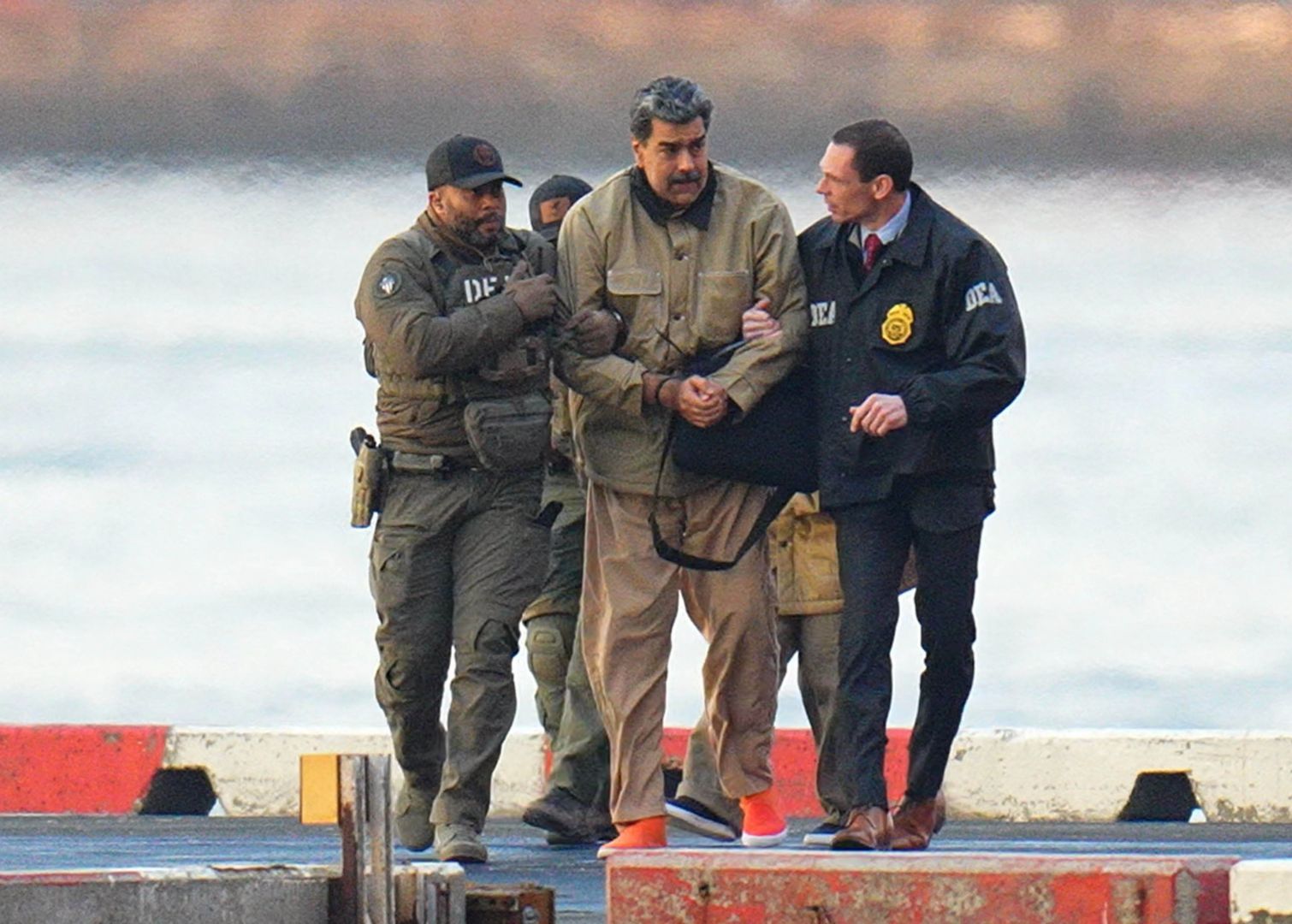
Former Venezuelan President Nicolás Maduro is facing fresh criminal charges in the United States over allegations that he and his wife, Cilia Flores, participated in a system of repression involving the torture of political opponents and American citizens detained in Venezuela.
The new charges were announced on Thursday, October 8, 2026, by the US Department of Justice following the unsealing of a superseding indictment in federal court in Manhattan, New York. The indictment adds allegations of conspiracy to commit torture to the existing narcotics trafficking and weapons case against the former Venezuelan leader and his wife.
According to the US Department of Justice, prosecutors allege that Maduro and Flores participated in a conspiracy involving torture spanning more than two decades. The allegations include the mistreatment of Venezuelan dissidents and American citizens detained by Venezuelan authorities.
The defendants have not been convicted of the newly alleged offences and remain entitled to the presumption of innocence unless proven guilty in court. US Department of Justice
New indictment adds to existing criminal case
The latest indictment marks a significant expansion of the criminal proceedings against Maduro, who served as Venezuela's president from 2013 until his removal from power in January 2026.
Maduro and Flores were captured by US military forces in Caracas on January 3, 2026, and transferred to New York to face federal charges. Their detention and transfer have generated international debate about sovereignty, the use of military force and the prosecution of foreign political leaders.
The original case accused Maduro and other Venezuelan officials of participating in a conspiracy involving cocaine trafficking, narcoterrorism and weapons offences. At the same time, the new indictment broadens the allegations by accusing the former president and his wife of involvement in a system that allegedly used torture to intimidate opponents and maintain political control.
US prosecutors allege that the abuse included beatings, electric shocks, asphyxiation and other forms of physical and psychological mistreatment. They further claim that Maduro received information about the treatment of individual detainees and, in certain instances, was directly involved in decisions concerning their abuse. The allegations have not yet been established through a criminal trial. -Associated Press
Americans allegedly subjected to torture
One of the most consequential aspects of the new indictment is its description of alleged abuses involving American citizens detained in Venezuela. According to prosecutors, three American victims suffered serious mistreatment while in detention. The indictment describes alleged electric shocks, beatings, threats and other forms of abuse, including treatment that reportedly caused lasting physical injuries.
One case described by prosecutors concerns an American detained after entering Venezuela in early 2022. The indictment alleges that he was subjected to electric shocks and forced to eat his own vomit during approximately eight months of imprisonment.
Another alleged victim reportedly suffered severe beatings requiring an extended hospital stay, while a third was allegedly beaten repeatedly while handcuffed and hooded, resulting in a permanent eye injury.
The descriptions have raised fresh questions about the treatment of foreign detainees and the alleged use of imprisonment as a means of exerting political or diplomatic pressure.
Some American detainees previously held in Venezuela were released through prisoner exchanges. Their cases had already attracted attention in Washington, particularly amid strained relations between the two countries.
However, the allegations in the indictment must be distinguished from findings established at trial. Prosecutors will be required to present admissible evidence to prove the charges against the defendants.
Cilia Flores also faces prosecution
Flores, a former Venezuelan first lady and influential political figure, is named alongside her husband in the superseding indictment. US prosecutors allege that she helped develop and implement the system of repression and ordered torture in particular cases. The allegations place her at the centre of the expanded prosecution rather than treating her solely as a relative of the former president.
Her lawyers have also been contesting aspects of the proceedings. According to the Associated Press, a judge on Thursday rejected a request for her release to house arrest based on medical concerns, with prosecutors arguing that she presented a flight risk.
The ruling means Flores remains in detention while the criminal case proceeds. It does not establish her guilt on the new charges. The legal proceedings against both defendants are expected to involve disputes over the evidence, the circumstances of their capture and whether the US courts can properly exercise jurisdiction over the case.
Maduro denies wrongdoing
Maduro has denied wrongdoing and pleaded not guilty to the earlier US charges. His lawyer, Barry Pollack, has said the former president looks forward to his day in court. The defence has challenged the legality of the prosecution, arguing that Maduro enjoys immunity as a foreign head of state and that his capture by US forces violated international law.
Those arguments raise difficult questions about the relationship between domestic criminal proceedings and international legal principles governing sovereign states and their leaders. The US government, however, maintains that the criminal charges can proceed. The court will have to consider the defence's arguments alongside the prosecution's position and applicable law.
The new allegations also come against the background of longstanding international criticism of Maduro's government over its treatment of political opponents. Maduro has consistently rejected accusations of wrongdoing.
Implications for Venezuela-US relations
The expanded indictment could further complicate relations between Washington and Caracas, even as Venezuela's current leadership navigates a changing political environment following Maduro's removal.
The case touches on several sensitive issues, including human rights, alleged state-sponsored abuse, drug trafficking and the authority of foreign courts to prosecute former political leaders.
For the United States, the prosecution provides an avenue to pursue allegations involving American victims and alleged criminal conduct linked to Venezuela's former leadership. For Maduro's defence, the central questions include the legitimacy of the proceedings, the circumstances of his capture and the evidence supporting each charge.
The case could also attract renewed international attention to allegations of torture and the legal accountability of officials accused of directing or facilitating abuses. Nevertheless, the charges remain allegations, and the court must determine whether prosecutors can prove them beyond a reasonable doubt.
What happens next?
The new charges add another layer to a prosecution already involving complex questions of criminal law, international relations and presidential immunity. Maduro and Flores will have opportunities to challenge the indictment and contest the evidence presented against them. The proceedings will also test the legal arguments surrounding their transfer from Venezuela to the United States.
The broader narcotics and weapons case is scheduled to proceed toward trial in 2027, with the newly expanded allegations likely to become a central issue in the litigation.
For now, the latest indictment represents an escalation in the US legal action against the former Venezuelan president and his wife. Whether the prosecution can establish the alleged torture conspiracy and secure convictions will ultimately depend on the evidence and the court's rulings.
The case remains a significant test of accountability for alleged abuses by political leaders, while also highlighting the contentious legal and diplomatic consequences of Maduro's capture and prosecution.