EU Reaffirms Nigeria’s Sovereignty After Trump’s Remarks, Says Stability and Mutual Respect Remain Key
The EU reaffirms unwavering respect for Nigeria’s sovereignty after Donald Trump’s remarks, emphasizing peacebuilding, human rights, and strategic cooperation.
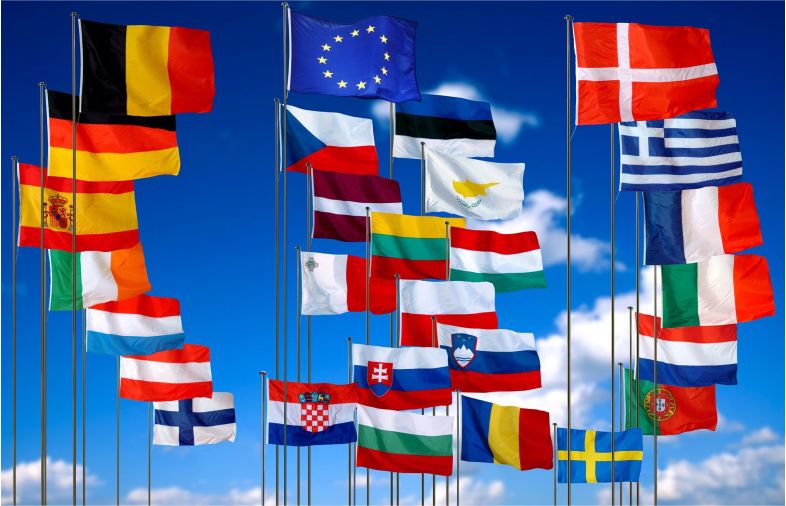
The European Union has reiterated its respect for Nigeria’s independence and governance authority while distancing itself from controversial statements recently made by former U.S. President Donald Trump regarding political and religious dynamics in the country. In a firm diplomatic reassurance, the EU emphasized its longstanding commitment to Nigeria’s peace, democracy, and territorial sovereignty - values that remain central to its partnership with Africa’s largest nation.
This clarification was delivered by the European Union Ambassador to Nigeria and ECOWAS, Mr. Gautier Mignot, during an interview with the News Agency of Nigeria (NAN) on Tuesday in Lagos. His remarks followed a series of social media posts by Trump accusing Nigerian authorities of failing to address alleged anti-Christian attacks and suggesting punitive actions from the United States, including withdrawal of support and labeling Nigeria as a “Country of Particular Concern.”
According to the ambassador, the European Union does not share that standpoint nor does it meddle in Nigeria’s internal governance matters based on opinions or rhetoric from other nations.
“Our position is one of solidarity with Nigeria - solidarity with victims of violence, with authorities working to protect citizens, and with the Nigerian people who overwhelmingly desire peaceful coexistence beyond ethnic and religious divides,” - Ambassador Gautier Mignot
He further noted that the EU’s foreign policy approach is guided by its collaboration with Nigeria, not by reactions to external political pronouncements, adding that the bloc’s engagements stem from shared values, partnership agreements, and mutual respect.
Strengthening Peace, Security, and Human Rights
Ambassador Mignot said the EU is committed to supporting Nigeria’s efforts in promoting national stability, rule of law, counterterrorism programmes, and community reconciliation. Some of these include assistance in peacebuilding operations, training and support for Nigeria’s security sector, dialogue with government, civil society, and religious leaders and human rights monitoring and capacity-building.
Nigeria continues to battle insecurity linked to terrorism, banditry, communal clashes and religious tensions, especially in the North-East and North-West regions. The ambassador acknowledged these ongoing challenges but stressed that Nigeria has strong legal frameworks protecting human rights and religious freedom.
“The situation is not perfect, as in any country, but there exists a constitutional basis for the protection of human rights. It is up to Nigerian authorities and society as a whole to uphold and strengthen this environment of peaceful coexistence,” - Mignot
Commitment to Religious Freedom and Minority Protection
The EU maintains a position of neutrality and inclusiveness, refusing to favour any religious group over another. Its peacebuilding assistance is designed to ensure:
- Equal protection for all victims of violence
- Respect for cultural and religious diversity
- Interfaith dialogue and tolerance initiatives
“We support programmes on deradicalization, demobilization, and reintegration of ex-members of non-state armed groups in the North-East,” he said, emphasizing that the goal is to reduce extremist threats while restoring community harmony. He confirmed that the EU continuously works with civil society organizations, traditional institutions, faith-based leaders, as well as local and national authorities
These efforts, he suggested, help prevent radicalization and ensure peaceful coexistence across Nigeria’s multiethnic population.
Strategic Cooperation Not Driven by External Influence
Ambassador Mignot firmly rejected any suggestion that Europe’s engagement with Nigeria might shift due to pressure from other world powers, including the United States. He emphasized that Nigeria is too important regionally and globally for EU relations to be swayed by short-term politics elsewhere.
“Our cooperation is not driven by what others do but by shared interest in a stable, prosperous, and democratic Nigeria.”
To strengthen this partnership further, Mignot announced that a high-level peace, security, and defence dialogue between Nigeria and the EU will take place soon - a move designed to deepen joint responses to insecurity and strengthen defence capacity.
Nigeria’s Future Remains in Nigerian Hands
The ambassador highlighted that while international partnerships can provide technical support and diplomatic backing, the primary responsibility for Nigeria’s development lies with its government and citizens.
“Nigeria’s future lies firmly in the hands of Nigerians themselves.” He encouraged continuous civic engagement, reforms that protect minority rights, and more investment in community resilience to curb extremism and reduce social divisions.
Background: Trump’s Statement Sparks Global Attention
Donald Trump recently issued public warnings claiming that Christians face increasing persecution in Nigeria. In his posts, he urged that the U.S. reconsider its financial and military assistance to Nigeria, framing the issue as a major international religious freedom concern.
This rhetoric reignited global media attention on Nigeria’s complex security realities. But the EU’s response - measured, diplomatic, and grounded in partnership - has served to calm concerns that Nigeria might face wider geopolitical pressure or sanctions. Nigeria’s Ministry of Foreign Affairs has previously reaffirmed that religious freedom is protected under Nigerian law, describing allegations of state-backed persecution as misleading and politically motivated.
The Bigger Picture: Nigeria-EU Relations Continue To Grow
Nigeria is EU’s largest trading partner in Africa a key player in West African security and an essential collaborator on migration, climate action, and democratic governance, while the EU remains one of the biggest contributors to humanitarian aid in conflict-affected zones, development projects supporting youths and vulnerable communities and governance reforms and electoral support. Diplomats note that this cooperation is built on decades of trust.
Conclusion
Despite political tensions stirred by Trump’s comments, the European Union has reassured that Nigeria’s sovereignty stands strong in its dealings with Europe. The bloc’s focus remains unwavering, supporting peace, strengthening national institutions, promoting inclusive security and human rights, and advancing Nigeria’s long-term stability and development.
As Nigeria continues to navigate internal security challenges and diverse political pressures, the EU insists that the nation’s destiny must be defined by Nigerians - not foreign critics.