EU Approves €90 Billion Ukraine Loan as Pipeline Dispute Ends Deadlock
The European Union has approved a €90 billion (about ₦90 trillion) loan for Ukraine after months of deadlock, triggered by a pipeline dispute that was resolved, unlocking critical wartime funding for Kyiv’s economy and military.
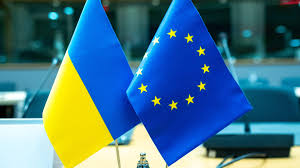
The European Union has finally approved a €90 billion (approximately ₦90 trillion) financial support package for Ukraine after months of political deadlock, marking one of the bloc’s most significant wartime financial interventions since Russia’s invasion in 2022.
The breakthrough came after a contentious dispute over the Druzhba oil pipeline was resolved, removing Hungary’s veto and allowing EU ambassadors to move forward with the long-delayed loan. The funds are expected to stabilize Ukraine’s economy and support its military operations over the next two years.
How the Deadlock Was Broken
For months, the €90 billion loan was blocked by Hungary, which used its veto power to demand the restoration of Russian oil flows through the Druzhba pipeline before approving any financial package for Kyiv.
The dispute centered on disruptions to the pipeline caused by earlier damage and geopolitical tensions linked to the Russia-Ukraine war. Hungary and Slovakia, both heavily dependent on Russian crude delivered through Druzhba, insisted that oil transit must be restored before releasing EU funds.
The breakthrough came when Ukraine completed urgent repairs to the pipeline, allowing limited oil flows to resume toward Central Europe. This development satisfied Hungary’s conditions and ended its opposition. (turn0search18)
EU diplomats confirmed that the restoration of pipeline operations removed the final obstacle to approval, ending a month-long diplomatic stalemate. (turn0news25)
EU Officials Confirm €90 Billion Loan Approval
EU ambassadors meeting in Brussels formally approved the loan package after Hungary lifted its veto. The agreement had originally reached last year but was repeatedly delayed due to political disputes.
The European Commission confirmed that the funding will be split across 2026 and 2027, with equal disbursements planned each year. (turn0news24)
Key details of the package include:
- Total value: €90 billion
- Timeline: 2026–2027
- Purpose: Military funding and budget support
- Allocation: Roughly two-thirds of Ukraine’s financing needs
EU officials said the loan is essential for preventing a fiscal crisis in Ukraine, which is facing a severe budget deficit due to wartime spending pressures.
Ukraine’s Growing Financial Crisis
Ukraine’s economy remains under extreme strain as the war with Russia enters its fifth year.
According to EU estimates, Ukraine’s 2026 budget shows:
- Spending of about 4.8 trillion hryvnias ($109 billion)
- Revenue of 2.9 trillion hryvnias ($66 billion)
- A deficit approaching 20% of GDP
A large portion of government spending, nearly 27% of GDP is directed toward defense, supporting a military of over one million personnel along an extended front line.
Without new funding, economists had warned that Ukraine risked running out of financial reserves by mid-2026.
The Role of the Druzhba Pipeline
The Druzhba pipeline became the unexpected centre of a geopolitical dispute that held up the EU loan for months.
Originally built during the Soviet era, the pipeline transports Russian crude oil through Ukraine into countries including Hungary and Slovakia.
The crisis escalated when:
- A Russian drone strike damaged sections of the pipeline
- Oil flows were interrupted or reduced
- Hungary demanded restoration of supply before approving EU aid
Ukraine eventually completed repairs, allowing flows to resume and removing the key condition tied to Hungary’s veto. (turn0search14)
The pipeline’s restoration effectively unlocked one of the EU’s most politically sensitive financial packages in recent years.
Hungary’s Shift Ends Political Gridlock
Hungary’s decision to lift its veto marked the turning point in the negotiations.
For months, Hungarian leaders had argued that the pipeline dispute directly affected national energy security and should be resolved before any financial commitments to Ukraine.
However, after the pipeline resumed operations, Budapest withdrew its objections, ending what EU officials described as a “four-month deadlock.”
EU diplomats said the breakthrough also reflects changing political dynamics within the bloc, as pressure mounted on Hungary to align with broader European consensus on Ukraine support.
EU Officials: Loan Is Critical for Ukraine’s Survival
EU leaders have described the loan as essential for Ukraine’s ability to maintain both economic stability and military resistance.
EU foreign policy chief Kaja Kallas said the funding sends a strong geopolitical message that “Russia cannot outlast Ukraine financially.”
Officials also confirmed that:
- The first disbursement could begin by late May or early June 2026
- Additional international partners (including Canada, Japan, and the UK) may contribute further funding
- Payments will be conditional on reforms and financial accountability
What the Loan Will Be Used For
The €90 billion package will support both civilian and military needs.
Planned allocations include:
- Defense spending and military operations
- Government salaries and pensions
- Infrastructure repair and reconstruction
- Energy system stabilization
- Macroeconomic support for public services
About €28 billion is expected to go directly toward military needs, while €17 billion will support Ukraine’s general budget annually under the scheme.
Remaining Risks and Uncertainty
Despite approval, the loan still faces several risks:
- Ongoing war-related damage to infrastructure
- Political disagreements within the EU
- Continued volatility in energy markets
- Dependence on external partners for full financing
Analysts warn that any renewed pipeline disruption or escalation in fighting could again destabilize funding arrangements.
Global and Political Implications
The approval of the €90 billion loan carries wider geopolitical significance.
It signals:
- Strong EU commitment to Ukraine’s survival
- Increased pressure on Russia through sustained financial support
- The EU’s willingness to use large-scale debt instruments in wartime
- Growing linkage between energy infrastructure and geopolitical negotiations
The resolution also highlights how energy systems like pipelines can directly influence global diplomacy.
Conclusion
The European Union’s approval of a €90 billion (₦90 trillion) loan for Ukraine marks a breakthrough after months of political deadlock tied to the Druzhba pipeline dispute.
By resolving the energy conflict and lifting Hungary’s veto, the EU has unlocked critical funding that will support Ukraine’s war effort and economic survival through 2027.
However, while the agreement ends one major crisis, the broader challenges of war, energy security, and political division in Europe remain unresolved ensuring that this financial package will be closely watched in the months ahead.