English FA Set to Withdraw Support for FIFA President Gianni Infantino Amid Growing Governance Crisis
The English Football Association is reportedly preparing to withdraw its support for FIFA President Gianni Infantino following controversy over a failed World Cup investment plan. Here's what sparked the backlash and what it means for FIFA's leadership.
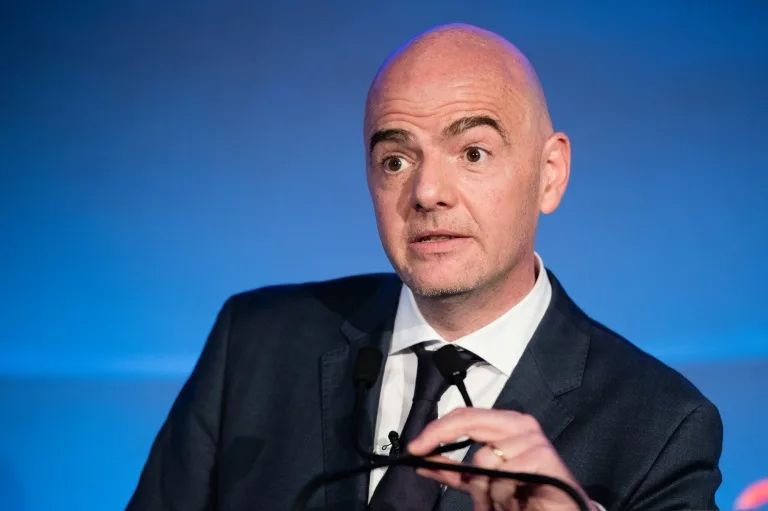
English FA Set to Withdraw Support for FIFA President Gianni Infantino Amid Growing Governance Crisis
The Football Association (FA) of England is reportedly preparing to withdraw its backing for FIFA President Gianni Infantino, adding to mounting pressure on the football chief after the collapse of his controversial plan to sell a stake in the commercial rights of FIFA's flagship competitions.
The move follows a wave of opposition from national football associations and continental governing bodies, with critics accusing FIFA's leadership of poor governance, inadequate consultation and a lack of transparency over proposals that would have allowed private investors to acquire a stake in a new commercial entity managing major FIFA tournaments, including the FIFA World Cup. (Reuters)
England Poised to Follow Wales
According to reports, the English FA is expected to join the Football Association of Wales (FAW) in formally withdrawing its support for Infantino's bid to secure another term as FIFA president.
The Welsh FA became one of the first national associations to publicly revoke its backing, saying confidence in FIFA's leadership had been undermined by the handling of the proposed commercial restructuring. The association cited concerns over governance, communication and stakeholder engagement, arguing that football's interests had not been adequately protected.
If England proceeds with the decision, it will represent one of the biggest political setbacks Infantino has faced since assuming office in 2016.
The Controversial World Cup Investment Proposal
At the heart of the dispute is FIFA's now-abandoned proposal to establish a new commercial company reportedly known as FIFA Forward Enterprise (FFE)to manage the commercial rights of FIFA competitions.
Under the proposal, private investors would have acquired a minority stake in the new entity in exchange for billions of dollars in investment. FIFA argued that the initiative would unlock new revenue streams and strengthen long-term financial sustainability.
However, many football associations, particularly in Europe, argued that the proposal effectively commercialised ownership of the World Cup without sufficient consultation.
Following intense opposition, FIFA announced that it had withdrawn the proposal. (Reuters)
UEFA Leads the Revolt
The strongest criticism has come from UEFA, European football's governing body.
UEFA declared that it had lost confidence in Infantino's leadership, accusing FIFA of making major strategic decisions behind closed doors. It described the investment proposal as opaque and inconsistent with the principles of good governance.
The organization has also instructed FIFA to preserve all documents related to the failed proposal, signalling that legal or regulatory action could follow.
European football officials argue that decisions affecting the global game should involve broad consultation with member associations rather than being developed in secrecy. (AP News)
Pressure Builds Across World Football
The controversy has expanded beyond Europe.
Reports indicate that several football federations across different confederations are reconsidering their support for Infantino ahead of the next FIFA presidential election, scheduled for March 2027 in Rabat, Morocco.
Although Infantino still enjoys backing from some national associations, analysts say the political landscape has shifted dramatically following the failed investment proposal.
The growing dissatisfaction has transformed what was once expected to be a straightforward re-election campaign into a potentially competitive contest.
Why the Proposal Sparked Outrage
Critics contend that the World Cup is a global sporting asset that should remain under the direct stewardship of FIFA and its member associations.
Many administrators feared that introducing private investors into FIFA's commercial operations could place financial interests ahead of sporting values.
Others questioned the lack of transparency surrounding the proposal, arguing that member associations were given insufficient information before being asked to consider the plan.
The backlash forced FIFA to abandon the proposal within days of widespread criticism.
Political Fallout for Infantino
Infantino, who has served as FIFA president since replacing Sepp Blatter in 2016, has previously survived several controversies during his tenure.
However, football governance experts say the current crisis represents one of the most significant challenges to his leadership.
The withdrawal of support by influential associations such as Wales—and potentially England could encourage other federations to reconsider their positions before nominations open for the next presidential election.
Some reports suggest that several senior football administrators are already discussing possible alternative candidates, although no major challenger has formally declared an intention to run. (Talksport)
Calls for Governance Reform
The controversy has renewed calls for broader governance reforms within FIFA.
Stakeholders have urged the organization to:
- Improve transparency in major commercial decisions.
- Strengthen consultation with member associations.
- Increase accountability within FIFA's executive leadership.
- Protect the long-term integrity of the World Cup.
- Ensure commercial initiatives prioritize the interests of football over private investment.
Governance advocates argue that restoring trust will require more open decision-making and stronger institutional oversight.
FIFA Yet to Fully Address Criticism
Although FIFA withdrew the investment proposal, critics say the organization has yet to fully address concerns about how the initiative was developed.
Several football associations have called for an independent review of the proposal and greater disclosure regarding the decision-making process.
Infantino has defended the intention behind the project, maintaining that exploring new commercial opportunities is necessary to support football's global development.
Nevertheless, the collapse of the plan has intensified scrutiny of FIFA's internal governance.
What Happens Next?
Attention now turns to whether the English FA will formally announce the withdrawal of its support and whether additional football associations will follow suit.
With the FIFA presidential election less than a year away, the coming months could prove decisive for Infantino's political future.
Should more member associations abandon their support, the FIFA president could face his first genuinely contested re-election campaign since taking office.
For now, the controversy has exposed deep divisions within world football over governance, transparency, and the sport's future commercial direction. Whether FIFA can rebuild confidence among its members may determine not only Infantino's future but also the credibility of football's global governing body in the years ahead.