Emir of Gumel Ahmed Sani II Dies in Cairo After Nearly 46 Years on the Throne
Emir of Gumel, Ahmed Muhammad Sani II, has died in Cairo, Egypt, after nearly 46 years on the throne. Jigawa and Nigeria mourn the respected traditional ruler.
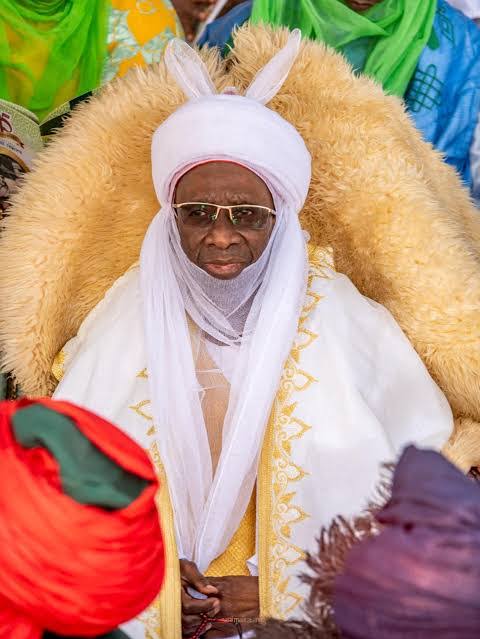
The Emir of Gumel in Jigawa State, Alhaji Dr Ahmed Muhammad Sani II, CON, has died in Cairo, Egypt, ending the remarkable reign of one of Northern Nigeria’s longest-serving traditional rulers.
The monarch died on Thursday, September 3, 2026, while receiving medical care in the Egyptian capital. His death was subsequently confirmed by the Jigawa State Government, palace sources and prominent Nigerians who expressed condolences to the royal family, Gumel Emirate and the people of Jigawa State. (Channels Television)
The death marks the end of nearly 46 years of leadership at the helm of the historic Gumel Emirate. Sani II ascended the throne on December 16, 1980, following the death of his father, and remained Emir until his death.
The Presidency described his passing as the end of a “remarkable and historic era,” praising the late monarch for his contributions to peace, education, Islamic scholarship, unity and community development. (State House Abuja)
Long Reign Comes to an End
Ahmed Muhammad Sani II became the 16th Emir of Gumel in 1980 and subsequently became one of the most enduring figures within Nigeria's traditional institution.
His reign spanned some of the country's most significant political and social changes, including the transition from military rule to democracy, the creation of Jigawa State in 1991 and decades of changing political, economic and security conditions across Northern Nigeria.
Throughout those years, the Emir maintained a reputation for conservative and measured leadership, with his influence extending beyond the palace to community affairs, education, peace-building and cultural preservation.
The Jigawa State Government described him as a beacon of wisdom who worked to improve the welfare of his people, including efforts connected to health, education, peace and security.
Medical Treatment in Cairo
The monarch had travelled to Cairo, Egypt, for medical treatment before his death.
Details about the specific illness for which he was receiving treatment have not been fully disclosed in official statements. Some reports described him as having suffered a prolonged illness, while other reports referred to a brief illness.
The Jigawa State Government confirmed that he died in Cairo on Thursday afternoon but did not provide further medical details. (The Sun Nigeria)
The announcement immediately generated an outpouring of grief from government officials, political leaders, traditional institutions and residents of Gumel and the wider Jigawa community.
A Scholar and Public Servant
Before becoming Emir, Sani II had established a career in public service, administration and politics.
According to the Presidency, he served with the Gumel Native Authority and later joined the Nigeria Immigration Service. He subsequently served as a senior official at the Kazaure Divisional Office.
His educational background included studies in public administration and political science. He attended Gumel Primary School, Hadejia Middle School and Rumfa College, formerly Kano High School.
He later obtained a Diploma in Public Administration from the Institute of Administration in Zaria and a Higher Diploma before studying Political Science and International Relations at Ohio University in the United States.
His combination of education, public administration and traditional leadership contributed to the distinctive character of his reign.
Role in Kano State Public Information
Before ascending the throne, Sani II also played a role in the development of public information institutions in the old Kano State.
Between 1978 and 1980, he served as Commissioner for Information, Internal Affairs and Culture.
The Presidency credited him with involvement in the establishment of The Triumph newspaper, the development of CTV 67, now known as ARTV, and the expansion of Radio Kano. Those institutions became important components of the media and information landscape in Northern Nigeria.
His political career came to an end following the death of his father, who was then Emir of Gumel, in December 1980. Days later, Sani II was selected to succeed him.
Legacy of Peace and Development
During his nearly four-and-a-half decades on the throne, Sani II was widely regarded as a traditional leader who placed emphasis on peace and stability.
President Bola Ahmed Tinubu, in his condolence message, described the late Emir as “a father to all” and a custodian of culture who devoted his long reign to promoting education, Islamic scholarship, unity among diverse communities and preservation of Gumel's heritage.
Tinubu also said the monarch's calm and inclusive leadership helped provide stability through periods of political and security challenges in Jigawa State and the wider region.
The President extended condolences to the monarch's immediate family, the Gumel Emirate Council, the Jigawa State Government and the traditional institution across Nigeria.
Tributes From Leaders
Former Minister of Communications and Digital Economy, Professor Isa Ali Ibrahim Pantami, was among those who announced and mourned the monarch's death.
Pantami described Sani II as a distinguished scholar, a beacon of wisdom and a father figure who dedicated his life to serving his people, promoting peace and education and preserving cultural values.
Former Kano State Governor and New Nigeria People's Party presidential candidate Rabiu Kwankwaso also mourned the monarch, describing him as a distinguished and far-sighted leader.
Kwankwaso said the late Emir would be remembered for guiding the Gumel Emirate through decades of dedicated service.
Jigawa State Governor Umar Namadi similarly described the death as a monumental loss to the Gumel Emirate, the state and Nigeria.
End of an Era for Gumel
The death of Ahmed Muhammad Sani II represents a significant transition for the Gumel Emirate.
For almost 46 years, his name and reign were closely associated with the emirate's traditional institution. His tenure witnessed generations of Gumel residents growing up under his leadership and saw the emirate navigate major political, economic and social transformations.
His death also comes only days after the reported death of the Emir of Zurmi in Zamfara State, making the passing of another prominent Northern Nigerian traditional ruler particularly significant for the region's traditional institutions.
Funeral Arrangements Awaited
The Jigawa State Government said details of the late Emir's funeral arrangements would be announced by the palace and communicated to the public.
As preparations begin, prayers and condolences are expected to continue across Gumel, Jigawa State and beyond.
Ahmed Muhammad Sani II leaves behind a legacy defined by an exceptionally long reign, public service, traditional leadership and involvement in efforts to promote peace, education and community development.
For the people of Gumel, his death closes one of the longest chapters in the emirate's modern history.
For Nigeria's traditional institution, it marks the departure of a monarch whose nearly five decades on the throne made him one of the country's most experienced and respected traditional rulers.
As Gumel mourns, attention will now turn to the succession process and the emergence of a new Emir to lead the historic emirate into its next chapter.