Elon Musk Loses High-Profile Lawsuit Against OpenAI in Landmark Court Ruling Over AI Governance Dispute
A U.S. federal court has ruled against Elon Musk in his high-profile lawsuit against OpenAI, dismissing claims related to AI governance and contractual obligations, marking a major legal victory for the artificial intelligence company.
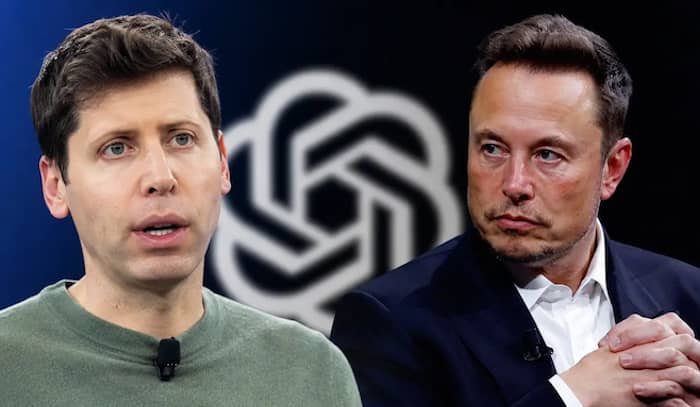
A United States federal court has ruled against tech billionaire Elon Musk in his closely watched lawsuit against artificial intelligence company OpenAI, delivering a major legal victory for the AI firm at the center of global debates over artificial intelligence governance and commercialization.
The ruling, delivered by a federal judge in California, dismissed Musk’s core claims that OpenAI had deviated from its founding mission and violated contractual or ethical obligations tied to its early development structure.
The case, which attracted global attention from the technology and legal communities, centered on allegations that OpenAI had shifted from its original nonprofit-aligned mission toward a more profit-driven model through its partnership with major investors.
Court Dismisses Key Claims
In its judgment, the court concluded that Musk’s arguments did not meet the legal threshold required to prove breach of contract or fiduciary duty.
The judge ruled that OpenAI’s governance structure, including its transition into a capped-profit model, did not violate enforceable legal commitments made to early collaborators or investors.
The court also noted that strategic restructuring within emerging technology companies is not inherently unlawful, particularly in rapidly evolving sectors such as artificial intelligence.
As a result, all major claims brought by Musk were dismissed, effectively ending this phase of the legal battle unless appealed to a higher court.
Background to the Legal Dispute
The lawsuit originated from disagreements over OpenAI’s direction following its rapid rise in global prominence after the launch of advanced generative AI systems.
Musk, who was one of the early supporters and co-founders of OpenAI before stepping away from its board, argued that the organization had drifted away from its original mission of ensuring artificial intelligence benefits all of humanity.
He alleged that OpenAI’s increasing commercial partnerships and deep ties with major technology firms represented a departure from its founding principles.
OpenAI, however, maintained that its restructuring was necessary to secure funding, scale infrastructure, and compete in an increasingly competitive global AI industry.
The company argued that without significant investment, it would not have been able to develop or maintain advanced systems that now power global AI applications.
Judge Rules on Mission and Commercial Structure
The court’s ruling focused heavily on the legal distinction between ethical intent and enforceable contractual obligation.
While acknowledging the philosophical debate around AI safety and commercialization, the judge emphasized that courts cannot enforce broad mission statements unless they are clearly defined in binding legal agreements.
The ruling stated that OpenAI’s transition toward a hybrid structure allowing for capped profits was consistent with its amended governance framework.
This interpretation effectively weakened Musk’s argument that the organization had unlawfully abandoned its original nonprofit vision.
OpenAI Welcomes Decision
Following the ruling, OpenAI expressed satisfaction with the outcome, stating that the decision reaffirmed its right to evolve its structure in response to technological and financial demands.
The company said its mission remains focused on ensuring artificial intelligence development is both safe and beneficial, even as it continues to scale its commercial operations.
OpenAI also emphasized that partnerships with major technology firms have been essential in advancing AI capabilities and expanding access to tools used globally.
Musk’s Position and Future Options
Representatives for Elon Musk expressed disappointment with the ruling but indicated that legal options, including appeal, remain under consideration.
Musk has long been one of the most prominent public voices calling for stricter regulation and oversight of artificial intelligence development.
He has repeatedly warned us about the risks associated with unregulated AI systems, including potential societal disruption, misinformation, and loss of control over advanced technologies.
His legal challenge against OpenAI was widely seen as part of a broader philosophical and strategic disagreement over the future direction of artificial intelligence development.
Wider Implications for the AI Industry
Legal analysts say the ruling could have significant implications for how AI companies structure their governance models in the future.
The decision reinforces the legal flexibility available to technology companies operating in rapidly evolving industries, particularly when balancing nonprofit ideals with commercial sustainability.
It also highlights the increasing tension between innovation, regulation, and ethical oversight in the global AI race.
Industry experts believe the outcome may encourage other AI firms to adopt hybrid funding models like OpenAI’s capped-profit structure, allowing them to attract investment while maintaining public-interest commitments.
Growing Debate Over AI Governance
The case has reignited global discussions about who should control advanced artificial intelligence systems and how they should be regulated.
Governments, regulators, and private companies continue to debate frameworks for ensuring transparency, accountability, and safety in AI development.
Some policymakers argue that legal systems must evolve to address emerging challenges posed by AI, including issues that fall outside traditional contract and corporate law.
Others believe innovation should remain largely market-driven, with limited judicial interference unless clear legal violations occur.
Technology Sector Reaction
The tech industry has closely followed the case due to its potential impact on startup governance, investor confidence, and AI policy direction.
Some investors view the ruling as a stabilizing factor, reinforcing the legal legitimacy of hybrid corporate structures in frontier technologies.
Others caution that unresolved ethical tensions around AI development could still lead to future regulatory or legislative interventions.
Conclusion
The court’s decision to rule against Elon Musk in his lawsuit against OpenAI marks a pivotal moment in the ongoing global debate over artificial intelligence governance.
While the ruling provides legal clarity on corporate structure and mission flexibility, it also underscores the unresolved philosophical and ethical tensions shaping the future of AI development.
As the industry continues to evolve at a rapid pace, both legal experts and technology leaders agree that this case is unlikely to be the final word in the broader struggle over how artificial intelligence should be built, funded, and controlled.