El-Rufai Suffers Fresh Legal Setback as Abuja Court Rules in ICPC Case
Former Kaduna State Governor Nasir El-Rufai suffers another legal setback in Abuja as a court rules in a case involving the ICPC. Here is the latest development, legal implications, and background.
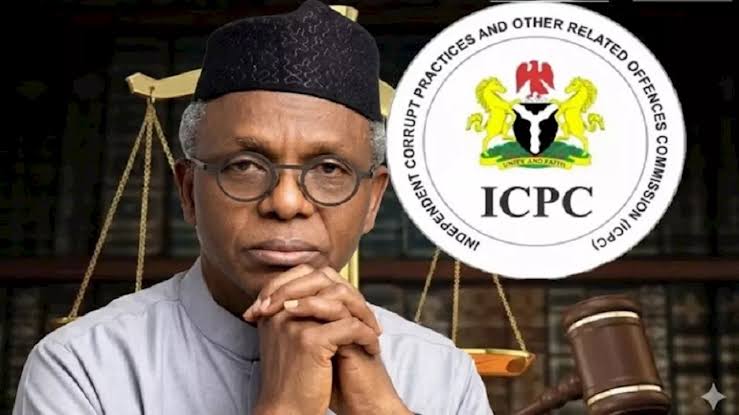
Nasir Ahmad El-Rufai, former governor of Kaduna State, has reportedly suffered another legal setback following a court decision in Abuja involving the Independent Corrupt Practices and Other Related Offences Commission (ICPC).
The development adds another chapter to the legal challenges confronting the former governor, who remains a prominent figure in Nigerian politics. The outcome also draws attention to the role of the courts in resolving disputes involving anti-corruption agencies and politically exposed individuals.
Court dismisses suit over proposed asset freeze
The case, marked FHC/ABJ/CS/368/2026, was filed on February 24, 2026. El-Rufai asked the Federal High Court to prevent the ICPC, Economic and Financial Crimes Commission (EFCC), Department of State Services (DSS) and Attorney-General of the Federation from freezing his bank accounts or seizing his properties in connection with the investigation.
In his application, the former governor argued that his severance benefits, received after serving two terms as Kaduna governor from 2015 to 2023, were legitimate entitlements. He sought a declaration that the funds were lawfully obtained and that properties acquired with the money belonged to him.
He also requested a perpetual injunction against the freezing, attachment, seizure or forfeiture of his identified accounts and properties, alongside ₦1 billion in damages and ₦100 million in legal costs. TheCable
The court, however, dismissed the suit after accepting the argument that the action constituted an abuse of court process.
Why the ICPC opposed El-Rufai’s application
The ICPC argued that El-Rufai had initiated multiple cases arising from the same investigation, including proceedings challenging the search of his residence and aspects of his detention.
According to the commission, pursuing overlapping claims before different courts risked conflicting judicial decisions. It urged the court to reject the attempt to obtain a broad order preventing law enforcement agencies from exercising their statutory powers.
Justice Joyce Abdulmalik agreed that the suit could not be sustained in the circumstances. She also struck out the EFCC, DSS and Attorney-General of the Federation as respondents after finding that the action disclosed no reasonable cause of action against them.
The judgment does not establish that El-Rufai committed a crime or that his assets were unlawfully acquired. It concerns the legal viability of the particular suit he filed and the overlap with other proceedings.
Other legal battles remain pending
The latest decision comes amid several other legal disputes involving the former governor and the anti-corruption authorities. In a separate case, El-Rufai is seeking ₦1 billion in damages over the search of his Abuja residence, which he alleges violated his fundamental rights. The Federal High Court adjourned that matter to October 27, 2026, for a definite hearing. - Premium Times Nigeria
He has also challenged aspects of his treatment during the investigation, while the ICPC maintains that its actions form part of its investigation. The outcomes of those separate proceedings will depend on the arguments and evidence presented before the respective courts.
What the ruling means for El-Rufai
The dismissal represents a setback for El-Rufai's attempt to secure advance protection against potential asset-freezing or forfeiture measures. It removes the relief he sought in this suit, allowing the relevant agencies to pursue lawful investigative steps and seek appropriate court orders where justified.
However, the judgment does not automatically freeze or confiscate his assets. Any such action must comply with the applicable legal requirements, and the former governor's other court challenges remain separate matters.
The ruling also underscores the importance of procedural discipline in litigation, particularly when related claims are brought before courts of coordinate jurisdiction.
For El-Rufai, the immediate outcome is unfavourable: the court has rejected his attempt to prevent possible action against his bank accounts and properties through this case. The wider legal dispute, however, remains unresolved, and the pending proceedings will determine the outcome of his other claims against the authorities.