El-Rufai Saga and Nigeria’s 2027 Presidential Race: How the ICPC Investigation Could Reshape Opposition Politics
The investigation and detention of former Kaduna governor Nasir El-Rufai by the ICPC may reshape Nigeria’s opposition politics ahead of the 2027 presidential election. Here is the political significance and what it could mean for the future of Nigerian democracy.
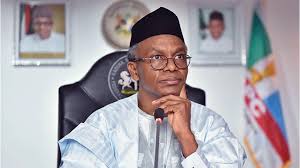
Nigeria’s political landscape is entering a new phase of uncertainty following the dramatic investigation and detention of former Kaduna State governor Nasir Ahmad El-Rufai by the Independent Corrupt Practices and Other Related Offences Commission (ICPC).
The former governor has been in ICPC custody since 19 February 2026, following an earlier detention by the Economic and Financial Crimes Commission (EFCC) over allegations linked to corruption and other offences. (Wikipedia)
While the investigation is officially framed as an anti-corruption probe, the political implications extend far beyond legal questions. Analysts increasingly believe the saga could reshape Nigeria’s opposition politics and the dynamics of the 2027 presidential election.
At the center of the controversy is El-Rufai’s own claim that the investigation is politically motivated and connected to his role within the opposition coalition preparing to challenge the ruling government.
The ICPC Custody Statement
While under interrogation, El-Rufai issued a written statement dated 19 February 2026, refusing to answer questions posed by investigators.
Instead, he invoked his constitutional right to remain silent and insisted that any allegations against him should be addressed only in court.
“I have decided to exercise my right to silence… I will respond only in court,” he wrote in the statement.
In the same statement, the former governor also argued that the investigation was linked to his political activities within the African Democratic Congress (ADC), which he described as “the only surviving opposition political party.” (Premium Times Nigeria)
This claim has intensified political debate about whether the probe is purely legal or part of a broader struggle over power ahead of the next general elections.
El-Rufai’s Place in Nigeria’s Opposition Movement
El-Rufai is not just another former governor; he is one of the most influential political figures in northern Nigeria.
He previously served as:
- Governor of Kaduna State (2015–2023)
- Minister of the Federal Capital Territory (2003–2007)
Over the years he has built a reputation as a strategic political operator capable of shaping alliances across regions.
After falling out with the ruling All Progressives Congress (APC) following his unsuccessful ministerial nomination in 2023, El-Rufai moved closer to emerging opposition coalitions.
These coalitions include political figures such as former Vice President Atiku Abubakar, former Rivers State governor Rotimi Amaechi, and other prominent politicians seeking to challenge President Bola Ahmed Tinubu in 2027. (ICIR News)
His role in building a new opposition alliance has made him one of the most significant actors in Nigeria’s evolving political chessboard.
The Emerging Opposition Coalition
Nigeria’s opposition landscape has been undergoing rapid realignment.
In recent months, several political leaders from different parties have begun exploring the African Democratic Congress (ADC) as a potential coalition platform to challenge the ruling APC.
The alliance includes politicians from the Peoples Democratic Party (PDP), the Labor Party, and other smaller parties. (ICIR News)
Political analysts say the goal is to avoid the fragmentation that weakened opposition forces in the 2023 presidential election.
The emergence of such a coalition could significantly reshape Nigeria’s political competition if the leaders succeed in presenting a united front.
Within this context, El-Rufai is widely viewed as a key strategist capable of mobilising support across northern Nigeria—a region that remains crucial in presidential elections.
Possible Impact on the 2027 Presidential Race
The El-Rufai saga could influence the 2027 election in several ways.
1. Weakening the Opposition
If the investigation results in criminal charges or prolonged legal battles, it could
weaken the emerging opposition coalition.
El-Rufai’s influence in northern politics and within elite political networks makes him an asset to opposition forces.
His absence could reduce the organizational strength of any coalition attempting to challenge the ruling party.
2. Strengthening Opposition Mobilization
Ironically, the controversy could also strengthen opposition unity.
Supporters of El-Rufai have framed the investigation as an example of political persecution.
This narrative could galvanize opposition supporters who already fear that Nigeria may drift toward a dominant-party system.
Opposition leaders could use the case as a rallying point to argue that democratic competition is under threat.
3. Re-shaping Alliances
Another possible outcome is the reconfiguration of political alliances ahead of 2027.
There has already been speculation about potential presidential tickets involving figures such as Rotimi Amaechi, Rabiu Kwankwaso, and others within the opposition coalition. (Wikipedia)
El-Rufai himself has also been mentioned as a possible vice-presidential candidate in some proposed opposition tickets.
If he remains politically active, his influence could shape the structure of any coalition ticket.
A Broader Struggle for Political Power
Beyond the legal case, the El-Rufai saga reflects a deeper struggle for political influence in Nigeria.
The country’s political environment is already entering early campaign mode even though the 2027 election is still more than a year away.
Opposition leaders are working to form alliances capable of challenging the ruling party, while the government is consolidating support for President Tinubu’s potential re-election bid.
Analysts note that such political maneuvering is typical in Nigeria’s highly competitive political system.
Democratic Concerns and Institutional Credibility
The controversy also raises questions about the role of anti-corruption agencies in Nigeria’s political system.
Supporters of the investigation argue that public officials must be held accountable regardless of their political status.
However, critics warn that investigations must remain transparent and independent to avoid perceptions of political bias.
The credibility of institutions such as the ICPC, EFCC, and security agencies will therefore play a crucial role in determining how the saga shape’s public opinion.
What Lies Ahead
As of early March 2026, the legal and political battle surrounding El-Rufai is far from over.
Several scenarios could emerge:
- Formal criminal charges could be filed in court.
- The investigation could collapse if evidence proves insufficient.
- Political negotiations could alter the trajectory of the case.
Regardless of the outcome, the controversy has already become one of the defining political developments in Nigeria’s pre-2027 political landscape.
Conclusion
The investigation of Nasir El-Rufai has evolved from a legal case into a major political event with implications for Nigeria’s democratic future.
For the opposition, the saga could either weaken its leadership structure or strengthen its narrative of resistance against perceived political domination.
For the ruling establishment, the case represents a test of the credibility of Nigeria’s anti-corruption institutions.
As the country gradually moves toward the 2027 presidential election, the outcome of the El-Rufai saga may significantly shape the balance of power in Africa’s largest democracy.