El-Rufai Drops Magistrate from ₦1 Billion Rights Suit
Former Kaduna governor Nasir El-Rufai withdraws a magistrate from his ₦1 billion fundamental rights suit, raising questions about legal strategy, judicial independence, and political implications.
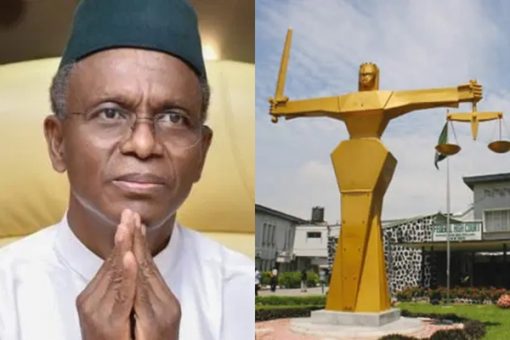
Former Kaduna State governor Nasir El-Rufai has taken a significant legal step by removing a magistrate from his ₦1 billion fundamental rights enforcement suit, a move that has sparked intense debate within Nigeria’s legal and political circles. The development not only reshapes the trajectory of the case but also raises deeper questions about judicial accountability, legal tactics, and the broader political context surrounding the dispute.
The case itself stems from allegations of rights violations linked to El-Rufai’s recent encounters with law enforcement authorities, a situation that has drawn national attention and fueled conversations about the treatment of political figures under Nigeria’s justice system.
Background: The ₦1 Billion Rights Suit
El-Rufai had initially filed a fundamental rights suit seeking ₦1 billion in damages, alleging unlawful arrest, detention, and infringement of his constitutional rights. The suit named multiple parties, including security agencies and a magistrate accused of issuing orders that allegedly facilitated the rights violations.
Fundamental rights enforcement suits are a key legal mechanism in Nigeria, allowing individuals to seek redress when their constitutional rights are violated. By placing a monetary value on the alleged infringement, El-Rufai signaled both the seriousness of his claims and his willingness to pursue accountability through the courts.
Why the Magistrate Was Dropped
In a surprising turn, El-Rufai’s legal team decided to drop the magistrate from the suit, effectively narrowing the focus of the case to other defendants, primarily security agencies.
Legal analysts suggest several possible reasons for this move. One interpretation is that it reflects a strategic recalibration aimed at strengthening the case. By removing the magistrate, the plaintiff may be seeking to avoid procedural complications or jurisdictional challenges that could arise from including a judicial officer as a defendant.
Another possibility is that the decision is intended to streamline the litigation process. Cases involving judicial officers often raise complex questions about immunity and the appropriate forum for adjudication, which can delay proceedings.
According to reports, the withdrawal does not necessarily absolve the magistrate of responsibility but rather shifts the legal emphasis toward the actions of law enforcement agencies.
Legal Implications: Judicial Immunity and Accountability
The removal of the magistrate brings into focus the delicate balance between judicial immunity and accountability. In Nigeria, judicial officers are generally protected from being sued for actions taken in the course of their official duties, except in cases of proven bad faith or gross misconduct.
By dropping the magistrate, El-Rufai’s legal team may be acknowledging the difficulty of overcoming these protections within the context of a fundamental rights suit.
However, the issue of accountability remains. Critics argue that excluding judicial officers from such suits could weaken efforts to hold the judiciary accountable for decisions that allegedly infringe on individual rights.
On the other hand, proponents of judicial immunity emphasize the need to protect judges and magistrates from undue pressure or harassment, which could undermine their independence.
Political Context: A Case Beyond the Courtroom
The case cannot be viewed in isolation from its political context. As a prominent figure in Nigeria’s ruling political landscape, El-Rufai’s legal battles are often interpreted through a political lens.
His decision to file and subsequently modifies the suit may reflect broader strategic considerations, including public perception and political positioning. By focusing the case on security agencies, El-Rufai may be directing attention toward institutional practices rather than individual judicial decisions.
This approach could resonate with public concerns about the conduct of law enforcement agencies, particularly in cases involving high-profile individuals.
Public Reaction and Legal Community Response
The development has elicited mixed reactions. Some legal experts view the move as a pragmatic decision that could enhance the chances of success in court. By narrowing the scope of the case, the plaintiff may be better positioned to present a clear and focused argument.
Others, however, see it as a missed opportunity to test the limits of judicial accountability in Nigeria. They argue that including the magistrate could have set an important precedent, even if the legal hurdles were significant.
Public opinion has also been divided, with some interpreting the move as a sign of legal prudence, while others question whether it reflects underlying political considerations.
Implications for Nigeria’s Justice System
The case highlights several broader issues within Nigeria’s justice system. First, it underscores the challenges of pursuing accountability in cases involving multiple actors, including judicial officers and security agencies.
Second, it raises questions about the effectiveness of existing legal frameworks in addressing alleged rights violations. If certain actors are effectively shielded from litigation, it may create gaps in accountability.
Third, the case illustrates the intersection of law and politics in Nigeria, where high-profile legal disputes often carry implications beyond the courtroom.
What Comes Next
With the magistrate no longer partying to the suit, the focus will now shift to the remaining defendants. The court will need to examine the actions of security agencies and determine whether they violated El-Rufai’s rights.
The outcome of the case could have significant implications, not only for the parties involved but also for the broader legal landscape. A ruling in favor of the plaintiff could reinforce the importance of constitutional protections and set a precedent for future cases.
Conversely, a dismissal could raise questions about the accessibility and effectiveness of legal remedies for alleged rights violations.
Conclusion: Strategy or Compromise?
El-Rufai’s decision to drop the magistrate from his ₦1 billion rights suit represents a pivotal moment in the case. Whether viewed as a strategic move or a compromise, it reflects the complexities of navigating Nigeria’s legal system.
At its core, the case is about more than one individual’s grievances - it is about the balance between power and accountability, the role of the judiciary, and the protection of fundamental rights.
As the legal proceedings continue, the case will serve as a test of Nigeria’s commitment to justice, transparency, and the rule of law.