Eiffel Tower Reopens After Staff Strike Over Removal of Women Employees During Hindu Group Visit
The Eiffel Tower has reopened after a staff strike over allegations that female employees were sidelined during a Hindu delegation's visit, sparking a gender equality row in France.
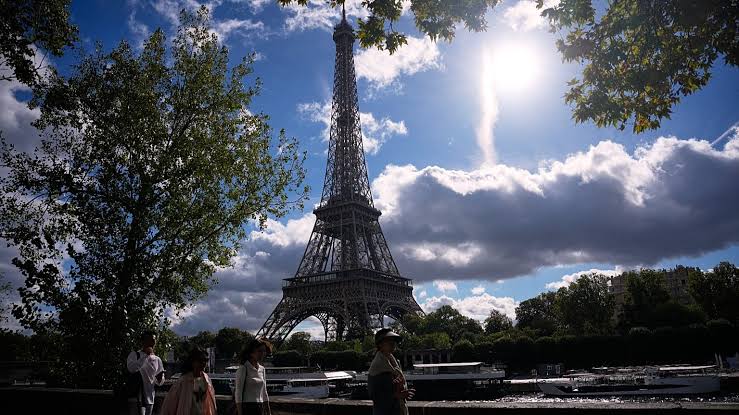
The Eiffel Tower reopened to visitors on Tuesday, September 8, 2026, after a one-day staff protest shut down the iconic Paris landmark over allegations that female employees were removed from their posts during a private visit by a Hindu religious delegation.
The dispute erupted after employees claimed that women working at the Eiffel Tower had been instructed to stay out of sight or were replaced by male colleagues during the visit by the Bochasanwasi Akshar Purushottam Swaminarayan Sanstha (BAPS), a global Hindu religious organisation.
The Eiffel Tower's operating company, SETE, acknowledged that the delegation had requested arrangements designed to limit interactions with women and admitted that such conditions should not have been accepted. (Reuters)
The controversy quickly escalated into a national debate over gender equality, religious accommodation and France's secular republican values.
Eiffel Tower Reopens After One-Day Closure
Visitors were allowed back into the Eiffel Tower shortly before 9:30 a.m. local time on Tuesday, with the monument announcing that it was open for business. The reopening followed a meeting between management and staff representatives on Monday after employees walked out in protest. (AFP)
The Eiffel Tower, one of the world's most recognisable tourist attractions, normally receives around seven million visitors annually, making even a short closure significant for Paris's tourism industry. (AP News)
The shutdown was not prompted by a technical problem or security threat but by a workplace dispute that quickly became a broader political controversy.
Why Did Eiffel Tower Staff Protest?
The dispute centred on a visit by a large Hindu religious delegation associated with BAPS.
According to the Eiffel Tower staff and the CGT trade union, female employees were given instructions that effectively prevented them from interacting with members of the visiting delegation.
Staff said some women were told to leave their workstations and move to other areas. At certain positions, they were allegedly replaced by male colleagues. Female employees were also reportedly instructed not to pass through particular areas while the delegation was present.
In a statement issued through the CGT, employees described the instructions as deeply inconsistent with principles of equality and non-discrimination.
The incident caused particular anger because the women were not being removed because of their individual conduct or professional duties, but allegedly because of their sex.
What Does BAPS Say?
BAPS has apologised following the controversy but disputed the suggestion that its delegation deliberately excluded women from the Eiffel Tower.
The organisation said the visit had been arranged in cooperation with the Eiffel Tower team because of the size of its delegation and the desire to avoid disruption to other visitors.
BAPS also said that, to its knowledge, nobody had been prevented from accessing the Eiffel Tower.
The organisation expressed regret for any "pain or inconvenience" caused by the arrangements. (RTE)
The explanation has not ended the controversy, however, because SETE itself acknowledged that the delegation had requested that interactions with women be limited.
The operating company's acceptance of those conditions became the focus of criticism from employees and French politicians.
Paris Launches Investigation
Paris authorities have announced an investigation into what happened.
Paris Mayor Emmanuel Grégoire said the concerns raised by Eiffel Tower workers were legitimate and promised that the circumstances surrounding the incident would be examined quickly.
SETE president and Paris Centre mayor Ariel Weil also said the conditions requested by the delegation were unacceptable and reaffirmed the Eiffel Tower's commitment to equality between women and men. (Reuters)
The investigation is expected to examine who authorised the arrangements, what instructions were given to female employees and whether management violated workplace rules or French principles concerning equality and non-discrimination.
For now, officials have not concluded that the BAPS organisation itself directly ordered individual Eiffel Tower employees to leave their positions. Much of the dispute concerns how the delegation's request was interpreted and implemented by the monument's management.
French Politicians Condemn the Incident
The controversy quickly moved from the workplace into French national politics.
Yaël Braun-Pivet, president of France's National Assembly, criticised the reported treatment of female workers, saying that welcoming visitors should not require France to abandon its values.
Other politicians also condemned the incident, stressing that women are entitled to participate fully in public life in France.
The debate has particular resonance in France, where égalité entre les femmes et les hommes, equality between women and men, is a central principle of the country's republican political culture.
The incident also touches on France's longstanding debate over the relationship between religion, public institutions and the secular state.
BAPS Temple Opening Adds Context
The Eiffel Tower visit occurred against the backdrop of the opening of a major BAPS Hindu temple in Bussy-Saint-Georges, east of Paris.
The temple was inaugurated during a period of heightened attention to India-France cultural and diplomatic relations.
BAPS have a substantial international presence and describes itself as a spiritual, volunteer-driven organisation within the Swaminarayan Hindu tradition.
The group's activities in France have attracted significant interest within the Indian diaspora and among French officials.
The controversy surrounding the Eiffel Tower visit therefore came at a particularly visible moment for the organisation.
A Debate About Religious Accommodation
At the heart of the dispute is a difficult question: How far should public venues go to accommodate the religious or cultural preferences of visiting groups?
Large international venues routinely make special arrangements for diplomatic delegations, religious groups, celebrities and other visitors. Such arrangements can include security measures, restricted access and changes to normal operating procedures.
But the Eiffel Tower dispute has raised the question of whether such accommodation can extend to treating employees differently according to their gender.
For the staff who staged the protest, the answer was clearly no.
Their position is that workplace equality cannot be suspended to satisfy the preferences of a visiting group.
Why the Dispute Matters Beyond Paris
The controversy has attracted international attention because it combines three sensitive issues: women's rights, religious freedom and cultural accommodation.
France has long presented itself as a country where religious belief is protected but public institutions operate according to secular principles.
The Eiffel Tower, meanwhile, is not simply a tourist attraction. It is one of France's most powerful international symbols.
Consequently, allegations that female employees were made "invisible" during a religious visit quickly became symbolic of a much larger argument about what France's values mean in practice.
Investigation Will Determine What Happened
With the Eiffel Tower now reopened, attention will turn to the investigation.
The key questions will include who made the decision to move female employees, whether the instructions originated from the visiting delegation or Eiffel Tower management, and whether employees were treated in accordance with French labour and equality principles.
The BAPS apology may help reduce tensions, but it is unlikely to end the debate until authorities establish exactly how the arrangements were made.
For Eiffel Tower employees, the reopening restores normal operations after an extraordinary day of industrial action.
For Paris authorities, however, the controversy serves as a reminder that international hospitality must be balanced against the principles governing workplaces and public life.
And for France, the dispute has become another test of how the country balances religious diversity with its commitment to gender equality and secular republican values.