Egypt, Turkey, Saudi Arabia, and Pakistan Lead Urgent Talks as U.S. Ground Invasion Looms
Egypt, Turkey, Saudi Arabia, and Pakistan launch urgent diplomatic talks to de-escalate the Iran war as the U.S. prepares ground operations. This analysis explores mediation efforts, geopolitical stakes, and global implications.
As tensions in the Middle East edge toward a dangerous tipping point, a new diplomatic front has emerged. While the United States intensifies military preparations, including the possibility of ground operations, regional powers are scrambling to prevent a full-scale war.
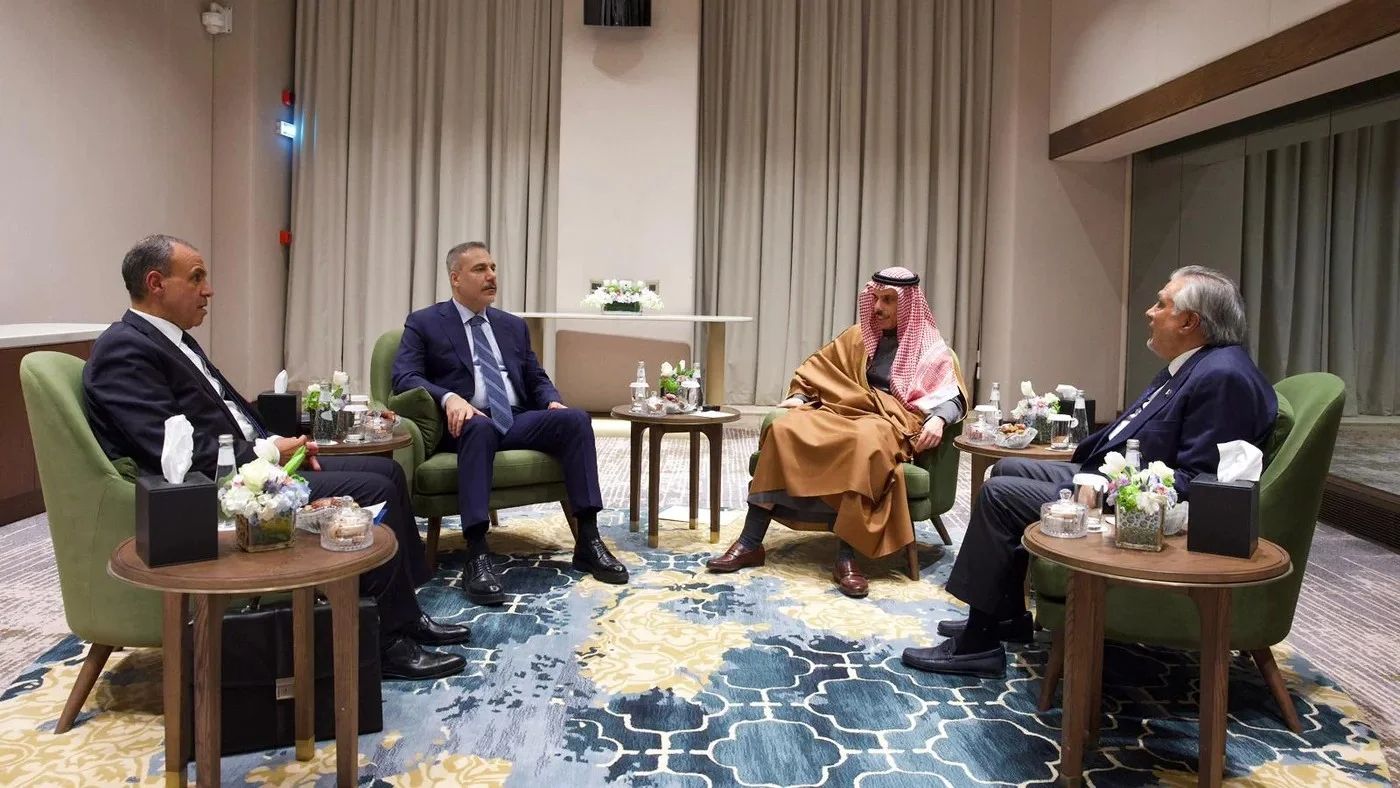
At the center of this diplomatic push are Pakistan, Egypt, Turkey, and Saudi Arabia, whose foreign ministers convened in Islamabad in late March 2026 in a high-stakes effort to de-escalate the conflict with Iran.
Their intervention comes at a critical moment: the war sparked by U.S. and Israeli strikes on Iran has already destabilized global energy markets, expanded across multiple fronts, and now risks escalating into direct ground warfare.
Islamabad Talks: A Coordinated Diplomatic Intervention
The Islamabad meeting represents one of the most coordinated regional diplomatic efforts since the conflict began. Foreign ministers from Egypt, Turkey, and Saudi Arabia joined Pakistani officials in talks aimed at opening channels between Iran and the United States and halting further escalation. (The Wall Street Journal)
Pakistan’s Foreign Minister, Ishaq Dar, confirmed that the goal was to facilitate “meaningful talks” between Washington and Tehran, signaling that both sides had shown tentative willingness to engage, albeit indirectly. (AP News)
This initiative builds on weeks of quiet diplomacy. Pakistan, uniquely positioned with working relationships with both Iran and the United States, has emerged as a central mediator. Its role reflects a broader shift toward regional problem-solving, as global powers struggle to contain the crisis.
Why These Countries Are Leading Effort
The involvement of Egypt, Turkey, Saudi Arabia, and Pakistan is not coincidental. Each country has strategic interests that make de-escalation imperative.
Egypt, which controls the Suez Canal - a critical artery for global trade, has a direct stake in preventing disruptions to maritime traffic. Any escalation in the Gulf or Red Sea threatens shipping routes vital to its economy.
Turkey, positioning itself as a regional power broker, has consistently advocated diplomatic solutions while maintaining relations with both Western and Middle Eastern actors. Turkish officials emphasized the urgency of protecting energy and trade routes as part of broader stabilization efforts. (Reuters)
Saudi Arabia, despite being a traditional rival of Iran, has adopted a more cautious approach. Having already faced Iranian-linked attacks in recent years, Riyadh is keen to avoid becoming a battlefield in a wider war.
Pakistan’s role is perhaps the most complex. It balances strategic ties with Saudi Arabia and the United States while maintaining a cooperative relationship with Iran. This delicate positioning allows Islamabad to act as a neutral facilitator, hosting talks and relaying proposals between opposing sides. (Wikipedia)
Together, these nations represent a coalition driven less by alliance politics and more by shared vulnerability to instability.
The Diplomatic Agenda: Ceasefire, Dialogue and Trade Security
At the core of the Islamabad talks are three key objectives:
- Establishing a ceasefire framework
- Facilitating direct or indirect U.S.-Iran dialogue
- Securing global energy and trade routes
One major focus has been the reopening and stabilization of the Strait of Hormuz, through which a significant portion of the world’s oil flows. Proposals discussed include coordinated maritime management and confidence-building measures to ensure the safe passage of ships.
There are also indications that mediators are working to reconcile differences between a U.S. 15-point proposal and Iran’s counteroffer. While Tehran has described the American plan as “one-sided,” it has not completely closed the door to negotiations. (The Times of India)
This suggests that diplomacy, though fragile, remains possible.
The Complication: U.S. Military Escalation
Despite these diplomatic efforts, developments on the ground threaten to undermine progress. The United States has deployed additional troops and military assets to the region, fueling speculation that ground operations may be imminent.
Iranian officials have reacted sharply, accusing Washington of pursuing a dual strategy- publicly supporting negotiations while secretly preparing for invasion.
This perception has created a credibility gap that complicates mediation efforts. For diplomacy to succeed, both sides must believe that negotiations are genuine. However, ongoing military escalation sends the opposite signal.
Iran’s Position: Negotiation Under Pressure Rejected
Iran’s stance remains firm: it will not negotiate under coercion.
Tehran has warned that any U.S. ground invasion would trigger severe retaliation, not only within Iran but across the region. At the same time, it has engaged with mediators, submitting proposals and allowing limited maritime concessions such as permitting Pakistani-flagged vessels to pass through the Strait of Hormuz.
This dual approach to resistance, combined with conditional openness, reflects a calculated strategy. Iran seeks to avoid appearing weak while keeping diplomatic options alive.
Regional Stakes: Avoiding a Wider War
The urgency of the Islamabad talks is underscored by the risk of regional spillovers. The conflict has already expanded, with Iran-aligned groups such as the Houthis entering the war and threatening key shipping routes.
If the United States proceeds with a ground invasion, the consequences could include:
- Multi-front conflict involving proxy forces
- Attacks on U.S. allies across the Middle East
- Severe disruptions to global oil and gas supplies
For countries like Egypt and Saudi Arabia, the stakes are existential. A prolonged war could destabilize their economies and security environments.
Can Diplomacy Succeed?
The success of the mediation effort depends on several factors.
First, there must be alignment among the mediating countries. While Egypt, Turkey, Saudi Arabia, and Pakistan share an interest in de-escalation, their strategic priorities differ. Maintaining a unified approach will be critical.
Second, the United States must balance military pressure with credible diplomatic engagement. Without this balance, mediation efforts risk being undermined.
Third, Iran must be willing to make concessions that address international concerns while preserving its sovereignty.
So far, progress has been limited but not insignificant. The mere fact that talks are ongoing and that Iran has shown some flexibility suggests that diplomacy still has a window of opportunity.
A Race Against Escalation
The Islamabad talks highlight a fundamental reality: diplomacy is racing against military escalation.
On one side, regional power are working to prevent war through dialogue and negotiation. On the other hand, military developments are accelerating, raising the risk of an irreversible conflict.
This tension defines the current moment. The coming days will likely determine whether the crisis moves toward de-escalation or deeper confrontation.
Conclusion: Regional Diplomacy Faces Its Biggest Test
The efforts of Egypt, Turkey, Saudi Arabia, and Pakistan represent a critical attempt to assert regional agency in a conflict with global implications.
Their success or failure will shape not only the trajectory of the Iran war but also the future of diplomacy in the Middle East.
As the United States edges closer to potential ground operations and Iran hardens its stance, the Islamabad initiative may be the last viable pathway to avoid a broader war.
The stakes could not be higher: energy security, regional stability, and global peace all hang in the balance.