Ebola Outbreak in Eastern DR Congo Leaves Dozens of Dead as Health Emergency Deepens
A new Ebola outbreak in eastern Democratic Republic of Congo has killed at least 65 people, with hundreds of suspected cases reported in Ituri province. Health authorities warn of possible cross-border spread.
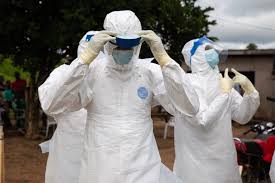
A new and rapidly escalating Ebola outbreak in the eastern Democratic Republic of Congo (DRC) has left at least 65 people dead, according to health authorities, triggering urgent regional and international response efforts as fears grow over wider spread across Central Africa.
The outbreak has been confirmed in Ituri province, a volatile and remote region bordering Uganda and South Sudan, where dense population movement, mining activity, and weak infrastructure are complicating containment efforts.
According to the Africa Centres for Disease Control and Prevention (Africa CDC), the outbreak has already recorded about 246 suspected cases, with laboratory testing confirming Ebola virus infection in several samples collected from affected health zones. (Xinhua News)
Outbreak Spreads in Mining and Border Regions
Health officials say most cases have been concentrated in the Mongwalu and Rwampara health zones, with additional suspected infections reported in Bunia, the provincial capital of Ituri.
The region is known for heavy mining activity, which attracts constant population movement, one of the key drivers of Ebola transmission. Public health experts warn that this mobility increases the risk of the virus spreading beyond national borders.
The Africa CDC has expressed concern that without rapid containment, the outbreak could extend into neighboring Uganda and South Sudan, both of which maintain high surveillance alerts along border regions. (AP News)
Death Toll and Infection Figures Rise
As of the latest update, at least 65 people have died, though only a portion of those deaths have been fully laboratory confirmed.
Officials note that out of 20 tested samples, 13 have returned positive for Ebola, suggesting active community transmission in several locations.
The outbreak is believed to be one of the fastest-growing Ebola flare-ups in the region in recent years, despite the DRC’s long experience in handling viral hemorrhagic diseases.
Emergency Response Activated
Africa CDC, alongside the World Health Organization (WHO), the DRC Ministry of Health, and regional partners, has launched an emergency response operation.
Teams have been deployed to strengthen surveillance and contact tracing, supporting safe burial practices, isolating infected patients, improving laboratory testing capacity, and coordinating cross-border monitoring systems.
Health officials say coordination is critical due to the region’s insecurity and limited healthcare infrastructure.
Dr. Jean Kaseya of Africa CDC described the outbreak as “serious but containable if response measures are rapidly scaled.”
Possible New Ebola Strain Under Investigation
Early laboratory analysis suggests the outbreak may not be linked to the commonly known Zaire strain of Ebola, which has been responsible for most previous outbreaks in the DRC.
Instead, preliminary sequencing indicates a potentially different viral strain, although full genetic confirmation is still underway. (Reuters)
If confirmed, this could complicate treatment efforts, as some existing vaccines and therapies are primarily designed for the Zaire strain.
Why Eastern Congo Is Highly Vulnerable
The Democratic Republic of Congo has experienced 16 previous Ebola outbreaks since 1976, making it the country with the highest frequency of outbreaks globally.
Experts say Eastern DRC remains particularly vulnerable due to ongoing armed conflict and insecurity, weak healthcare infrastructure, high population mobility, dense tropical forest ecosystems where the virus naturally circulates, and limited access to remote communities.
These factors make rapid response difficult, often allowing outbreaks to spread before containment measures take full effect.
Cross-Border Risk Raises Regional Alarm
Health authorities in Uganda and South Sudan have intensified screening at border crossings following confirmation of the outbreak.
Travel advisories and surveillance systems have been activated, with isolation units placed on standby in nearby regions.
Public health experts warn that even limited cross-border movement could accelerate regional spread if containment fails in Ituri province.
Ebola: A Deadly but Containable Disease
Ebola is a severe viral disease transmitted through direct contact with the bodily fluids of infected individuals or contaminated materials.
Symptoms include high fever, severe weakness, vomiting and diarrhea, and internal and external bleeding in advanced cases.
While the virus has a high fatality rate, rapid isolation, contact tracing, and vaccination campaigns have proven effective in past outbreaks.
The DRC previously contained several outbreaks using ring vaccination strategies and international support, though insecurity often delays intervention.
International Support Being Mobilized
Global partners, including the WHO and humanitarian organizations, are assisting with logistics, medical supplies, and emergency funding.
Vaccine stockpiles and treatment protocols are being prepared for deployment if confirmed transmission continues to rise.
The current response is considered a race against time, especially in remote areas where road access is limited and communication networks are weak.
Conclusion: Urgent Race to Contain a Growing Threat
The new Ebola outbreak in eastern DR Congo highlights the persistent vulnerability of the region to recurring epidemics.
While health authorities are experienced in managing Ebola, the combination of insecurity, mobility, and possible viral mutation presents a serious challenge.
For now, officials are urging calm while intensifying containment efforts, but the coming weeks will be critical in determining whether the outbreak can be stopped or expand beyond the region.