Donald Trump’s Arrest of Venezuelan Leader: A Dangerous Precedent and Affront on National Sovereignty
Explore how Donald Trump’s military-backed arrest of Venezuelan President Nicolás Maduro has triggered global backlash, legal controversy, and fears of eroding international norms on sovereignty and the rule of law, with reactions from world leaders and legal experts.
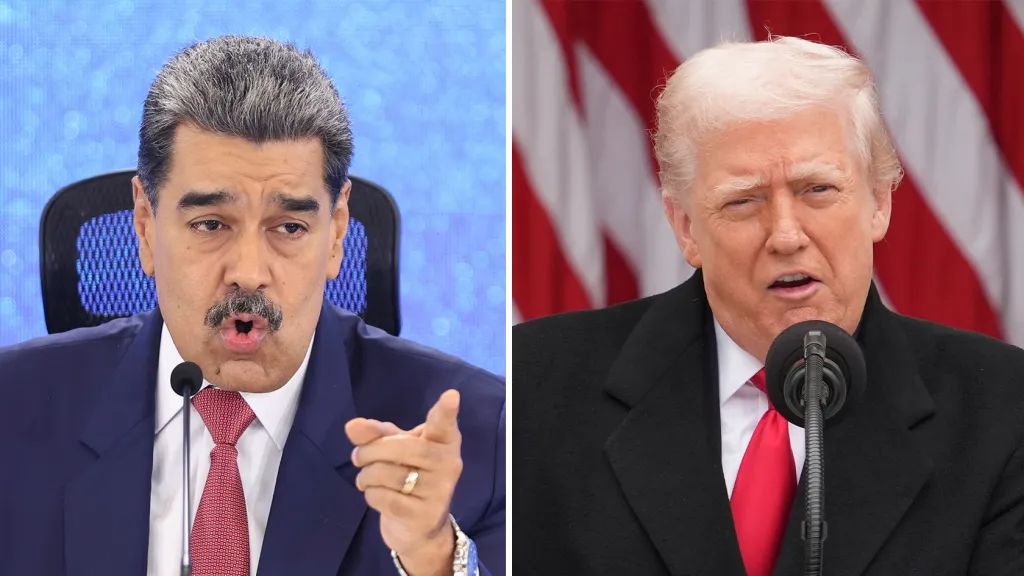
On January 3, 2026, the world woke to an extraordinary escalation in U.S.–Venezuela relations: U.S. forces carried out a military-backed operation that captured Venezuelan President Nicolás Maduro and transported him to the United States to face charges. Announced by President Donald Trump on social media, the bold move has been framed by the U.S. administration as a necessary enforcement of American law. But critics worldwide see it as a dangerous breach of international law, an affront to Venezuela’s sovereignty, and a precedent that could reshape global norms on state autonomy and intervention. (EFE Noticias)
A controversial military-law enforcement hybrid
Official U.S. announcements described the raid as a “large-scale strike” conducted in conjunction with U.S. law enforcement, asserting that Maduro and his wife were “captured and flown out of the country.” Trump’s office claims Maduro faces narcotics and terrorism-related charges in U.S. courts, justifying the operation as part of long-standing efforts to combat drug trafficking and criminal networks linked to the government in Caracas.
But the method by which Maduro was seized - involving military strikes inside Venezuelan territory without the host government’s consent - triggered immediate international alarm. According to widely cited legal analysis, such an act risks violating Article 2(4) of the United Nations Charter, which prohibits the use of force against the territorial integrity or political independence of any state absent Security Council authorization or clear self-defense. (ieu-monitoring.com)
Global outcry: sovereignty and international norms
World leaders and regional blocs condemned the operation as an illegal intervention that undermines national sovereignty. Brazil’s President Luiz Inácio Lula da Silva reportedly called the U.S. military action “an unacceptable line crossing” that threatens the foundations of the international system. Colombia’s President Gustavo Petro labeled it an “assault on the sovereignty of Latin America,” warning that it could spark regional instability. Nations including China, Russia, and members of the Caribbean Community (CARICOM) echoed concerns that the U.S. move violated core principles of international law and established norms governing state relations. (The Guardian)
Many critics, particularly from the Global South, have likened the intervention to historical patterns of powerful nations imposing their will on smaller states, breeding distrust and resentment that could reverberate beyond U.S.–Latin America relations. (Forbes)
Legal controversy surrounds executive authority
Domestically in the United States, questions swirl over the legal basis for Trump’s decision. The White House reportedly relied on a secret legal memo arguing that the president has inherent constitutional authority to order such missions if deemed in the national interest, even without explicit congressional authorization or U.N. backing. This memo referenced past precedents like the 1989 capture of Panamanian leader Manuel Noriega. Critics, including legal scholars, argue that invoking “inherent authority” to justify military action on foreign soil stretches presidential power beyond constitutional and international law constraints. (The Washington Post)
The matter of diplomatic immunity further complicates the picture. Sitting heads of state are generally protected from foreign prosecution or arrest by virtue of customary international law and treaties like the Vienna Convention, unless the host state consents or immunity is explicitly waived - neither of which occurred in this case.
Impact on Venezuelans and regional politics
Within Venezuela, reactions are deeply polarized. Government officials and supporters of Maduro have denounced the operation as an act of aggression, with state broadcasts calling for resistance and asserting that Maduro remains the legitimate leader. Vice President Delcy Rodríguez - declared acting president under Venezuelan constitutional provisions - has rejected U.S. claims and called for Maduro’s immediate release. (WSLS)
For ordinary Venezuelans, the event has generated fear and uncertainty. Reports indicate power outages, civilian casualties amid the strikes, and a tense security environment following the U.S. intervention - factors that heighten concern about everyday survival in an already fragile context.
Strategic motivations: law enforcement or resource imperatives?
Observers note that President Trump has repeatedly tied his foreign policy toward Venezuela to allegations of narco-terrorism, drug trafficking, and threats to U.S. security. However, independent fact-checking highlights that many claims linking Maduro directly to organized crime networks - such as Venezuelan prisons’ Tren de Aragua - are contested or lack robust evidence. (Al Jazeera)
At the same time, the U.S. interest in Venezuelan oil - among the largest reserves in the world - adds another layer to the geopolitical calculus. Trump’s own statements suggesting U.S. involvement in running Venezuela’s oil sector post-capture have intensified allegations that strategic economic interests are interwoven with security narratives. (Malay Mail)
Dangerous precedents and future risks
Leading analysts warn that this intervention sets a dangerous precedent. If powerful states can unilaterally decide to remove foreign leaders under the guise of law enforcement or security, the risk emerges that weaker states may become vulnerable to similar actions by others - eroding the normative barriers that underpin global stability. Advocates of sovereign equality argue that such actions could fuel a cycle of military unilateralism, undermining multilateral dispute resolution mechanisms and the U.N. framework that has governed interstate relations since World War II.
The long-term impact of Trump’s Venezuelan operation - legally, politically, and geopolitically - is likely to occupy diplomatic and academic debate for years. Whether it ends up being viewed as a bold step against perceived criminal governance or a reckless affront to foundational international norms, its reverberations will be felt well beyond the immediate headlines.