Dick Cheney’s Death Marks the End of America’s Most Polarizing Era of Power
Former U.S. Vice President Dick Cheney dies at 84, leaving behind a deeply debated legacy that reshaped global politics, security strategy, and America’s role in the world.
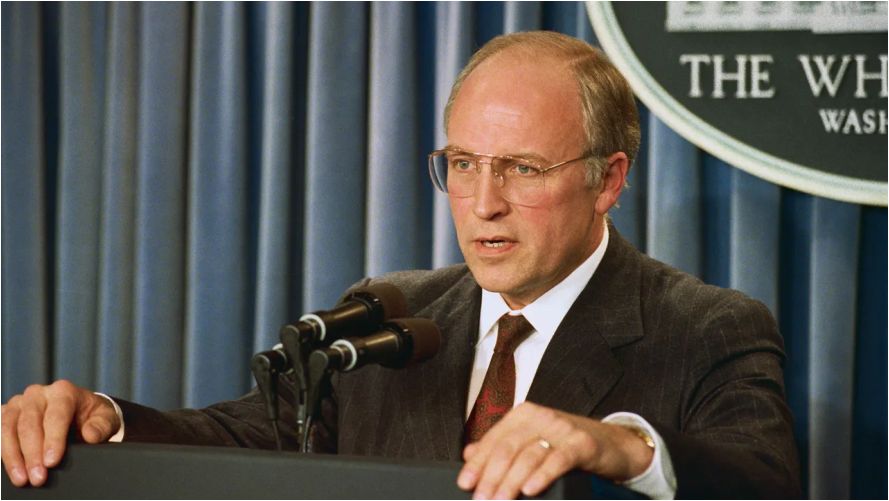
Former U.S. Vice President Dick Cheney, one of the most influential and divisive figures in modern American politics, has died at 84 after complications related to long-term heart disease. The news was confirmed by his family, according to reports from major U.S. media outlets including NPR and The Washington Post. - https://www.npr.org, https://www.washingtonpost.com. With his passing comes a renewed global debate over the legacy of a man who shaped the U.S. national-security state after the September 11 attacks, establishing policies that redefined counterterrorism and America’s posture toward the world.
Background:
Cheney served under President George W. Bush from 2001 to 2009, though many analysts frequently described him as the most powerful vice president in history. His influence extended across the Pentagon, CIA, and global war strategy, with decisions that remain deeply consequential today. - 9/11 Commission Report – https://govinfo.gov/app/collection/911
War on Terror - A Legacy of Power and Controversy
Following 9/11, Cheney became the face of an aggressive doctrine of pre-emptive warfare, culminating in the 2003 Iraq invasion - a conflict launched on claims that Saddam Hussein possessed weapons of mass destruction. - CIA Iraq WMD Report –https://www.cia.gov/library/reports/general-reports-1/iraq_wmd_2004/
The war led to the toppling of Saddam’s regime but destabilized the region and paved the way for the rise of ISIS. - Council on Foreign Relations – https://www.cfr.org/timeline/islamic-state
Cheney also championed controversial enhanced interrogation techniques - widely classified by international law experts as torture - at CIA black sites. - U.S. Senate Torture Report – https://www.intelligence.senate.gov/publications
Civil-liberties advocates argue that programs like warrantless domestic surveillance, justified under Cheney’s authority, set dangerous precedents that still influence U.S. intelligence powers today. - ACLU on NSA Surveillance – https://www.aclu.org/cases/nsa
Global Shockwaves - From Washington to Africa
Cheney’s war-centred foreign policy deeply expanded U.S. military presence abroad, including in Africa via AFRICOM operations - especially counter-terrorism missions against Boko Haram and Al-Shabaab. U.S. Africa Command – https://www.africom.mil/about-the-command
However, many African analysts argue that such interventions were driven more by strategic U.S. interests than sustainable peacebuilding. The Nigerian perception is particularly complex: while U.S. counter-terror support helped challenge insurgent threats, the war on terror also influenced oil markets, global security narratives, and diaspora experiences abroad.
To Nigerians in the United States - especially Muslim and African immigrants - Cheney-era policies formed a backdrop for tightened immigration and profiling concerns during the 2000s. - Migration Policy Institute – https://www.migrationpolicy.org/
The End of an Era for U.S. Conservatism
Even in his final years, Cheney remained politically vocal, notably breaking with Donald Trump over the January 6 attack on the U.S. Capitol. - U.S. House Jan. 6 Committee Report – https://january6th.house.gov/
His daughter, former congresswoman Liz Cheney, became one of Trump’s most outspoken Republican critics - widening a rift within the conservative movement between traditional national-security Republicans and Trump-aligned populists. Trump’s refusal to issue a formal tribute after Cheney’s death reflects that divide - a symbolic moment marking the shift of power in the GOP.
A Legacy Still on Trial
Cheney leaves behind sharply divided public opinion. While supporters hail him as the backbone of U.S. national defense, critics denounce him as architect of unnecessary war and democratic overreach
Both perspectives agree on one fact: Cheney’s influence shaped the 21st-century world more than most elected leaders ever will.
For Nigeria and Africa, his death revives conversations about how global powers project force on the continent, the long-term effects of the war on terror, and how African nations can assert greater strategic independence
What the World Learns Moving Forward
Cheney’s passing offers a moment to reflect on whether fear-driven policies strengthen nations - or weaken the values they claim to protect. As the United States and its partners increasingly confront new power dynamics with China, Russia, AI-driven warfare, and cyber-terrorism, the question becomes: Will the world continue with Cheney-era force as first response, or choose diplomacy and international cooperation as the new measure of strength?
In Nigeria, where terrorism still threatens communities in the North and civic unity remains fragile, his legacy reminds policymakers that military force alone cannot secure peace. Solutions must include justice, inclusion, economic development, and respect for human rights.
Dick Cheney’s story is far from universally admired - but universally impactful. His death brings closure to a man’s life, but not to the debates he leaves behind. Those battles - ideological, moral, geopolitical - remain active across continents.
Now, the world must decide whether Cheney’s lessons are warnings… or instructions.