Democrats Win Alaska Senate Race Two Weeks After Midterms, Secure 56–44 Majority
Democrats have won Alaska's closely watched US Senate race after two weeks of vote counting, with Mary Peltola defeating Republican incumbent Dan Sullivan to give the party a 56–44 majority in the Senate.
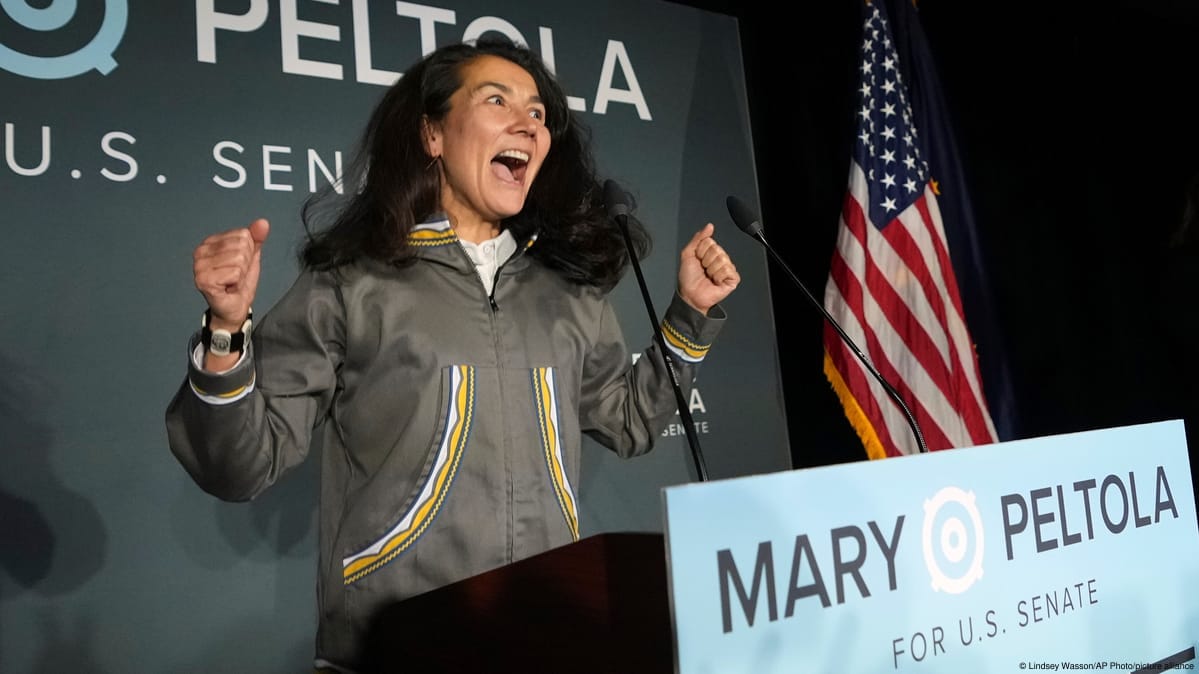
The Democratic Party has secured victory in Alaska's closely watched United States Senate race, nearly two weeks after the November 3 midterm elections, following the defeat of Republican incumbent Senator Dan Sullivan by Democratic challenger Mary Peltola.
Peltola's victory, called by major US media organisations on Tuesday, November 17, gives Democrats another Republican-held Senate seat and strengthens their incoming majority to 56 seats against the Republicans' 44.
The Alaska contest was the final outstanding Senate race from the November midterm elections, with its outcome delayed by the state's unusual election procedures, absentee ballots and controversies surrounding a second candidate bearing the same name as the Republican incumbent.
According to unofficial results released by the Alaska Division of Elections, with 401 of 403 precincts reporting, Peltola secured approximately 50.12 per cent of the vote, compared with Sullivan's 45.79 per cent.
The Associated Press called the race for Peltola after determining that the Republican senator no longer had a viable path to re-election.
Her victory represents a significant political development in a state that has traditionally supported Republican candidates in federal elections.
It also marks the first time a Democrat has won an Alaska Senate election since 2008.
Peltola Defeats Republican Incumbent
Peltola, a former congresswoman, defeated Sullivan, who had represented Alaska in the US Senate since 2015.
Following the announcement of her victory, the Democratic candidate expressed appreciation to voters, promising to prioritise their interests and address the economic challenges affecting communities across the state.
"We did it! Alaskans have voted for change, and I'm so honoured to be your next US senator," Peltola said in a victory message.
She pledged to fight corruption and corporate greed, reduce living costs, lower fuel prices and support the construction of affordable homes.
The 53-year-old politician also highlighted the difficulties experienced by residents in remote Alaskan communities, where the high cost of transportation, food, electricity and heating has become a major concern.
During her campaign, Peltola emphasised affordability, healthcare costs, family welfare and the protection of Alaska's fishing industry.
Her campaign slogan, 'Fish, Family, Freedom', reflected her attempt to connect with voters across the state's diverse communities, particularly rural residents who depend heavily on fishing and other traditional economic activities.
Peltola previously served in the US House of Representatives, winning a special election in 2022 before losing her re-election campaign in 2024.
With her latest victory, she will become the first Alaska Native person to serve in the United States Senate.
Why Did Counting Take Two Weeks?
The delay in determining the winner was largely connected to Alaska's geographical challenges and its election administration procedures.
Unlike several other American states that rely on county-level election authorities, Alaska operates a statewide election administration system.
Its vast territory, sparsely populated communities and difficult transportation networks make the collection and processing of ballots particularly challenging.
Additionally, Alaska's election laws allow eligible domestic absentee ballots postmarked by Election Day to arrive within 10 days after the election, while overseas ballots can be received within 15 days.
Consequently, election officials continued processing ballots long after voters had cast their votes on November 3.
The state also uses a ranked-choice voting system, under which voters can rank candidates according to their preferences rather than selecting only one candidate.
Under the system, if no candidate receives more than 50 per cent of first-choice votes, the candidate with the fewest votes is eliminated, and ballots are redistributed according to voters' next preferences until someone secures a majority.
However, Peltola's performance exceeded the 50 per cent threshold, meaning the additional ranked-choice tabulation was unnecessary.
According to Alaska Public Media, approximately 99 per cent of the votes had been counted when the Associated Press declared Peltola the winner.
Controversy Over Two Candidates Named Dan Sullivan
The Senate contest was also surrounded by controversy involving another candidate named Dan J. Sullivan, whose name closely resembled that of the Republican incumbent, Dan S. Sullivan.
Republicans accused Peltola's campaign of helping recruit the independent candidate to confuse voters and potentially divert votes away from the sitting senator.
The allegations became a major issue during the final stages of the campaign, with Sullivan's supporters questioning whether the presence of the second candidate could affect the outcome.
Peltola denied having any knowledge of or involvement in the alleged recruitment arrangement.
The controversy attracted the attention of the US Department of Justice, which filed a lawsuit seeking to prevent certification of the election results if Sullivan lost, pending an investigation into possible voter confusion.
However, a federal judge dismissed the department's request on November 1, and the Justice Department subsequently appealed the decision.
The department also initiated a criminal investigation into allegations surrounding the recruitment of the second Sullivan.
Alaska Governor Mike Dunleavy ordered a separate state investigation into the controversy.
Despite the allegations, the election results showed that Peltola's vote total exceeded the combined votes received by the incumbent Sullivan, the independent Dan J. Sullivan and another Republican candidate, Gerald Heikes.
Alaska Public Media reported that Peltola had approximately 1,600 more votes than the combined total of the other three candidates in the latest count.
The investigations remain separate from the determination of the election result, and the allegations against Peltola's campaign have not established wrongdoing.
Democrats Secure 56 Senate Seats
Peltola's victory completes a major Democratic breakthrough in the 2026 midterm elections.
With Alaska's result, Democrats are projected to enter the next Congress with 56 Senate seats, while Republicans will hold 44.
The party flipped nine Republican-held Senate seats during the elections, expanding its control of the upper chamber.
The result also represents the Democrats' strongest Senate performance in a midterm election since 1958, according to reports.
Senate Democratic leader Chuck Schumer welcomed the outcome, describing the incoming majority as an opportunity for the party to pursue its legislative priorities.
He said Democrats would focus on policies aimed at reducing living costs and improving the lives of Americans.
The new Congress is scheduled to begin on January 3, 2027, when newly elected senators will be sworn into office.
Peltola's election is particularly historic because she will become the first Alaska Native senator, adding a new dimension to the representation of Indigenous communities in the US Congress.
What Peltola's Victory Means for American Politics
The outcome carries significant implications for the balance of political power in Washington.
With 56 seats, Democrats will have a substantial majority in the Senate, giving them greater influence over legislative proceedings, committee leadership and the chamber's political agenda.
The result also comes after a midterm election that saw Democrats make gains in several states traditionally associated with Republican electoral strength.
Alaska's political landscape has historically been competitive in certain statewide contests despite its support for Republican presidential candidates.
President Donald Trump carried the state by approximately 13 percentage points in the 2024 presidential election, making Peltola's Senate victory particularly notable.
Nevertheless, her campaign focused heavily on local economic concerns, rural representation and Alaska-specific issues rather than simply reflecting national party divisions.
With the Senate contest now called, attention will turn to the completion of certification procedures and the legal investigations surrounding the campaign controversy.
For Democrats, Peltola's victory completes their Senate gains from the midterms and establishes a 56 - 44 majority ahead of the new congressional session.
For Republicans, Sullivan's defeat marks the loss of another Senate seat in an election that has significantly altered the balance of power in Washington.