Defence Minister Rates Tinubu Government 70% on Security Performance, Citing Gains in Counter-Insurgency Efforts
Nigeria’s Defence Minister has rated President Bola Tinubu’s administration 70% on national security performance, citing improved military coordination, reduced terror attacks in some regions, and increased defence funding despite ongoing challenges.
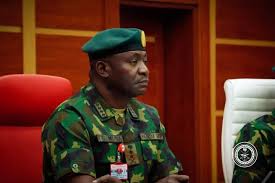
Nigeria’s Minister of Defence, General Christopher Gwabin Musa, has rated the security performance of President Bola Ahmed Tinubu’s administration at 70%, saying significant progress has been recorded in the fight against terrorism, banditry, and other violent crimes across the country.
The Defence Minister made the assessment while speaking at a recent security briefing in Abuja, where he reviewed ongoing military operations and the government’s broader national security strategy.
According to him, while Nigeria still faces serious security challenges, particularly in parts of the North-East, North-West, and North-Central regions, the Tinubu administration has made notable improvements in coordination, intelligence sharing, and military responsiveness.
“We Are Not Where We Used to Be” - Defence Minister
General Musa explained that the security architecture under President Tinubu has undergone reforms that have strengthened inter-agency collaboration among the Armed Forces, the Department of State Services (DSS), the Nigeria Police Force, and other security agencies.
He noted that these improvements have led to more coordinated operations against insurgents, kidnappers, and armed criminal groups.
“We are not where we used to be. If you look at the level of coordination today compared to previous years, there is a clear improvement,” the minister said.
He added that although insecurity has not been eliminated, the overall trajectory shows “steady progress,” which he estimated at 70% effectiveness in current security management efforts.
The Defence Minister further stated that the Armed Forces are now better equipped and more motivated due to increased government investment in defence infrastructure, equipment procurement, and personnel welfare.
Increased Defence Spending and Military Modernization
Under President Tinubu’s administration, defence spending has increased significantly as part of efforts to modernize the military and enhance operational capabilities.
Reports from official government statements show that the administration has prioritized the procurement of armored vehicles, surveillance technology, drones, and improved logistics for frontline troops.
Security analysts say these investments have contributed to improved mobility and tactical response in ongoing military operations against insurgent groups and criminal networks.
General Musa stressed that modern warfare requires not only manpower but also advanced technology and intelligence-driven operations.
He noted that the Nigerian military is gradually transitioning toward a more intelligence-led security framework, which is improving efficiency in targeted operations.
Gains in Counter-Terrorism Operations
The Defence Minister highlighted recent military successes in several theatres of operation, including counter-terrorism operations in the North-East and anti-banditry campaigns in the North-West.
He said troops have recorded significant gains in dismantling terrorist cells, rescuing abducted civilians, and recovering illegal weapons.
According to him, the Armed Forces have also intensified joint operations with regional and international partners to combat cross-border terrorism and arms trafficking.
Security cooperation with neighboring countries under the Multinational Joint Task Force (MNJTF) has also been strengthened, leading to coordinated strikes against insurgent groups operating around the Lake Chad Basin.
Persistent Challenges Despite Progress
Despite the positive assessment, General Musa acknowledged that Nigeria still faces major security threats, including bandit attacks, kidnapping for ransom, communal conflicts, and terrorism in remote regions.
He warned that criminal groups are adapting their tactics, making it necessary for security agencies to continuously evolve their strategies.
“Insecurity is dynamic. As we improve our operations, they also try to change their methods,” he said.
He emphasized that while progress has been made, achieving full stability will require sustained effort, long-term investment, and stronger community engagement.
Public Support and Intelligence Gathering
The Defence Minister also called on Nigerians to play a more active role in supporting security operations by providing timely intelligence to security agencies.
He said community cooperation remains essential in identifying criminal hideouts, tracking suspicious movements, and preventing attacks before they occur.
According to him, no military operation can succeed without the support of civilians, particularly in rural and hard-to-reach areas where insurgents often operate.
“Security is not only about the military. It is about the people. Citizens must support security agencies with credible information,” he said.
Government’s Broader Security Strategy
President Tinubu’s administration has repeatedly stated that national security remains a top priority under its “Renewed Hope Agenda.”
Recent policy directions have focused on restructuring security operations, improving intelligence coordination, and strengthening state and community policing initiatives.
The federal government has also continued to advocate for reforms that would allow more decentralized security responses to address localized threats more effectively.
Security experts note that Nigeria’s defence strategy is gradually shifting from reactive operations to preventive intelligence-led interventions. (Vanguard)
Reactions and Analysis
The 70% rating has generated mixed reactions among security analysts and members of the public.
Some observers argue that while improvements are visible in certain regions, insecurity remains severe in others, making the rating subjective.
Others, however, say the figure reflects relative progress compared to previous administrations, particularly in terms of improved coordination and military responsiveness.
Political analysts also note that such assessments are often used to measure policy direction rather than absolute security outcomes. (Punchng)
Conclusion
While Nigeria continues to grapple with complex and evolving security challenges, the Defence Minister’s 70% rating suggests that the Tinubu administration believes it is on a path of measurable progress.
However, experts stress that sustaining and improving these gains will require consistent investment, stronger governance, and deeper collaboration between security agencies and the public.
As the country moves forward, the balance between optimism and realism remains central to evaluating Nigeria’s ongoing battle against insecurity.