Death of Cameroon’s Senate Titan at 91: What Marcel Niat Njifenji’s Passing Reveals About Power, Age, and Politics in Africa
Cameroon mourns former Senate President Marcel Niat Njifenji, who died at 91. This in-depth analysis explores the implications of his death and Africa’s ongoing debate over aging leadership and political longevity.
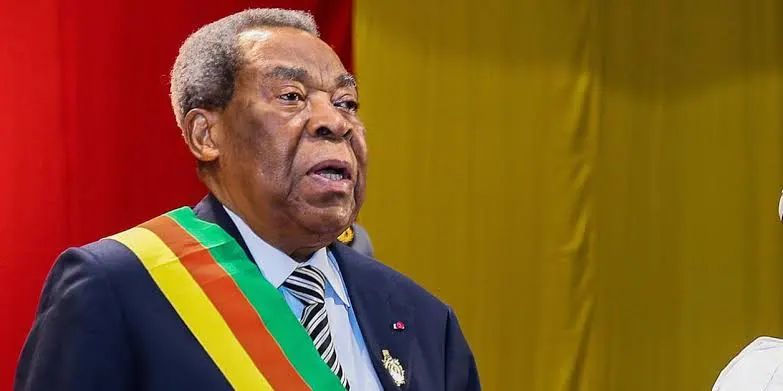
On April 11, 2026, Marcel Niat Njifenji, one of Cameroon’s most enduring political figures, passed away at the age of 91. His death, confirmed by authorities in Yaoundé, marked the end of a political era that spanned decades and symbolized a broader phenomenon across Africa: the dominance of long-serving, elderly leaders in positions of power. (Journal du Cameroun)
Njifenji’s passing has triggered not just national mourning but also a renewed conversation about leadership, succession, and generational change across the continent.
April 11, 2026 - The Passing of a Political Institution
Njifenji died in a hospital in Yaoundé after a prolonged illness, just weeks after stepping down as Senate President - a role he had held since the creation of the Senate in 2013. (Journal du Cameroun)
As the pioneer head of Cameroon’s upper legislative chamber, he was not just a political figure but a constitutional pillar. The Senate President holds a critical role in Cameroon’s governance structure, serving as the constitutional successor to the presidency in the event of a vacancy. (CameroonOnline.org)
His death therefore carries institutional weight beyond personal legacy - it reshapes the country’s power dynamics at a sensitive political moment.
A Career Defined by Longevity and Loyalty
Born in 1934, Njifenji’s career stretched across multiple eras of Cameroon’s political evolution. Before entering politics, he built a reputation as an engineer and technocrat, later rising to head the national electricity company and serving in ministerial roles.
He eventually became a key figure in the ruling Cameroon People’s Democratic Movement (CPDM), aligning closely with the long-standing presidency of Paul Biya.
For over a decade, from 2013 to 2026, Njifenji presided over the Senate, becoming one of the most powerful men in the country - second only to the president in the line of succession. (Wikipedia)
His longevity in public office reflects a broader trend in African politics, where experience and loyalty often outweigh generational renewal.
Cameroon’s Political Context: Aging Leadership at the Top
Njifenji’s death comes at a time when Cameroon is already grappling with questions about leadership succession. President Paul Biya, at over 90 years old, remains one of the world’s oldest serving heads of state.
Recent constitutional changes - including the reintroduction of a vice presidency - have been widely interpreted as attempts to manage succession risks in a system heavily reliant on aging leadership. (Reuters)
In this context, Njifenji’s passing is more than a symbolic highlight of the fragility of a political structure dominated by elderly figures whose eventual exit could trigger instability.
National Reaction: Mourning a “Builder of the State”
Across Cameroon, tributes have poured in from political leaders, institutions, and citizens. Njifenji is widely remembered as a “builder” of modern Cameroon - a technocrat who helped shape infrastructure and governance systems.
Government officials praised his loyalty, discretion, and service, while political allies emphasized his role in stabilizing the Senate during its formative years. (CameroonOnline.org)
Yet beneath the tributes lies a quieter, more critical conversation about whether such long tenures in office have helped or hindered democratic development.
Africa’s Broader Debate: The Politics of Age
Njifenji’s death feeds into a larger continental debate about aging leadership. Across Africa, several countries continue to be led or influenced by politicians well into their 70s, 80s, and even 90s.
Critics argue that this trend stifles innovation, limits youth participation, and slows institutional reform. Supporters, however, contend that experience and continuity are essential in politically fragile environments.
In Cameroon’s case, the dominance of older leaders has created a generational disconnect. With an overwhelmingly young population, many citizens feel excluded from decision-making processes dominated by a much older political elite.
The Implications: Power Vacuum or Smooth Transition?
One immediate implication of Njifenji’s death is the consolidation of power under his successor, Aboubakary Abdoulaye, who assumed office in March 2026.
While the transition appears orderly on the surface, the broader question is whether Cameroon’s institutions are resilient enough to handle future leadership changes - particularly at the presidential level.
The Senate’s role as a constitutional backstop makes its leadership crucial in times of crisis. Njifenji’s absence removes a seasoned figure who had long been part of the country’s inner political circle.
Youth, Reform, and the Future of Governance
For many young Africans, Njifenji’s death is a moment of reflection rather than just mourning. It raises fundamental questions about the future of governance on the continent:
- When should leaders step aside?
- How can political systems encourage generational renewal?
- What balance should be struck between experience and innovation?
These questions are particularly urgent in countries like Cameroon, where political continuity has often come at the expense of political diversity.
A Symbol of an Era Ending
In many ways, Njifenji represented a generation of African leaders who came of age in the post-independence era and remained influential for decades. His career mirrored the evolution of Cameroon itself - from a developing state to a complex political system grappling with modern challenges.
His death, therefore, is not just the loss of an individual but the gradual fading of a political generation.
Continental Perspective: Stability vs Renewal
Across Africa, reactions to Njifenji’s passing reflect a dual reality. On one hand, there is respect for his experience and contributions. On the other hand, there is growing impatience for change.
Countries that have embraced younger leadership or term limits often point to improved governance outcomes. Meanwhile, nations with entrenched political elites continue to face criticism over democratic stagnation.
Njifenji’s death brings this contrast into sharp focus, serving as a reminder that leadership is not just about longevity but also about adaptability.
Conclusion: A Moment of Reflection for Cameroon and Africa
The death of Marcel Niat Njifenji at 91 marks the end of a significant chapter in Cameroon’s political history. It is a moment of mourning, but also one of introspection.
For Cameroon, it raises immediate questions about institutional stability and succession. For Africa, it reignites a broader debate about the role of age in leadership and the need for generational transition.
As the continent continues to evolve, the challenge will be to honor the legacy of leaders like Njifenji while creating space for new voices and ideas. The future of African governance may well depend on how that balance is struck.