Deadliest Since Ceasefire: Israeli Strikes in Gaza Kill at Least 30 as Truce Shows Fragile Fault Lines
Israeli airstrikes in Gaza kill at least 30 Palestinians, including women and children, in one of the highest death tolls since the October ceasefire. We explore the events, competing claims, impacts on ceasefire diplomacy, and humanitarian concerns.
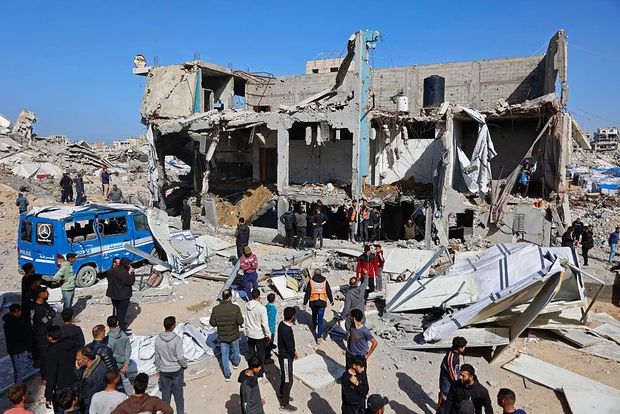
A wave of Israeli airstrikes across the Gaza Strip on Saturday killed at least 30 Palestinians, including women and children, in one of the deadliest incidents since an October ceasefire aimed at ending hostilities between Israel and Hamas took effect. Hospital officials reported the toll, which has intensified fears that the fragile truce may be unraveling. (AP News)
The strikes - which hit locations from Gaza City to Khan Younis - came just a day after Israel accused Hamas of violating the ceasefire agreement, leading to a rapid escalation. (CBS News)
What Happened: Multiple Sites Struck
According to Gaza hospital officials, at least 30 people were killed across several strike sites: an apartment building in Gaza City, a tent camp in Khan Younis, and a police station in Gaza City. Among the dead were children and civilians swept up in the deadly blows. (Sky News)
• Tent camp strike in Khan Younis sparked a fire that killed seven family members - including a father, his three children, and three grandchildren, officials told Nasser Hospital.
• Apartment building strike in Gaza City reportedly killed a mother, three children, and a relative, according to Shifa Hospital.
• The police station attack in Gaza City killed at least 14 people, including policewomen, civilians, and inmates held at the facility.
One additional strike was reported in the eastern part of the Jabaliya refugee camp, where a man was killed, hospital officials said.
Israel’s Account: Response to Alleged Ceasefire Violations
The Israel Defense Forces (IDF) stated that the strikes targeted Hamas and Islamic Jihad militants whom it accused of breaching the ceasefire the day before. According to Israeli officials, eight armed militants emerged from an underground tunnel in an area controlled by Israel near Rafah, prompting a response.
The IDF said it had struck four commanders and additional operatives from the groups, as well as weapons sites across the Gaza Strip. It repeated longstanding claims that Hamas embeds military infrastructure within civilian areas, exploiting the Palestinian population.
Ceasefire in Jeopardy?
The October ceasefire, brokered with international mediation, particularly involving the United States, Egypt, and Qatar, had brought a reduction in large-scale fighting, allowed limited humanitarian access, and moved toward a phased reopening of borders, including the Rafah crossing with Egypt.
Saturday’s strikes occurred just one day before the planned partial reopening of the Rafah crossing, a critical conduit for medical evacuations, humanitarian supplies, and people needing urgent treatment outside Gaza.
Following the attack, Hamas condemned the strikes as “a renewed flagrant violation” of the ceasefire and urged the United States and mediators to push Israel to halt its military actions. (United News Bangladesh)
Humanitarian Impact
The latest burst of violence underlines the vulnerability of civilians in Gaza, where years of conflict have devastated infrastructure, especially healthcare. Most hospitals have been damaged or destroyed, and the territory’s health ministry - run by the Hamas-led government - reports that since the ceasefire began on October 10, 2025, more than 500 Palestinians have been killed by Israeli fire.
International humanitarian groups have often warned that even limited fighting threatens the lives of civilians and undermines fragile relief efforts. The potential reopening of Rafah - the main gateway for Gazans to receive treatment outside the enclave - had offered tentative hope that medical needs could be addressed after prolonged shortages.
Regional and International Reactions
Egypt and Qatar, key mediators in the ceasefire talks, condemned the airstrikes, arguing that such attacks risk derailing ongoing diplomatic efforts and endanger civilians already suffering under dire conditions. Their statements reflect broader concern among regional actors that progress toward lasting calm is fragile. (The Business Standard)
The strikes also highlight the complex nature of the current peace framework, which envisages second-phase arrangements including demilitarization of Gaza and a new governing authority, steps that both Israel and Hamas have struggled to implement.
The Larger Context: A Ceasefire Under Strain
Saturday’s incident stands out because it is one of the highest single-day death tolls under the ceasefire, raising questions about how robust the truce really is. Analysts say that both sides still accuse the other of violations, and that the ceasefire - though successful in reducing the intensity of overall warfare - lacks strong enforcement mechanisms to prevent such flare-ups.
If such strikes continue, it may become increasingly difficult to sustain diplomatic momentum toward more durable peace talks, including negotiations over prisoners, security guarantees, and political arrangements in Gaza.
Meanwhile, Gazans are left to mourn amid continued uncertainty. One relative at the Shifa Hospital described the strike that killed a family: “The three girls are gone… they were asleep,” highlighting how quickly life can be shattered even under a ceasefire agreement.
Looking Ahead
The Rafah crossing’s impending partial reopening remains a key test of whether truce mechanisms can coexist with ongoing security operations. If border access expands while military actions persist, the ceasefire’s credibility and the prospects for progressing toward long-term stability may be undermined.
For now, the latest strikes are a stark reminder that even fragile truces in long-standing conflicts can be punctured by violence, with devastating consequences for civilians and diplomatic efforts alike. Continued mediation efforts, pressure from international actors, and robust mechanisms to address alleged violations will likely be critical in preventing further escalations.