David Umahi’s Reaction to Mary Habila’s Death Sparks Mixed Feelings, Public Debate
Minister of Works David Umahi’s public reaction to the death of his aide, Mary Habila, has generated mixed reactions, with some Nigerians backing his call for an autopsy while others demand a more transparent investigation.
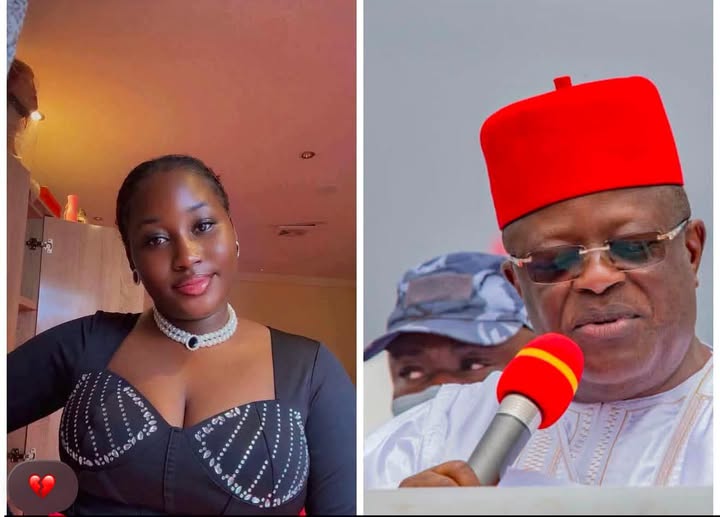
The reaction of the Minister of Works, Senator David Umahi, to the death of his staff member, Mary Habila, has ignited widespread public debate, with Nigerians expressing sharply divided opinions over his comments and the circumstances surrounding the incident.
Mary Habila, a nurse attached to the David Umahi Federal University of Health Sciences, Ebonyi State, died at a guest house within Umahi’s private residence in Uburu, Ebonyi State. Her death has attracted national attention, prompting calls for a thorough investigation and greater transparency.
Days after the incident, Umahi publicly addressed the controversy for the first time, insisting that he was not involved in Habila’s death, dismissing allegations of foul play, and warning against what he described as attempts to politicize the tragedy. His remarks have since sparked mixed reactions across social media, political circles and civil society.
Umahi Denies Wrongdoing
Speaking during a press briefing in Abuja, the minister described the late Habila as someone "like a daughter" who had worked closely with him for about three years.
Umahi said Habila was not a physiotherapist, as earlier reported in some media outlets, but a nurse employed by the Federal University of Health Sciences.
According to him, she had battled recurring health challenges and had received treatment at a Turkish hospital, with him personally paying her medical bills, including ₦2.2 million for treatment earlier this year.
The minister explained that shortly before her death, Habila reportedly spoke with her boyfriend by telephone and complained of bleeding from her nose. He said the boyfriend advised her to seek medical attention before ending the call. When he called back a few minutes later, she reportedly did not answer.
Umahi added that Habila had earlier informed her boyfriend she intended to take a bath. The following morning, after she failed to respond, the door to her room was forced open, and she was found unconscious, while the bathroom tap was still running.
Call for an Autopsy
One of the major points in Umahi’s statement was his insistence that an autopsy must be conducted to establish the exact cause of death.
He disclosed that he had requested the Inspector-General of Police to transfer the investigation to Abuja to ensure an independent and comprehensive probe.
According to him, he also directed that Habila’s remains should not be released for burial until an autopsy is completed, despite concerns reportedly raised by members of her family over cultural objections.
The minister argued that only a scientific examination could eliminate speculation and provide clarity on what happened.
Comments That Sparked Debate
While many Nigerians welcomed Umahi’s decision to publicly address the matter, several aspects of his comments generated controversy.
His insistence that there was "no foul play" before the conclusion of police investigations drew criticism from some legal analysts and members of the public, who argued that only investigators and forensic experts should determine the cause of death.
Others questioned his warning against those linking him to the incident, particularly his remarks suggesting that critics should "be careful" when making allegations. Those comments quickly circulated on social media, attracting both support and criticism.
Mixed Public Reactions
Public opinion has remained sharply divided.
Supporters of the minister argue that he acted responsibly by demanding an autopsy and calling for the transfer of the investigation to Abuja. They also point to his long-standing relationship with the deceased and his claim that he personally financed her medical treatment as evidence of genuine concern.
Some commentators believe it was appropriate for Umahi to speak publicly to counter speculation and misinformation surrounding the incident.
However, critics maintain that his comments appeared defensive and raised additional questions that investigators should answer independently.
Civil society advocates have urged Nigerians to avoid speculation while allowing law enforcement authorities to complete their investigation without interference.
Police Investigation Continues
Authorities have confirmed that investigations into Habila’s death remain ongoing.
Police have yet to release a final report establishing the cause of death, and no official findings have been announced regarding whether the incident involved any criminal conduct.
Investigators are expected to review witness statements, medical records, phone records and any available forensic evidence before concluding.
The outcome of the autopsy, if conducted, is expected to play a central role in determining the circumstances surrounding Habila’s death.
Importance of Due Process
Legal experts say the case highlights the importance of allowing investigative agencies to complete their work before conclusions are drawn.
They note that high-profile cases often generate intense public interest, making it essential for both public officials and citizens to avoid prejudging investigations.
Forensic evidence, medical examinations and police findings remain the most reliable means of establishing the facts.
Experts also caution against misinformation on social media, which can complicate investigations and deepen public mistrust.
Family Awaits Answers
As investigations continue, the focus remains on providing answers to Habila’s family while ensuring accountability through lawful procedures.
The death of the young nurse has generated sympathy across Nigeria, with many expressing condolences to her relatives and colleagues.
Observers say the investigation must be transparent, thorough and independent to maintain public confidence, regardless of where the evidence ultimately leads.
Looking Ahead
David Umahi’s public reaction to Mary Habila’s death has become almost as widely discussed as the incident itself, reflecting the sensitivity of cases involving public officials.
While his supporters see his remarks as those of a grieving employer seeking transparency, critics believe the circumstances demand careful scrutiny and independent investigation.
Ultimately, the questions surrounding Habila’s death can only be resolved through the ongoing police investigation and forensic examination.
Until official findings are released, the case remains under investigation, and authorities have urged the public to avoid speculation while allowing due process to take its course.
The coming weeks are expected to provide greater clarity as investigators conclude their inquiries and determine the circumstances surrounding one of the country's most closely watched cases.