Dangote Unveils $10bn Investment Plan to Transform Africa’s Power Sector
Aliko Dangote plans to invest more than $10 billion in Africa’s power sector over the next three to four years, targeting electricity shortages and industrial growth.
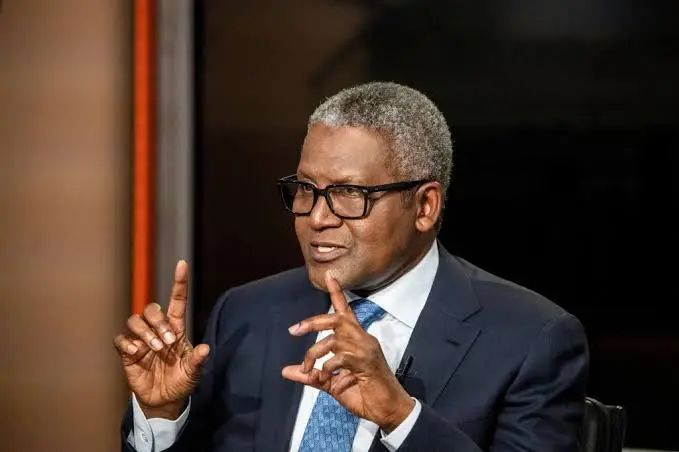
Africa’s power crisis could be entering a new phase as Nigerian industrialist Aliko Dangote announces plans to invest more than $10 billion in the continent’s power sector over the next three to four years.
The proposed investment represents a major expansion of Dangote Group’s interests beyond cement, fertiliser, oil refining and manufacturing, with electricity infrastructure emerging as a central part of the conglomerate’s long-term African strategy.
Dangote disclosed the plan in an interview with Al Jazeera published on September 21, 2026, arguing that Africa cannot achieve sustained economic growth without reliable electricity. He said the group was prepared to redirect capital from some planned ventures, potentially including its steel project, towards power investments. (BusinessDay NG)
“We want to invest over $10 billion alone in power,” Dangote said.
Why Dangote Is Targeting Africa’s Power Sector
Dangote's proposed investment comes against the backdrop of Africa's persistent electricity-access and reliability challenges.
He estimates that more than 600 million Africans remain without access to electricity, describing the situation as unacceptable and a major obstacle to the continent's development.
For Dangote, electricity is not simply a social service but a foundation for industrialisation. Reliable power can lower production costs, enable factories to operate consistently, support businesses and improve the ability of African economies to attract investment.
“So power is key. We will never, ever create growth without power,” Dangote said.
The proposed investment therefore reflects a broader argument that Africa's industrial ambitions must be supported by significant private-sector investment in energy infrastructure.
From 20,000MW in Nigeria to a Continental Strategy
Dangote's latest announcement builds on a much larger power ambition disclosed earlier in 2026.
In May, Dangote announced plans to enter Nigeria's power sector with an ambitious target of developing 20,000 megawatts of generation capacity. The proposal was presented as an attempt to address Nigeria's chronic electricity shortage while providing energy for industrial development.
The latest $10 billion announcement broadens that ambition beyond Nigeria.
Rather than focusing exclusively on electricity for Dangote's own industrial operations, the group appears to be positioning power as a standalone investment area capable of supporting economic activity across several African markets.
The scale is significant because electricity generation requires large amounts of capital, long-term planning, fuel or renewable-energy resources, transmission infrastructure and regulatory stability.
Steel Project Could Give Way to Power
One of the clearest indications of the seriousness of the proposed investment is Dangote's suggestion that the group could cancel or postpone one or two planned businesses to free capital for power.
He specifically mentioned the possibility of reconsidering the steel project.
“We are going to invest in power. We want to say there are one or two businesses that we might cancel, like steel, and we will put in the money,” he said.
Such a shift would represent an important change in capital allocation for Dangote Industries.
The group already has major investments in cement, fertiliser and petroleum refining. Its move into electricity would add another infrastructure-heavy business to the portfolio while potentially strengthening the energy security of its existing industrial operations.
Tanzania Offers an Example of Regional Expansion
Dangote Group's power ambitions are already being discussed in other African countries.
In June 2026, the Tanzanian government said it was discussing several potential investments with Dangote Industries, including power generation, fertiliser production, infrastructure and port development.
Among the proposals was a 2,000MW coal-fired power plant in Tanzania, alongside other infrastructure projects. The Tanzanian government said detailed technical discussions would follow. (Dangote Industries)
The Tanzania discussions demonstrate the possible regional nature of Dangote's energy strategy, although individual projects remain subject to negotiations, technical assessments, financing and government approvals.
Power and Industrialisation
Dangote's argument is closely linked to the relationship between electricity and industrial production.
Manufacturers across Africa frequently face unreliable grid supplies and consequently depend on diesel or gas-powered generators. The additional cost of self-generation can make locally produced goods more expensive and undermine the competitiveness of African businesses.
A substantial increase in reliable generation could therefore have effects beyond the electricity sector.
Factories could increase operating hours, businesses could reduce reliance on backup generators, and new industrial facilities could become more commercially viable.
For Dangote, better electricity supply could also support the development of African manufacturing and reduce the continent's dependence on imported products. (Vanguard News)
The Challenges Ahead
Despite the size of the proposed investment, putting billions of dollars into Africa's power sector will involve considerable challenges.
Generation capacity alone does not guarantee reliable electricity. Power must also be transmitted and distributed efficiently to consumers.
Nigeria, for example, has historically faced problems involving transmission capacity, gas availability, distribution-company finances, electricity tariffs and infrastructure maintenance.
Dangote's earlier 20,000MW proposal therefore faces questions about how such a large volume of electricity would be integrated into the country's existing electricity system. BusinessDay noted that Nigeria's transmission infrastructure and the financial condition of the electricity market remain significant constraints.
Similar challenges could arise in other African markets, although the exact risks would differ from country to country.
A New Direction for Dangote Group
The power announcement comes as Dangote Group continues to expand its industrial footprint across Africa.
The conglomerate's refinery and fertiliser investments have already significantly increased its presence in the energy and agricultural-input sectors. Its proposed power investments could further strengthen that position by adding electricity generation to its growing portfolio.
Dangote Group's expansion is also occurring as the continent seeks greater private-sector participation in infrastructure development.
The company's discussions with Tanzania, for example, include power, fertiliser, transport infrastructure and ports, suggesting a model in which energy investment could be linked with broader industrial and logistics projects.
What the $10bn Plan Could Mean for Africa
If implemented at the announced scale, Dangote's proposed $10 billion-plus power investment could become one of the largest private-sector commitments to Africa's electricity infrastructure.
However, the announcement is a strategic investment plan rather than evidence that the entire $10 billion has already been committed to specific projects.
Details such as the countries that will receive the investments, the exact generation technologies, financing structures, project timelines and expected capacity have yet to be fully disclosed.
What is clear is that Dangote sees electricity as one of Africa's most urgent infrastructure needs and is considering moving significant capital towards addressing it.
His message is that industrialisation, job creation and economic growth cannot be separated from reliable power.
Over the next three to four years, the proposed investment could therefore become a major test of whether large-scale African private capital can help close the continent's longstanding electricity gap.