Dangote Slams ‘False Claims’ on Refinery Financing, Denies Rift with Elumelu
Aliko Dangote has dismissed reports alleging false financing claims about his refinery and a rift with Tony Elumelu. Here’s what happened, the facts, and the wider implications for Nigeria’s business landscape.
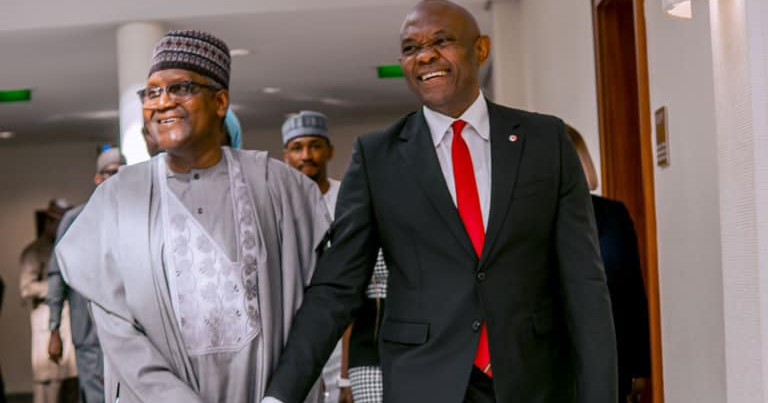
Nigeria’s business and industrial space was jolted by controversy in early May 2026 after reports surfaced alleging that Aliko Dangote had financed his multi-billion-dollar refinery through personal borrowing from associates and had fallen out with fellow billionaire Tony Elumelu.
The claims, which quickly gained traction across media and online platforms, have now been firmly rejected by the Dangote Group, which described them as “false,” “malicious,” and a deliberate misrepresentation of facts.
The development has not only reignited conversations around the financing of Africa’s largest industrial project but also raised questions about misinformation in Nigeria’s high-stakes corporate environment.
Controversy: Claims of Personal Financing and a Business Rift
At the center of the storm were two key allegations. First, Dangote had relied on personal loans from friends and associates to fund the construction of the Dangote Petroleum Refinery, a project widely regarded as one of Africa’s most ambitious private-sector investments.
Second, that a fallout had occurred between Dangote and Elumelu, chairman of Heirs Holdings and a prominent figure in Nigeria’s financial ecosystem.
The narrative suggested that disagreements over financing structures and strategic direction may have triggered tensions between the two business leaders.
However, within hours of the reports gaining traction, Dangote Group moved swiftly to counter the claims.
Dangote Group Responds: ‘Entirely Baseless’
In an official statement, the Dangote Group categorically dismissed both allegations, stating that neither Dangote nor the company made the remarks attributed to them.
The company described the claims about refinery financing as “wholly inaccurate,” emphasizing that the project was not funded through informal personal borrowing as suggested. (Vanguard News)
It also rejected the suggestion of any rift between Dangote and Elumelu, insisting that the relationship between the two businessmen remains intact and cordial. (Punch Newspapers)
The group went further to label the publication as “baseless and malicious,” warning against the spread of misinformation and hinting at possible legal action against those responsible. (Nigerian Bulletin)
Understanding the Refinery Financing Structure
The controversy has drawn renewed attention to how the Dangote refinery, estimated at over $20 billion, was financed.
Contrary to the viral claims, the refinery is known to have been funded through a mix of institutional financing, equity investments, and strategic partnerships rather than informal personal loans.
Reports indicate that Dangote has explored structured financing mechanisms, including plans to sell a stake in the refinery through a major Initial Public Offering (IPO) to raise additional capital and expand operations.
The refinery itself has already reached a capacity of about 650,000 barrels per day, positioning it as the largest single-train refinery globally and a cornerstone of Nigeria’s energy ambitions. (Shares Saver)
These facts contradict the narrative that the project relied on ad hoc funding arrangements.
Dangote and Elumelu: A Relationship Under Scrutiny
The alleged rift between Dangote and Elumelu has also attracted significant public interest, given the stature of both men.
Dangote, Africa’s richest man, built his empire through manufacturing and industrial ventures, while Elumelu is a leading figure in banking and investment, known for championing “AFRI capitalism” - a philosophy promoting private-sector-led development.
While both operate in overlapping economic spheres, there has been no credible evidence of a breakdown in their relationship. The Dangote Group’s denial reinforces the view that the claims may have been speculative or fabricated.
In Nigeria’s tightly interconnected business elite, perceived rivalries often generate headlines, but actual conflicts are typically more nuanced than portrayed.
Why the Story Matters
Beyond the immediate denial, the episode highlights several important dynamics within Nigeria’s corporate and economic landscape.
1. The Scale of the Dangote Refinery: The Dangote refinery is not just another industrial project; it is a transformative asset expected to reshape Nigeria’s energy sector. Reducing reliance on imported refined petroleum products, it has the potential to save billions in foreign exchange and stabilize the domestic fuel supply.
Given its scale and strategic importance, any claims about its financing or leadership naturally attract intense scrutiny.
2. The Role of Information and Perception: In an era of rapid information dissemination, unverified claims can quickly gain traction and influence public perception.
For high-profile figures like Dangote and Elumelu, such narratives can have reputational and even financial implications. The swift response by the Dangote Group underscores the importance of controlling the narrative in a digital age where misinformation can spread rapidly.
3. Investor Confidence and Market Stability: With plans underway for a potential public listing of the refinery, maintaining investor confidence is critical.
False claims about financing structures or leadership disputes could undermine trust among potential investors and stakeholders. By addressing the issue promptly, Dangote Group appears to be safeguarding both its reputation and the integrity of the project.
Broader Context: Expansion and Strategic Ambitions
The controversy comes at a time when Dangote is expanding his industrial footprint beyond Nigeria.
Recent plans include the development of additional refining capacity in other parts of Africa and increased participation in regional energy markets.
The refinery itself is already influencing fuel pricing and supply dynamics within Nigeria, with regulators noting its role in stabilizing key sectors such as aviation fuel.
These developments highlight the broader significance of the project not just for Nigeria, but for the entire African continent.
Conclusion: Fact vs Fiction in Nigeria’s Business Arena
The Dangote-Elumelu controversy serves as a reminder of the delicate interplay between fact, perception, and influence in Nigeria’s business environment.
While the claims of personal financing and a rift may have captured headlines, the swift and unequivocal denial by the Dangote Group has clarified the situation.
At its core, the episode underscores the importance of accurate reporting and responsible information sharing, especially when it involves projects and personalities that shape the economic future of a nation.
As Nigeria continues its push toward industrialization and economic diversification, the stakes will only grow higher, making clarity, credibility, and transparency more essential than ever.