Dangote’s $400m China Equipment Deal Signals Industrial Power Shift Beyond Refining
Dangote signs $400m deal with XCMG to accelerate refinery expansion to 1.4m bpd, deepen petrochemicals, and reshape Africa’s industrial future.
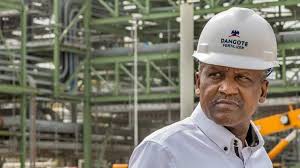
In what may prove to be a defining moment in Africa’s industrial transformation story, the Dangote Group has signed a $400 million construction equipment agreement with XCMG Construction Machinery Company Limited, a major Chinese manufacturer of heavy machinery.
While headlines have largely framed the move as a step toward expanding the Dangote Petroleum Refinery & Petrochemicals from 650,000 barrels per day to 1.4 million barrels per day, a deeper analysis suggests something far more strategic is unfolding - a deliberate industrial consolidation that could shift Africa’s manufacturing balance of power.
Beyond Refining: A Construction Empire in the Making
Official statements describe the $400 million deal as a means to fast-track refinery expansion and complement existing assets. But embedded within that announcement is a revealing ambition: the Group says it is positioning itself to become the “number one construction company in the world.”
That signals a broader recalibration. Rather than merely scaling petroleum output, the Dangote Group is vertically integrating its industrial ecosystem - strengthening logistics, civil works capacity, petrochemicals, fertilizer production, and infrastructure development under one coordinated expansion blueprint.
By acquiring advanced heavy-duty equipment directly from XCMG, the Group reduces dependence on third-party contractors while building internal execution muscle. In essence, Dangote is not just expanding a refinery - it is building the industrial tools to control its own future growth.
The Numbers That Matter
The refinery currently operates at its nameplate capacity of 650,000 barrels per day, with the ability to produce approximately 75 million litres of petrol daily. In January alone, it reportedly supplied over 40 million litres per day, capturing around 62% of Nigeria’s petrol market share.
However, the expansion target of 1.4 million barrels per day would make it the largest single-location refinery in the world - a scale rarely seen outside major state-owned Middle Eastern complexes.
But oil refining is only one dimension of the plan. Under the broader expansion programme:
- Polypropylene output will rise from 900,000 to 2.4 million metric tonnes annually.
- Urea production in Nigeria will triple from 3 million to 9 million metric tonnes annually, in addition to the 3 million metric tonnes capacity in Ethiopia.
- Linear Alkyl Benzene (LAB) capacity will reach 400,000 metric tonnes annually.
- Base oil production will also be significantly expanded.
These figures point toward something more ambitious than fuel security. They represent a strategic pivot toward petrochemical dominance.
Africa’s Industrial Gap - and Dangote’s Bet
Africa imports billions of dollars’ worth of refined petroleum products, plastics, detergents, fertilizers, and industrial inputs annually. By scaling domestic production of polypropylene and LAB, Dangote is targeting sectors that feed packaging, textiles, automotive components, and cleaning-product manufacturing.
Tripling urea capacity has agricultural implications. Nigeria and other African nations rely heavily on fertilizer imports, making domestic supply critical to food security and price stability.
Viewed through this lens, the $400 million equipment purchase is less about machinery and more about reducing Africa’s industrial dependency.
The China Dimension
The choice of XCMG is also geopolitically significant. China remains Africa’s largest infrastructure partner and one of its biggest trading partners. By deepening industrial collaboration with a Chinese heavy equipment giant, Dangote strengthens a supply chain that bypasses Western industrial bottlenecks.
This partnership reflects the growing South-South industrial axis - African capital partnering with Asian manufacturing power to drive domestic transformation.
However, it also raises questions about technology transfer, local workforce integration, and long-term equipment servicing dependencies.
Building a $100 Billion Enterprise
Dangote Group has repeatedly stated its ambition to build a $100 billion enterprise by 2030. That target may have seemed aspirational a decade ago. Today, with refining, petrochemicals, fertilizers, cement, and agriculture consolidated under one umbrella, it appears increasingly structured.
Industrial giants are rarely built on single-sector dominance. They thrive on ecosystem control - owning upstream inputs, downstream outputs, logistics, and infrastructure. This expansion strategy aligns with that playbook.
The refinery itself was already one of Africa’s largest private-sector industrial investments. The new equipment acquisition suggests that the Group intends to maintain construction velocity across multiple sectors simultaneously.
Market Implications
Domestically, increased refinery output could further reduce Nigeria’s dependence on imported fuel and ease foreign exchange pressure. However, it may also intensify competition within the downstream sector, particularly among fuel importers.
In petrochemicals, expanded polypropylene production could stimulate local manufacturing clusters - provided policy stability, power supply, and regulatory frameworks keep pace.
Agriculturally, higher urea capacity could reshape fertilizer pricing across West Africa, potentially lowering input costs for farmers if distribution networks are optimized.
Regionally, the refinery’s expanded capacity positions Nigeria as a potential net exporter of refined petroleum and petrochemical products to West and Central Africa, strengthening its economic influence.
Execution Risks
Large-scale industrial expansions are not without risks:
- Global oil price volatility
- Domestic regulatory uncertainties
- Infrastructure bottlenecks (ports, power, logistics)
- FX exposure and debt servicing pressures
Additionally, scaling from 650,000 to 1.4 million barrels per day within three years is a technically ambitious timeline.
Yet Dangote’s track record in cement manufacturing - where it became Africa’s largest producer, suggests a willingness to undertake high-risk, capital-intensive projects with long gestation periods.
A Broader African Story
This deal underscores a larger narrative unfolding across the continent: the shift from resource extraction to value addition.
For decades, African economies exported crude oil and imported refined products. They exported raw agricultural commodities and imported fertilizers. They imported finished plastics while exporting petrochemical feedstock.
The Dangote expansion, if executed effectively, challenges that model. It represents a push toward industrial sovereignty - producing value-added goods domestically and exporting finished products rather than raw inputs.
Conclusion
The $400 million equipment deal between Dangote Group and XCMG may appear on the surface as a construction procurement story. In reality, it marks a deeper industrial pivot - one that blends refining, petrochemicals, agriculture, and infrastructure into a consolidated growth machine.
If successful, this expansion will not only redefine Nigeria’s energy landscape but could reposition West Africa within global industrial supply chains. Whether this becomes a transformative milestone or an overextended ambition will depend on execution, market stability, and policy alignment. But one thing is clear: the scale of the bet signals that Africa’s industrial narrative is entering a new phase.
Source Links
- Dangote Group Official Statement (via major Nigerian media)
- Reuters Business Coverage: https://www.reuters.com
- Premium Times Nigeria Business Desk: https://www.premiumtimesng.com
- Bloomberg Africa Energy Reports: https://www.bloomberg.com