Court Remands Omoyele Sowore in Kuje Prison Over Fresh Charges, Sets Next Hearing Date
A Nigerian court has ordered the remand of activist Omoyele Sowore in Kuje Correctional Centre after fresh charges were filed, sparking renewed debate over political activism, due process, and civil liberties in Nigeria.
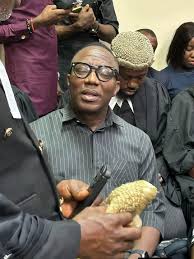
A Federal High Court in Abuja has ordered the remand of Nigerian activist and former presidential candidate Omoyele Sowore at the Kuje Correctional Centre following the filing of fresh charges against him by federal authorities.
The ruling, delivered after Sowore was arraigned on allegations related to public order, alleged incitement, and breach of national security provisions, has once again placed the outspoken activist at the centre of Nigeria’s ongoing debate over civil liberties and state authority.
Security operatives escorted Sowore from the courtroom shortly after the judge declined a bail application filed by his legal team, citing the need to first hear arguments on jurisdiction and the merits of the case.
Court officials confirmed that the case has been adjourned to a later date for further hearing, with both prosecution and defence counsel expected to present additional submissions.
According to court filings and procedural records typically published through Nigeria’s judiciary information channels, the remand order is standard practice where the court determines that an accused person should remain in custody pending bail consideration or trial proceedings.
Charges Linked to Alleged Public Disturbance and Online Statements
While full details of the charges are still being examined in court, sources familiar with the matter say the prosecution is linked to alleged statements made by Sowore on social media and during public appearances, which authorities claim may have violated public order regulations.
Sowore, founder of the #RevolutionNow movement, has long been a controversial figure in Nigerian politics and activism, frequently criticizing successive governments over governance, corruption, and human rights issues.
His legal team, however, has strongly denied any wrongdoing, arguing that the charges are politically motivated and intended to suppress dissent.
They maintain that Sowore’s statements fall under constitutionally protected freedom of expression as guaranteed by Nigeria’s 1999 Constitution (as amended), particularly sections relating to speech and assembly rights.
Court Rejects Bail at Initial Stage
During the court proceedings, Sowore’s lawyers applied for bail, arguing that their client posed no flight risk and had consistently appeared before courts in previous cases.
The prosecution opposed the application, urging the court to remand him pending full consideration of the charges.
The presiding judge ruled that the application for bail would be heard later after preliminary issues are resolved, leading to the order for his temporary remand at Kuje Correctional Centre.
Kuje prison, one of Nigeria’s most well-known correctional facilities, has previously held several high-profile detainees, including politicians, activists, and individuals facing terrorism-related or financial crime charges.
Information on Nigeria’s correctional system and inmate management can be found via the Nigerian Correctional Service portal.
Security Presence and Courtroom Atmosphere
The courtroom session was reportedly heavily secured, with armed personnel stationed around the Federal High Court premises in Abuja.
Supporters of Sowore gathered outside the court complex, chanting solidarity slogans and calling for his immediate release. Security personnel monitored the situation closely to prevent disruptions.
Inside the courtroom, proceedings remained tense but orderly as arguments were exchanged between prosecution and defence counsel.
Observers described the atmosphere as “charged but controlled,” reflecting the political sensitivity often associated with Sowore’s legal battles.
Human Rights Groups React
Following news of the remand order, several civil society organizations and human rights advocates expressed concern over what they described as a pattern of repeated arrests and prosecutions targeting activists in Nigeria.
Groups argue that such cases risk undermining democratic freedoms and could discourage civic engagement and peaceful protest.
Amnesty International and other rights bodies have previously called on Nigerian authorities to ensure that activists are not subjected to arbitrary detention or politically motivated charges.
However, government officials have consistently maintained that all arrests and prosecutions are based on lawful investigations and national security considerations.
Broader Political Context
Sowore’s latest court appearance adds to his long history of confrontations with Nigerian authorities. He has previously been arrested in connection with protests, online activism, and allegations relating to public disturbance.
His supporters view him as a symbol of resistance against corruption and authoritarian governance, while critics accuse him of provocative rhetoric that sometimes escalates tensions.
Legal analysts say the case could once again test the boundaries between free speech and national security enforcement in Nigeria’s legal system.
Next Court Hearing Expected
The Federal High Court has adjourned the matter to allow for further legal arguments, including the review of bail applications and preliminary objections.
Both prosecution and defence teams are expected to return with additional filings as the court begins a more detailed examination of the charges.
Until then, Sowore remains in custody at Kuje Correctional Centre, where he will be held under standard remand conditions pending further court instructions.
Conclusion
The remand of Omoyele Sowore in Kuje prison marks yet another chapter in his ongoing legal battles with Nigerian authorities, raising renewed questions about civil liberties, political expression, and the limits of protest in the country.
As the case proceeds, attention will remain focused on the judiciary’s handling of the charges and whether the courts will grant bail or allow the matter to proceed to full trial.
For now, the situation remains fluid, with legal arguments expected to shape the next phase of proceedings.