Court Clears Goodluck Jonathan to Contest Presidential Election in Landmark Political Ruling
A Nigerian court has reportedly cleared former President Goodluck Jonathan to contest the presidential election, resolving legal disputes over term limits and eligibility ahead of the next polls.
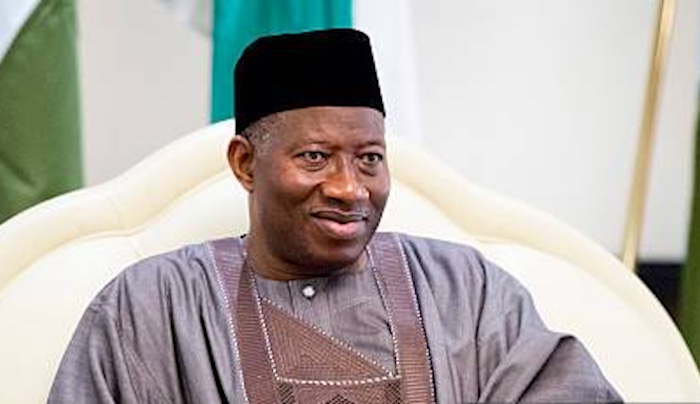
A Nigerian court has reportedly ruled in favour of former President Goodluck Jonathan, clearing him to contest the forthcoming presidential election in a landmark judgment that could significantly reshape Nigeria’s political landscape ahead of the next general polls.
The decision, delivered by a Federal High Court sitting in Abuja, addressed longstanding legal questions surrounding Jonathan’s eligibility to seek another term in office, following years of political debate over constitutional interpretation of presidential term limits.
The ruling has sparked nationwide discussions, with supporters describing it as a restoration of democratic choice, while critics argue it may open fresh constitutional controversies.
Court Resolves Longstanding Eligibility Dispute
The case centered on whether Jonathan, who served as Nigeria’s president from 2010 to 2015, remains constitutionally eligible to contest for the highest political office in the country.
Opponents of his candidacy had argued that he had already been sworn in twice, following his assumption of office after the death of former President Umaru Musa Yar’Adua in 2010 and his subsequent election victory in 2011.
However, the court reportedly held that his initial assumption of office under succession circumstances did not amount to a full elected term under the constitutional interpretation being considered.
According to the judgment, Jonathan remains eligible to contest one more presidential election, provided he meets all other constitutional requirements.
The court emphasized that its decision was based strictly on legal interpretation of the Nigerian Constitution and not on political considerations.
Political Earthquake Ahead of Election Season
The ruling has immediately triggered political reactions across Nigeria, with analysts describing it as a major development that could reshape alliances ahead of the next election cycle.
Jonathan, a member of the People’s Democratic Party (PDP), has long remained a key figure in national politics despite stepping down in 2015 after losing to the then-opposition candidate.
His potential return to the presidential race is expected to significantly alter calculations within both ruling and opposition blocks.
Political observers say his candidacy could energize voter turnout in the southern regions where he retains strong support, while also reshaping coalition dynamics in the north.
Supporters Celebrate Court Decision
Supporters of Jonathan welcomed the court ruling as a vindication of his political rights and a reaffirmation of democratic participation.
They argue that the former president remains one of Nigeria’s most experienced statesmen, with deep knowledge of governance, diplomacy, and national development issues.
Some PDP loyalists have already begun calling for internal consultations to determine how his potential candidacy would fit into the party’s broader electoral strategy.
Party officials, however, have yet to issue an official position on the ruling.
Critics Raise Constitutional Concerns
Despite the enthusiasm from supporters, the ruling has also sparked criticism from legal experts and political opponents who warn of possible constitutional ambiguity.
Some analysts argue that allowing Jonathan to recontest could set a precedent that may be interpreted in multiple ways in future succession disputes.
Others insist that Nigeria’s constitution clearly limits presidents to two elected terms, regardless of circumstances surrounding their initial assumption of office.
The debate is expected to intensify as political parties begin preparations for primaries and candidate selection processes.
PDP Faces Strategic Decision
Within the PDP, Jonathan’s potential return presents both an opportunity and a challenge.
On one hand, his national profile and previous experience as head of state could strengthen the party’s electoral chances.
On the other hand, his emergence could trigger internal competition among other aspirants who have long prepared for the party’s presidential ticket.
Party insiders say consultations are ongoing, but no final decision has been made regarding endorsement or internal zoning arrangements.
The PDP leadership is expected to carefully assess the political implications before taking a formal position.
National Political Reactions Intensify
Across Nigeria’s political landscape, reactions to the court ruling have been swift and divided.
Supporters describe it as a “game-changing decision” that reopens the political field ahead of what is expected to be a highly competitive election.
Opposition figures, however, have called for caution, urging judicial review and further clarification to avoid constitutional crises.
Civil society organizations have also urged political actors to respect institutional processes and avoid premature conclusions.
Legal Experts Weigh In
Constitutional lawyers say the ruling could become a reference point in future electoral disputes, depending on whether it is upheld by higher courts.
Some experts argue that the case may eventually reach the Court of Appeal or even the Supreme Court if challenged by opposing parties.
Others believe the judgment reflects evolving interpretations of Nigeria’s constitutional democracy and succession provisions.
The legal debate is expected to continue as electoral preparations intensify nationwide.
Implications for the 2027 Election Cycle
If upheld, Jonathan’s eligibility could significantly alter the dynamics of the upcoming presidential election.
Political analysts suggest his candidacy could attract support from voters nostalgic for his administration’s policies, particularly in areas of economic and diplomatic engagement.
However, he would also face strong competition from established political figures across both major parties.
The ruling could also trigger strategic alliances and coalition-building efforts as parties reposition themselves ahead of the election.
Conclusion
The court’s reported decision clearing Goodluck Jonathan to contest the presidential election marks a potentially historic moment in Nigeria’s democratic evolution.
While the ruling opens the door for a possible political comeback, it also raises complex legal and constitutional questions that may shape electoral discourse in the months ahead.
As political parties, legal experts, and voters react to the development, Nigeria’s political landscape appears set for a highly competitive and unpredictable election season.