Christa Pike Awake and Speaking After Failed Tennessee Execution, Lawyer Says
Tennessee death row inmate Christa Pike is awake and speaking six days after a failed lethal injection left her critically ill. Her lawyers are seeking evidence and a commutation of her death sentence.
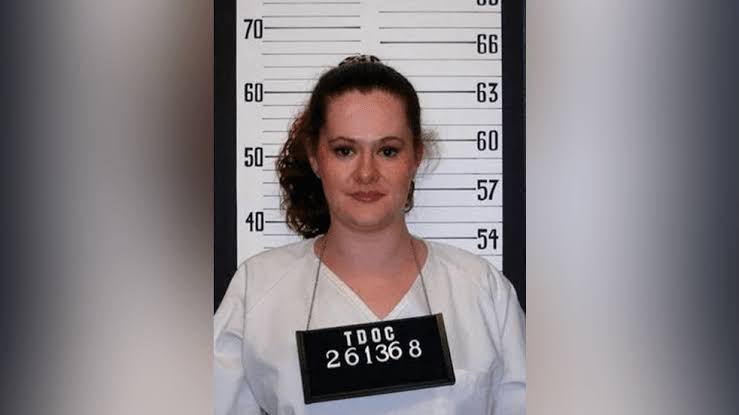
Tennessee death row inmate Christa Pike is awake and speaking six days after the state's attempt to execute her by lethal injection failed, her lawyers have confirmed.
Pike, 50, survived the September 30 execution attempt at the Riverbend Maximum Security Institution in Nashville after officials administered two doses of pentobarbital but failed to cause her death.
Her lawyers said Tuesday that Pike remains critically ill and faces a potentially long recovery. The development represents the first reported improvement in her condition since she was taken to hospital following the failed execution.
“Against all odds,” Pike is conscious and able to speak, according to a statement from her legal team. They said she continues to receive critical medical care and remains handcuffed and shackled to her hospital bed because she is still in state custody.
Failed execution leaves Pike critically ill
Pike's execution was scheduled after she exhausted her appeals over the 1995 murder of 19-year-old Colleen Slemmer, a classmate whom Pike and her then-boyfriend tortured and killed when Pike was 18.
The execution attempt on September 30 quickly encountered difficulties. According to accounts from witnesses and Pike's attorneys, officials had trouble establishing intravenous access before administering the lethal drug.
Two doses of pentobarbital were ultimately administered. However, Pike did not die as expected.
Her attorneys said the procedure caused serious injuries to her arms, including burns and blistering. She was subsequently transported to a hospital for emergency treatment.
As recently as October 4, Pike's attorney Stephen Ferrell said she remained unconscious and dependent on a ventilator, and that her long-term prognosis was uncertain.
The change in her condition was announced six days after the failed execution.
Lawyer says recovery could take months
Although Pike is now conscious and speaking, doctors have not declared her out of danger.
Dr Joel Zivot, an anesthesiologist who has advised Pike's legal team, said the ability to breathe without a ventilator and speak was an encouraging development but warned that it could take weeks or months to determine the full extent of her recovery.
Pike remains in intensive care, according to the latest reports.
Her attorneys have described her recovery as medically unprecedented because she survived after the state administered the drugs intended to end her life.
The lawyers also said they were grateful to the first responders and hospital medical staff who treated Pike following the failed execution.
Questions over what went wrong
Pike's failed execution has prompted serious questions about Tennessee's execution procedures.
Her lawyers had previously raised concerns about difficulties accessing her veins. They argued that problems with intravenous access could cause the lethal drug to enter surrounding tissue instead of the bloodstream.
Former attorney James Crowson, who represented Pike during part of her post-conviction proceedings, said defense lawyers had warned that her compromised veins could make the execution particularly difficult and potentially dangerous.
Pike's legal team has alleged that improperly positioned intravenous lines contributed to the severe injuries to her arms.
The Tennessee Department of Correction, however, has maintained that officials followed the state's lawful execution protocol. The department has not publicly accepted the lawyers' allegations concerning how the procedure was conducted.
The state has launched an investigation into the incident.
Governor halts further executions
Tennessee Governor Bill Lee halted further executions in the state for the remainder of 2026 following the failed attempt.
Lee ordered a comprehensive independent review to establish exactly what happened during the execution.
The decision means another scheduled Tennessee execution will not proceed while the review is underway.
The governor's office has not indicated what the investigation's findings could mean for Pike's case or whether the state could eventually attempt another execution.
Pike's lawyers are meanwhile asking Lee to commute her death sentence to life imprisonment without the possibility of parole.
They argue that the failed execution and the injuries she suffered demonstrate that another attempt would raise profound constitutional and humanitarian concerns.
Can Tennessee execute Pike again?
Pike's survival has created an extraordinary legal question: can a state legally attempt to execute someone again after administering the full lethal-injection protocol?
Legal scholars disagree over what would happen if Tennessee sought another execution date.
Deborah Denno, a Fordham University law professor who has studied execution methods for decades, said Pike's lawyers could argue that another attempt would constitute cruel and unusual punishment and potentially raise double-jeopardy concerns.
She noted that there have been previous cases in which executions failed because authorities could not establish an intravenous line. However, Pike's case is different because the state actually administered the lethal drugs and she survived.
Seattle University law professor Michael Russo offered a different assessment, saying he was not convinced the double-jeopardy argument would necessarily prevent another execution attempt.
The legal debate is therefore likely to continue as Pike's medical condition becomes clearer.
Pike's murder conviction
Pike was sentenced to death for the murder of Slemmer, who was killed in Tennessee in 1995.
Pike and her boyfriend were convicted after prosecutors established that Slemmer had been tortured and killed in a jealous rage.
Pike was 18 at the time of the crime and became one of the youngest women sentenced to death in the United States.
Her defense lawyers have also argued over the years that important mitigating evidence was not adequately presented during her original sentencing.
That evidence included allegations concerning childhood abuse, mental illness and brain injury. Her attorneys have argued that such circumstances should have been properly considered when determining her punishment.
Despite numerous appeals, Pike's death sentence remained in place.
A new chapter after failed execution
Pike's return to consciousness has changed the circumstances surrounding a case that appeared to be reaching its final chapter.
Instead of being pronounced dead after the lethal injection, she is now recovering in a hospital while lawyers, officials and legal experts debate what happens next.
Her attorneys are seeking preservation of evidence from the execution, including records and information concerning the drugs used and the procedure followed. A court hearing has been scheduled to address those requests.
The failed execution has also renewed debate over capital punishment and the reliability of lethal-injection procedures in the United States.
For Pike, however, the immediate issue is her health.
Her lawyers say she remains seriously ill but is now conscious, speaking and receiving intensive medical care.
Whether she will make a full recovery remains uncertain. What is clear is that Tennessee's attempt to carry out her death sentence has produced an unprecedented situation - one that has left Pike alive, seriously injured and at the centre of a new legal battle over whether the state can ever attempt to execute her again.