China Sentences Former Senior Official to Death for Accepting $325 Million in Bribes
A Chinese court has sentenced former senior official Li Gang to death with a two-year reprieve after finding him guilty of accepting more than $325 million in bribes, underscoring Beijing's continued anti-corruption drive.
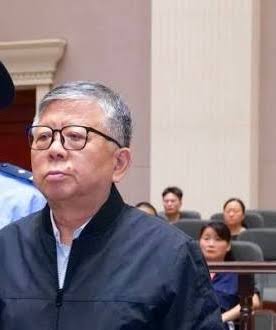
A Chinese court has handed a death sentence with a two-year reprieve to former senior government official Li Gang after convicting him of accepting bribes totaling more than 2.34 billion yuan (approximately $325 million), in one of the country's largest corruption cases in recent years.
The verdict highlights China's ongoing anti-corruption campaign under President Xi Jinping, who has repeatedly vowed to root out corruption at every level of government and the ruling Communist Party.
According to Chinese state media, the Intermediate People's Court in Guangzhou found that Li abused various official positions over more than two decades to seek benefits for companies and individuals in exchange for enormous financial rewards.
The court ruled that the scale of the bribery was "extremely huge," describing the crimes as particularly serious and deserving of severe punishment.
Court Delivers Death Sentence
The court sentenced Li to death with a two-year reprieve, a form of punishment unique to China's legal system.
Under Chinese law, a death sentence with reprieve is typically suspended for two years. If the convicted individual demonstrates good behavior during that period and commits no further intentional crimes, the sentence is often commuted to life imprisonment without the possibility of parole or, in some cases, a fixed-term prison sentence depending on the circumstances.
In addition to the sentence, the court ordered the confiscation of all of Li's personal assets and the recovery of proceeds obtained through illegal activities.
Authorities said all illicit gains and related assets would be turned over to the state treasury in accordance with Chinese law.
Decades of Corruption
According to prosecutors, Li exploited numerous senior positions between 1999 and 2023 to facilitate business contracts, project approvals, promotions, land acquisitions, and regulatory decisions for various companies and individuals.
In return, investigators said he accepted massive cash payments, luxury gifts, valuable property, and other financial benefits totaling more than 2.34 billion yuan.
The court concluded that Li had used public office as a tool for personal enrichment, severely damaging public trust and undermining the integrity of government institutions.
Judges noted that while Li had admitted his crimes, cooperated with investigators, and returned part of the illicit assets, the extraordinary size of the bribes justified the harsh sentence.
Part of Xi Jinping's Anti-Corruption Campaign
The case forms part of President Xi Jinping's sweeping anti-corruption campaign, which began shortly after he assumed office in 2012.
Chinese authorities have described the campaign as targeting both "tigers and flies"—a reference to senior officials and lower-level public servants accused of corruption.
Over the past decade, thousands of government officials, military officers, executives of state-owned enterprises, and Communist Party members have been investigated or prosecuted.
Supporters of the campaign argue that it has strengthened discipline within the government and restored public confidence in state institutions.
However, some international observers and human rights organizations have questioned whether anti-corruption investigations are always conducted independently, suggesting that political considerations may also influence certain high-profile cases.
Chinese authorities have consistently rejected such claims, insisting that all investigations are conducted strictly according to the law.
China's Tough Stance on Corruption
China maintains some of the world's toughest criminal penalties for corruption.
Officials convicted of accepting exceptionally large bribes or causing significant damage to state interests may receive life imprisonment or the death penalty, depending on the severity of the offence.
The government argues that strict punishment serves as a deterrent against abuse of public office and reinforces accountability among public officials.
In recent years, several senior officials have received death sentences with reprieves after being convicted in major corruption scandals involving billions of yuan.
Legal experts note that while immediate executions for economic crimes have become less common, suspended death sentences remain one of the strongest penalties available under Chinese criminal law.
Economic and Political Implications
The latest conviction comes as China continues efforts to strengthen investor confidence and improve governance during a period of economic adjustment.
Authorities have increasingly emphasized transparency, regulatory oversight, and financial discipline across both government institutions and state-owned enterprises.
Analysts say large-scale corruption can undermine economic development by distorting market competition, increasing project costs, discouraging investment, and weakening public confidence in government administration.
The Chinese leadership has repeatedly stressed that maintaining clean governance is essential to achieving long-term economic stability and sustainable growth.
International Attention
Li's conviction has attracted international attention because of both the enormous amount involved and the severity of the sentence.
Global anti-corruption organizations frequently monitor major prosecutions in China as part of broader assessments of governance and judicial enforcement.
While many countries impose lengthy prison terms for large-scale corruption, relatively few maintain capital punishment as a legal penalty for economic crimes.
Human rights organizations continue to oppose the death penalty in all circumstances, arguing that life imprisonment provides sufficient punishment while eliminating the risk of irreversible miscarriages of justice.
China, however, maintains that its criminal justice system reflects the country's legal traditions and national circumstances.
Public Reaction
News of the sentence generated widespread discussion across Chinese social media platforms, where many users expressed support for tough measures against corrupt officials.
Some commenters argued that severe penalties help protect public resources and discourage abuse of power.
Others emphasized the importance of preventing corruption through stronger institutional oversight rather than relying solely on punishment after offences occur.
The case has also renewed debate about improving transparency in government procurement, financial management, and public administration.
Looking Ahead
Li's conviction represents another significant chapter in China's long-running campaign against official corruption.
While the death sentence with reprieve reflects the seriousness with which Chinese authorities view major corruption offences, the broader challenge remains preventing abuse of power before it occurs.
As Beijing continues strengthening internal supervision, expanding financial oversight, and prosecuting high-profile corruption cases, the government insists that accountability remains central to improving governance and maintaining public trust.
Whether the latest conviction serves as a stronger deterrent to future corruption will become clearer over time, but it undoubtedly reinforces China's message that officials who exploit public office for personal gain face severe legal consequences.
For now, the case stands as one of the country's largest corruption prosecutions in recent years and underscores the Chinese government's determination to continue its anti-graft campaign despite ongoing domestic and international scrutiny.