China's Economic Growth Accelerates to 4.5% as AI Boom Fuels Export Surge
China's economy grew 4.5% in the third quarter of 2026 as artificial intelligence demand boosted exports of semiconductors and computing equipment, despite weak domestic consumption and mounting trade tensions.
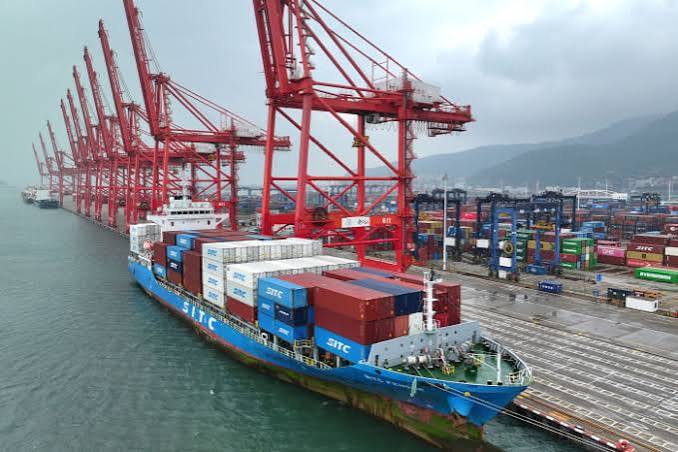
China's economy accelerated in the third quarter of 2026, powered by a surge in exports of artificial intelligence-related products, as booming global demand for semiconductors, computing equipment and advanced technology helped offset persistent weakness in domestic consumption.
Official figures released on Monday, October 19, showed that China's gross domestic product (GDP) expanded by 4.5 per cent year-on-year between July and September, up from 4.3 per cent in the second quarter. The result exceeded the 4.4 per cent growth forecast by economists surveyed by Reuters.
The figures offer some relief to Chinese policymakers seeking to achieve the government's annual economic growth target of between 4.5 and 5 per cent. The economy expanded by 4.6 per cent during the first nine months of the year, putting Beijing closer to its full-year objective.
However, the recovery remains uneven. While manufacturers and exporters have benefited from growing international demand for technology products, households continue to spend cautiously, investment remains under pressure and the prolonged property-sector downturn continues to weigh on economic confidence.
The latest figures underscore China's growing reliance on advanced manufacturing and overseas markets to sustain growth amid domestic economic challenges. (Reuters)
AI boom drives China's export performance
Artificial intelligence has emerged as an important engine of China's export expansion, creating demand for the chips, computing equipment and electronic components required to build and operate AI systems.
China's exports surged by 36.3 per cent year-on-year in September, according to customs data released on October 14. The increase exceeded market expectations and accelerated from the 25 per cent growth recorded in August.
Semiconductors and automatic data-processing machinery, including computers and related components, accounted for a substantial share of the export increase. These categories contributed approximately 13 percentage points to September's overall export growth, highlighting the importance of AI-related trade.
The country's monthly trade surplus also reached a record $133.5 billion, while the surplus for the first nine months of 2026 climbed to approximately $938.1 billion.
China's expanding role in technology supply chains has enabled its manufacturers to benefit from global investment in data centres, cloud computing and artificial intelligence infrastructure.
The boom has also supported demand for industrial equipment, electronic components and other manufactured goods, strengthening factory output even as consumer spending remains subdued.
Nevertheless, the concentration of export growth in a limited number of technology-related sectors leaves the economy exposed to changes in global investment patterns and demand. (Financial Times)
Global demand strengthens China's trade position
China's export expansion has extended across several major trading partners, reflecting continued international demand for its manufactured products.
September shipments to the United States rose by 39.6 per cent year-on-year, while exports to the European Union increased by 25.3 per cent. Demand from Southeast Asian markets also strengthened.
The performance reinforces China's importance to global manufacturing and technology supply chains, particularly as businesses expand their digital infrastructure and seek competitively priced industrial goods.
However, the widening trade surplus is creating friction with trading partners concerned about the competitiveness of Chinese products and the implications for their domestic industries.
European policymakers have raised concerns about trade imbalances and competition in sectors such as automobiles. An agreement between Beijing and Brussels to address Chinese hybrid-vehicle shipments illustrates the growing pressure to manage disputes over market access.
For China, maintaining export momentum will require navigating these disagreements while preserving access to international markets.
The challenge is particularly important because exports have become a crucial source of economic growth at a time when domestic demand and private investment remain relatively weak. (Reuters)
Manufacturing improves as domestic demand remains weak
The export boom has helped support China's industrial sector, but the broader economy continues to face structural challenges.
Industrial production grew by 5.5 per cent in September, accelerating from 5.2 per cent in August and marking its strongest expansion in six months, according to official figures.
Retail sales also improved, increasing by 1.1 per cent year-on-year in September, compared with 0.4 per cent in August. Although the improvement suggests some recovery in consumer spending, household demand remains relatively modest.
Investment is a more persistent concern. Fixed-asset investment fell by 7.2 per cent during the first nine months of 2026, while property investment declined by 20.6 per cent over the same period.
The prolonged real-estate downturn has affected household confidence, construction activity and businesses connected to the property market. It has also complicated efforts to encourage consumers and private companies to spend and invest more.
China's economic performance increasingly reflects a divide between competitive industrial sectors and parts of the domestic economy that have yet to recover strongly. (Associated Press)
Beijing weighs further measures to sustain growth
Chinese authorities have introduced targeted measures to support economic activity, including assistance for homebuyers, financing support for businesses and additional resources for infrastructure investment.
The government has also sought to direct credit towards strategic industries, including advanced manufacturing and technology, while addressing financial pressures facing local governments.
The stronger third-quarter result could reduce immediate pressure for a large-scale stimulus package. However, economists warn that export strength alone may not be sufficient to sustain growth if household spending and private investment remain weak.
Policymakers face a delicate balancing act: supporting economic activity without worsening financial risks or deepening dependence on industrial production and overseas demand.
The next phase of China's recovery will depend partly on whether government measures can restore confidence among consumers, stabilise the property sector and encourage businesses to invest.
For the world's second-largest economy, stronger domestic demand would help make growth more balanced and less vulnerable to trade disruptions.
AI boom presents opportunities and risks for the global economy
The International Monetary Fund has identified artificial intelligence as a major contributor to the expansion of global trade, with China and other Asian economies benefiting from rising demand for AI-related products.
According to the IMF's chief economist, global trade grew by 8.3 per cent between 2023 and 2025, while trade associated with AI expanded by 29 per cent. Without AI-related trade, overall trade growth would have been considerably weaker.
However, the IMF has cautioned that the technology boom carries risks. Concentration in AI supply chains, potential market corrections and cybersecurity threats could undermine the gains if investment expectations change or technological productivity falls short of expectations.
For China, a sharp slowdown in global AI investment could reduce demand for the electronics and computing equipment currently supporting export growth. Intensifying trade restrictions could create additional obstacles.
Conclusion: China moves closer to its 2026 growth target
China's 4.5 per cent economic growth in the third quarter demonstrates the strength of its export-oriented manufacturing sector and the growing importance of artificial intelligence to international trade.
The expansion puts Beijing closer to its annual growth target, supported by strong demand for semiconductors, computing equipment and other technology products.
Yet the recovery remains incomplete. Weak consumer spending, declining investment and continuing difficulties in the property sector highlight the limitations of relying heavily on exports to sustain economic growth.
The widening trade surplus also threatens to intensify disputes with major trading partners, potentially resulting in additional restrictions on Chinese goods.
The key test for China will be whether it can turn the AI-driven export boom into a broader domestic recovery. Stronger household consumption, renewed private investment and a stabilised property market will be essential if the country is to sustain growth beyond the current technology cycle.
For the global economy, China's performance presents both an opportunity and a challenge: greater access to competitively priced technology products, alongside growing concerns about trade imbalances, industrial competition and dependence on a rapidly evolving AI market.