China Evacuates More Than 1 Million as Powerful Typhoon Dolphin Hits Eastern Coast
China evacuates more than one million people as Typhoon Dolphin, the most powerful tropical cyclone to hit the country in 2026, brings hurricane-force winds, torrential rain, flooding and landslide risks.
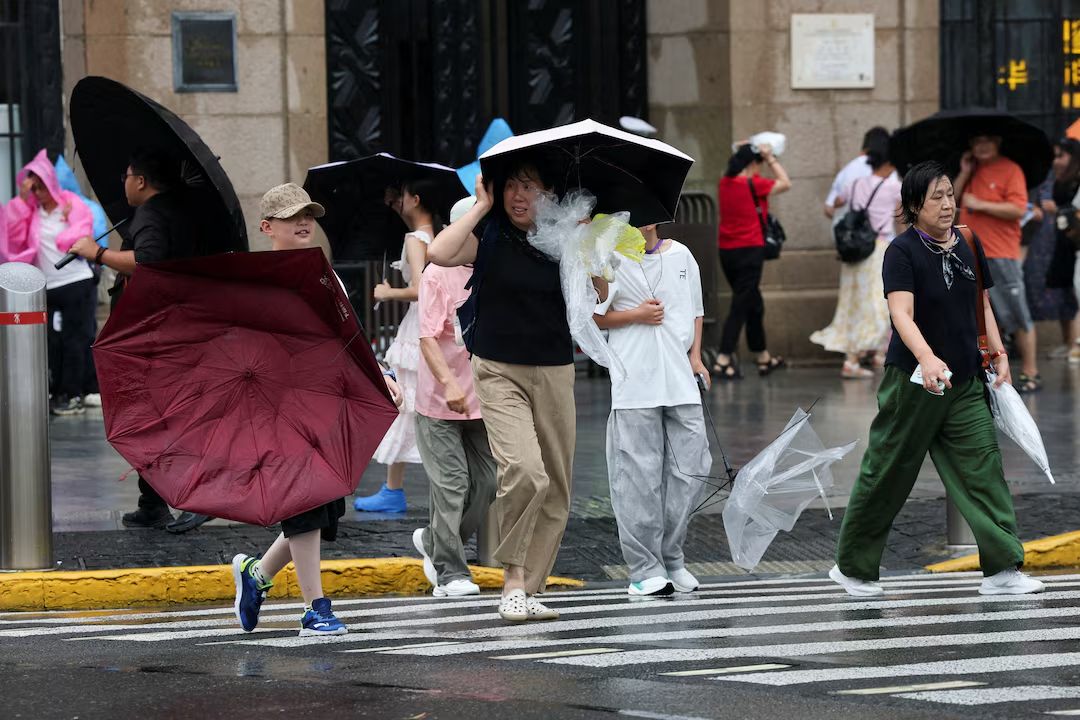
China has evacuated more than one million people from vulnerable areas as powerful Typhoon Dolphin approached and made landfall along the country's eastern coast, triggering emergency measures across several provinces and disrupting transport in major cities, including Shanghai.
The storm, described as the most powerful tropical cyclone to strike China in 2026, made landfall near Yuhuan in eastern Zhejiang province on Sunday, August 9, bringing destructive winds, torrential rainfall and an elevated risk of flooding and landslides. (Reuters)
The massive evacuation reflected the scale of the threat posed by Dolphin, particularly in densely populated coastal areas where millions of people live and where extreme rainfall can rapidly overwhelm drainage systems, rivers and other infrastructure.
Typhoon Dolphin intensifies before landfall
Typhoon Dolphin strengthened as it moved toward China's eastern coastline, with sustained winds reaching about 151 kilometres per hour, equivalent to the strength of a Category 1 hurricane.
Authorities responded by moving residents from areas considered particularly vulnerable to flooding, storm surges and landslides.
In Zhejiang, Wenzhou alone relocated more than 900,000 residents and established more than 1,000 emergency shelters to accommodate people forced to leave their homes. Nearly 99,000 residents were also evacuated from high-risk areas in neighbouring Fujian province.
The scale of the preparations demonstrated China's extensive disaster-response infrastructure and the government's determination to reduce casualties before the storm's arrival.
Authorities suspended ferry operations, construction activities and other potentially dangerous outdoor activities, while emergency services were placed on heightened alert.
Shanghai prepares for heavy rainfall and disruption
Shanghai, China's financial and commercial hub, was among the major population centres preparing for Dolphin's impact.
The storm disrupted air travel, with more than 1,500 flights cancelled in Shanghai, while authorities warned residents to remain indoors as strong winds and heavy rainfall threatened transport networks and urban infrastructure.
Shanghai's exposure was particularly significant because of its enormous population and strategic importance to China's economy.
Typhoons affecting the city can disrupt airports, rail services, ports, businesses and manufacturing supply chains, creating economic consequences that extend well beyond the immediate storm zone.
The city's experience with previous powerful storms has also reinforced concerns about flooding, especially as intense rainfall can combine with coastal water levels and drainage pressures.
Up to 500mm of rain forecast
One of the greatest dangers associated with Dolphin was not simply its wind strength but the enormous quantity of rainfall accompanying the system.
Forecasters warned that some areas could receive up to 500 millimetres of rain, raising the risk of flash floods, river flooding and landslides.
Heavy rainfall was expected to continue into August 10, meaning the danger did not end when the typhoon crossed the coastline.
Emergency authorities were therefore monitoring rivers, reservoirs and other water-control infrastructure while preparing for possible geological disasters.
The combination of saturated ground, steep terrain and intense rainfall can create particularly dangerous conditions in areas prone to landslides.
Japan was also affected before China landfall
Dolphin had already disrupted before reaching mainland China.
The storm passed through Japan's Okinawa prefecture, where six people were injured, and widespread power outages were reported.
The storm's movement across the western Pacific illustrated the wide geographical footprint of major tropical cyclones. Although the most severe impacts were expected in China, neighbouring countries and territories can also experience strong winds, heavy rain, coastal flooding and transportation disruptions.
Why China's evacuation was so extensive
China's decision to evacuate more than one million people reflects the country's experience with increasingly destructive weather disasters and the enormous population living in coastal and low-lying areas.
Eastern China is home to major industrial centres, ports and densely populated cities. A severe typhoon can therefore create risks not only to human life but also to electricity networks, factories, roads, railways, ports and global supply chains.
Moving residents before the arrival of dangerous weather is one of the most effective ways authorities can reduce deaths and injuries.
The evacuation of more than one million people was therefore not necessarily an indication that disaster had already occurred. Rather, it represented a large-scale preventive response designed to keep people away from the areas expected to experience the worst conditions.
Climate change and stronger storms
The arrival of Dolphin has also renewed attention on the relationship between tropical cyclones and a warming planet.
Scientists have increasingly examined how warmer ocean temperatures can provide additional energy for tropical cyclones and contribute to the intensification of some storms.
Research published in 2026 has highlighted the importance of ocean heat content and subsurface ocean conditions in tropical cyclone development, showing that storm behaviour depends on more than surface temperatures alone. (arXiv)
Researchers studying typhoon risks around Shanghai have likewise warned that the combination of coastal urbanisation, population growth and changing climate conditions could increase the potential impact of future storms.
For a megacity and economic centre such as Shanghai, even a storm that does not make a direct hit can produce major disruption through rainfall, flooding and transportation shutdowns.
China faces another major weather test
Typhoon Dolphin arrived as China continued to contend with a broader pattern of extreme weather, including heavy rainfall and flooding in different parts of the country.
The government's response to Dolphin highlighted the importance of early warnings, evacuation planning, emergency shelters and coordinated disaster management.
With more than one million people moved to safety, authorities appeared determined to prevent a repeat of the worst consequences associated with major typhoons of the past.
The storm's ultimate impact will depend on the extent of flooding, infrastructure damage and casualties after the rainfall subsides.
Conclusion
Typhoon Dolphin has emerged as one of China's most significant weather emergencies of 2026, forcing more than one million people to leave their homes as the powerful storm approached the country's eastern coastline.
With hurricane-force winds, torrential rainfall and forecasts of up to 500mm of precipitation, the threat extended from coastal communities to major urban and economic centres such as Shanghai.
The evacuation effort underscored the scale of China's preparedness for extreme weather and the growing importance of early action in protecting vulnerable populations.
As climate change continues to influence discussions about extreme weather, Dolphin also serves as another reminder that densely populated coastal regions face mounting risks from powerful storms, flooding and rising disaster costs.