China Censors Public Mourning as Former Premier Zhu Rongji Is Laid to Rest
China has tightened security and restricted online tributes as former Premier Zhu Rongji is cremated in Beijing, highlighting official concerns over public grief becoming political dissent.
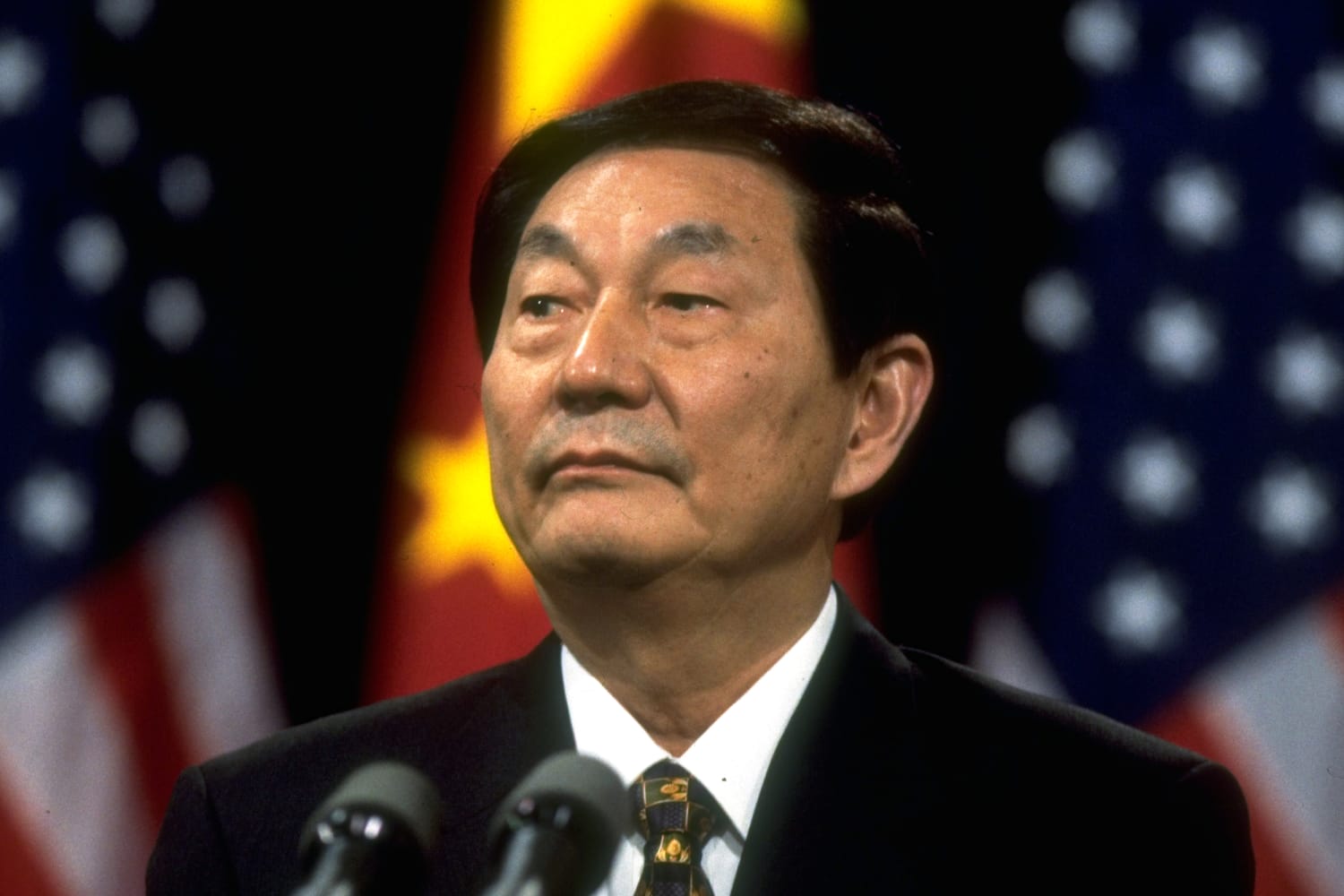
China has tightened security and restricted public expressions of mourning as the country bid farewell to former Premier Zhu Rongji, a towering figure in China's economic reform era whose legacy remains both celebrated and politically sensitive.
Zhu, who died last week at the age of 97, was cremated in Beijing on Tuesday, August 18, with President Xi Jinping and other senior Communist Party officials attending the tightly controlled funeral ceremony. National flags were lowered to half-mast at government buildings, including Tiananmen Square, as part of the official mourning arrangements. (Reuters)
But alongside the official tributes, authorities have moved to keep public grief carefully contained. Online discussions about Zhu have reportedly faced censorship, while security was increased around sensitive locations in Beijing and at places associated with his family and political career. (Financial Times)
The measures reflect a longstanding concern within China's Communist Party that the death of a popular former leader can become a catalyst for broader political expression.
Zhu Rongji's funeral was held under tight security
Zhu's funeral took place at the Babaoshan Revolutionary Cemetery in Beijing, where the remains of many senior Communist Party officials and national figures are buried.
Authorities lowered China's national flag at Tiananmen Square and other government locations as a mark of respect. Flags were also lowered in Hong Kong and Macau under the official mourning arrangements. (SCMP)
Security was particularly tight around central Beijing, including Tiananmen Square and Zhongnanhai, the leadership compound at the heart of China's political system. The route between the leadership district and the crematorium was also heavily secured. (The Straits Times)
The highly controlled arrangements allowed the Communist Party to honour Zhu officially while maintaining close control over how his death was publicly discussed.
Online mourning comes under scrutiny
While state media provided official coverage of Zhu's death and funeral, independent discussion online has reportedly been much more restricted.
The restrictions are significant because Zhu remains a popular figure among sections of the Chinese public, particularly those nostalgic for the period of rapid economic liberalisation during the 1990s and early 2000s.
The Financial Times reported that authorities were keeping a close watch on public mourning, including gatherings around Zhu's ancestral home in Hunan Province. Plainclothes police reportedly monitored mourners, while tributes were removed or cleared away.
The restrictions illustrate the delicate balance Beijing faces: Zhu is an official figure whose contribution to China's economic development is recognised by the state, but widespread public discussion of his reformist legacy could also encourage comparisons with China's current political and economic direction.
Why Zhu Rongji remains politically sensitive
Zhu served as China's premier from 1998 to 2003, after serving as vice premier during the 1990s.
He became internationally recognised for his role in transforming China's economy. During his premiership, China pursued major reforms of state-owned enterprises, banking, taxation and other areas of the economy.
He also played an important role in China's preparations for joining the World Trade Organisation in 2001, a milestone that helped accelerate China's integration into the global economy.
Zhu was known for his blunt speaking style and reputation for confronting difficult economic problems directly.
His reforms, however, came with substantial social costs. Restructuring state-owned enterprises resulted in millions of workers losing their jobs, while economic liberalisation contributed to major changes in Chinese society.
Consequently, Zhu's legacy is complicated. He is admired by many for his economic competence and integrity, while others remember the hardship associated with his reforms.
Public nostalgia creates a challenge for Beijing
The political sensitivity surrounding Zhu's funeral is partly connected to nostalgia for the era in which he served.
The 1990s and early 2000s were characterised by rapid economic growth, greater engagement with foreign markets and extensive market-oriented reforms.
Under President Xi Jinping, China has increasingly emphasised stronger state control over strategic sectors and a more centralised political system.
For some Chinese citizens, Zhu therefore represents an earlier period of economic openness and reform.
Reuters reported that many Chinese social media users have expressed nostalgia for the reform era associated with Zhu and his political counterpart, former leader Jiang Zemin.
That nostalgia does not necessarily translate into organised political opposition. Nevertheless, Chinese authorities have historically been wary of spontaneous public gatherings and emotional displays that could develop into political movements.
Lessons from Hu Yaobang and Li Keqiang
China's caution over Zhu's funeral has deep historical roots.
The most important precedent is perhaps the death of former Communist Party leader Hu Yaobang in 1989.
Hu had been removed from his position after being viewed as too sympathetic to political reform. When he died, enormous public gatherings were held to mourn him. Those gatherings eventually contributed to the student-led demonstrations that culminated in the Tiananmen Square protests of 1989.
That history remains deeply sensitive for the Chinese Communist Party.
More recently, the death of former Premier Li Keqiang in 2023 also produced an extraordinary public reaction.
Chinese citizens placed flowers and other tributes at memorial sites, while online users expressed affection for Li and, in some cases, used the occasion to indirectly criticise the country's political direction.
Citizen Lab documented censorship of online discussion following Li's death, including instructions warning platforms against allowing “overly effusive” comments. Universities also warned students against gathering to commemorate him. (The Citizen Lab)
The Li experience appears to have reinforced Beijing's determination to prevent mourning for senior former leaders from becoming a vehicle for political mobilisation.
Zhu's funeral contrasts with his public image
The restrictions surrounding Zhu's funeral are particularly notable because of his reputation for speaking candidly.
During his political career, Zhu became known for his direct language and willingness to address difficult economic issues openly.
His public image has remained relatively positive among many Chinese citizens, with some viewing him as a symbol of a more pragmatic period of governance.
Yet the official handling of his death has focused primarily on his loyalty to the Communist Party and his contributions to national development, while avoiding extensive public debate about the political implications of his reform agenda. (Financial Times)
That approach allows authorities to preserve Zhu's status as a respected former national leader without encouraging an uncontrolled debate about China's current political and economic trajectory.
Censorship extends beyond the funeral
The restrictions surrounding Zhu are part of China's broader system of internet and media censorship.
Chinese authorities maintain extensive controls over social media, online search, news organisations and other forms of public communication.
Political subjects considered particularly sensitive can be removed quickly from Chinese social media platforms, while accounts that repeatedly publish prohibited material can face suspension or other penalties.
The death of a senior political figure presents a particular challenge because millions of people may want to discuss the person's career, policies and legacy.
In Zhu's case, the government appears determined to ensure that those discussions remain within officially acceptable boundaries.
A carefully managed farewell
China's handling of Zhu Rongji's death illustrates the Communist Party's broader approach to political memory: honour the past while controlling the narrative surrounding it.
The state has formally recognised Zhu's contributions, lowered national flags and held a high-level funeral attended by the country's top leadership.
At the same time, security restrictions and online censorship have limited opportunities for spontaneous public mourning and political discussion.
For many Chinese citizens, however, Zhu's death has prompted memories of a period when the country's economy was undergoing dramatic transformation, and its relationship with the outside world was rapidly expanding.
The challenge for Beijing is ensuring that such nostalgia remains a reflection on history rather than becoming a broader conversation about China's present.
As Zhu Rongji is laid to rest, his funeral has therefore become more than a ceremony for a former premier. It has also highlighted the continuing tension between public memory, political control and China's changing economic identity.