Canada Unveils ‘Dollar-for-Dollar’ Retaliatory Tariffs on US Goods as Trade War Escalates
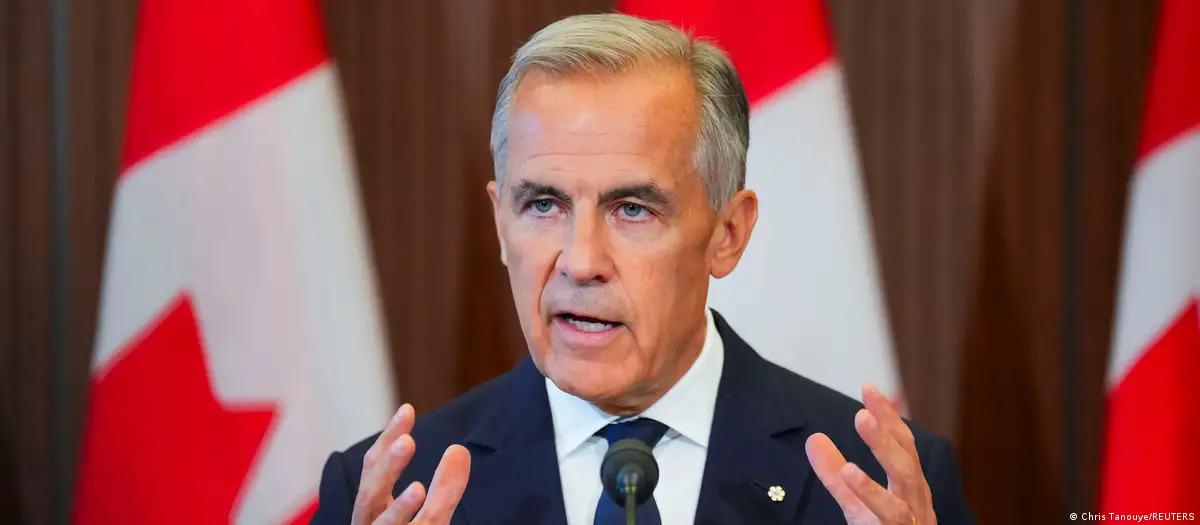
Canada has announced a sweeping package of “dollar-for-dollar” retaliatory tariffs on US imports, escalating a rapidly deteriorating trade dispute between the two North American neighbours and longtime economic partners.
The Canadian government said on August 25 that it would match the latest US tariffs rate for rate, imposing duties of 15%, 25% and 50% on selected American products worth approximately C$27.6 billion (US$19.9 billion) annually.
The measures will take effect on September 8, 2026, following the collapse of intensive trade negotiations between Canadian Prime Minister Mark Carney and US President Donald Trump. (Canada)
The latest escalation marks a new phase in the trade confrontation between the two countries, whose economies are deeply interconnected through supply chains spanning manufacturing, agriculture, energy and consumer goods.
Canada vows to match US tariffs
Canada's Finance Minister, François-Philippe Champagne, announced that Ottawa would respond directly to Washington's latest tariffs by matching them “dollar for dollar, rate for rate.”
Under the new measures, Canada will impose tariffs of 50%, 25% and 15%, depending on the corresponding US tariff imposed on Canadian goods.
The Canadian government said the new countermeasures will cover products targeted by US Section 338 and Section 232 tariffs. The affected sectors include steel, dairy, appliances, agricultural equipment, pulp and paper and electronics.
The policy is intended to protect Canadian businesses from being placed at a disadvantage by American imports while demonstrating that Ottawa will not accept what it considers unfair trade pressure.
Why Canada retaliated
The latest Canadian response followed Washington's decision to impose 50% tariffs on C$27.6 billion worth of Canadian goods, effective August 22.
The US tariffs came after several days of intensive negotiations between Ottawa and Washington failed to produce an agreement.
According to Reuters, the breakdown in talks followed disagreements over sensitive sectors including steel, aluminium, automobiles and softwood lumber. The new American tariffs also affect products such as furniture, clothing, dairy products, fishing equipment and hockey-related goods. (Reuters)
Carney said Canada had negotiated in good faith but would not accept terms that he believed were damaging to Canadian workers, businesses or national interests.
The Canadian government subsequently suspended further negotiations while announcing its retaliatory measures.
More than 700 American products affected
Ottawa's response is extensive.
Canada's Department of Finance said the new tariffs will apply to products representing approximately C$27.6 billion in US imports.
The affected goods span hundreds of product categories, with the government saying the list covers more than 700 products.
Items facing the highest 50% tariff include certain steel, aluminium, furniture and clothing products. A 25% tariff will apply to products including some appliances, cheese, seafood and steel and aluminium derivatives, while selected electronics and tools will face 15% duties. (Investing.com)
The complete list has been published by the Canadian government, giving businesses time to prepare for the September implementation date. Canada's official list of products subject to counter-tariffs
Canada targets vulnerable US industries
The selection of American products appears designed not simply to raise revenue but also to protect Canadian industries and create pressure on US producers.
Canadian officials have indicated that the counter-tariffs were deliberately focused on sectors affected by the American measures.
Some of the targeted industries have strong political and economic significance in the United States.
Canadian Industry Minister Mélanie Joly has encouraged Canadians to support domestic products as the country responds to the trade dispute.
The strategy reflects Ottawa's broader effort to reduce Canada's dependence on the US market while encouraging domestic production and finding alternative international markets.
Ottawa offers C$7.5 billion support package
Canada's retaliation comes alongside a significant financial support programme for businesses and workers expected to be affected by the trade war.
The federal government announced a C$7.5 billion package of new and enhanced measures.
The package includes assistance for small and medium-sized businesses, financing to help companies maintain cash flow and programmes aimed at workers whose jobs could be affected by tariffs.
Ottawa also announced measures to support retraining and job transitions, as well as changes to financing facilities for large companies facing tariff-related disruptions.
The government said these measures build on almost C$25 billion in support already provided since the beginning of the wider tariff dispute.
Energy and other sectors remain relatively protected
Despite the severity of the latest retaliation, Canada has deliberately avoided imposing new tariffs across every area of trade.
Energy and some strategically important commodities remain outside the new measures.
The decision reflects Canada's own dependence on the US market and the need to prevent retaliatory measures from causing excessive damage to Canadian consumers and industries.
Canadian authorities have also said that the counter-tariffs are designed to minimise the impact on Canadian households while placing pressure on US exporters.
That balancing act will be difficult, however, because American and Canadian supply chains are deeply integrated.
US-Canada trade worth hundreds of billions
Canada and the United States maintain one of the world's largest bilateral trading relationships.
Goods and services worth hundreds of billions of dollars move across their shared border every year, supporting businesses and jobs in both countries.
Manufacturing is particularly interconnected, with components frequently crossing the border multiple times before finished products reach consumers.
The escalating tariffs therefore risk raising costs for companies on both sides.
US businesses that rely on Canadian customers could see demand fall, while Canadian manufacturers importing American components could face higher production costs.
Consumers could ultimately bear some of those costs through higher prices.
USMCA faces new pressure
The trade confrontation could also threaten the stability of the United States-Mexico-Canada Agreement (USMCA), the trade framework that replaced NAFTA.
The agreement has provided preferential access to North American markets and helped support integrated supply chains.
However, the latest US tariffs reportedly apply to some Canadian products that previously benefited from preferential treatment under the agreement.
Reuters described the development as a significant escalation that could further complicate the future of the three-country trade pact. (Reuters)
The possibility of prolonged tariffs has consequently created uncertainty for companies making long-term investment decisions.
Trump and Carney face political pressure
The dispute is also becoming increasingly political.
Trump has continued to defend his administration's aggressive tariff strategy, arguing that tariffs can protect American industries and improve the US trade position.
Carney, meanwhile, has portrayed Canada's response as necessary to defend national interests and protect Canadian workers.
The confrontation has strengthened nationalist rhetoric on both sides of the border.
For Carney, the challenge is to demonstrate that Canada can stand up to its largest trading partner without causing unnecessary economic damage.
For Trump, the dispute tests whether tariffs can deliver the political and economic benefits promised by his administration without triggering significant costs for American businesses and consumers.
Canadian businesses urged to diversify
The trade crisis is also accelerating Canada's efforts to diversify its economy.
Canadian officials have increasingly encouraged companies to explore markets beyond the United States, including Europe and Asia.
The federal government's Canada Strong Diversification Fund is among the measures designed to help companies adapt to changing international trade conditions.
Such diversification could reduce Canada's long-term vulnerability to changes in US trade policy.
However, replacing the US market will not be easy.
Geographical proximity, existing infrastructure and decades of economic integration make the American market uniquely important to Canadian exporters.
Could the tariffs still be reversed?
Despite the escalation, the situation remains fluid.
Canada's new tariffs do not necessarily mean the trade dispute will continue indefinitely.
Ottawa has left the door open to future negotiations, while businesses on both sides have strong incentives for the two governments to reach an agreement.
The September 8 implementation date could provide another window for diplomatic discussions.
If negotiations resume and a compromise is reached, some or all of the tariffs could potentially be withdrawn.
But for now, Canada is preparing for a prolonged confrontation.
A new chapter in North American trade
Canada's decision to impose dollar-for-dollar tariffs on US goods represents one of the clearest signs yet that the longstanding economic relationship between Ottawa and Washington is under serious strain.
The measures will target about C$27.6 billion of American imports, while the Canadian government is committing billions of dollars to protect workers and businesses from the fallout.
The immediate impact will depend on how companies respond, whether American exporters absorb the additional costs and whether consumers change their purchasing habits.
More importantly, the dispute could reshape North American trade well beyond the current tariff battle.
For decades, Canada and the United States have relied on an exceptionally integrated economic relationship.
Now, that relationship is being tested by a cycle of tariffs and retaliation.
Canada's “dollar-for-dollar” response sends a clear message: Ottawa is prepared to absorb economic pain to resist what it considers unfair US trade pressure.
Whether that strategy ultimately forces Washington back to the negotiating table or instead triggers a deeper and longer trade war—will be one of the most important economic questions facing North America in the months ahead.