Canada PM Warns ‘Stakes Are High’ Ahead of Alberta Separation Vote
Canadian Prime Minister Mark Carney warns that the stakes are high as Alberta prepares to vote on October 19 on whether to begin the legal process for a future independence referendum, amid concerns over national unity, oil revenues and US influence.
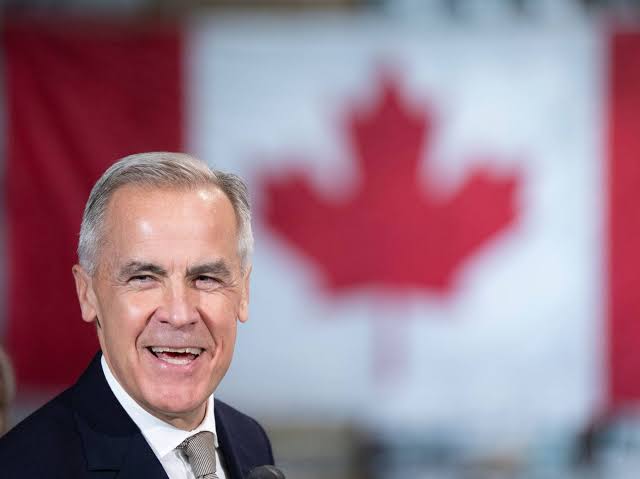
Canadian Prime Minister Mark Carney has warned that the stakes are high as Alberta approaches a landmark vote on whether to begin the legal process for a future referendum on separating from Canada, urging residents of the oil-rich province to preserve national unity amid growing economic and geopolitical uncertainty.
Speaking at a pro-Canada rally in Calgary on Thursday, October 15, Carney called on Albertans to vote against initiating the separation process, warning that the move could lead to years of political division, economic uncertainty and missed opportunities.
“The stakes are high,” Carney told the crowd, (Global News)
The rally formed part of a last-minute campaign to persuade voters to keep Alberta within the Canadian federation ahead of Monday's October 19 referendum.
The vote is not an immediate decision on independence. Instead, residents will be asked whether Alberta should remain part of Canada or begin the legal process required to hold a future, binding referendum on separation.
The distinction is significant because even a majority vote in favour of starting that process would not automatically make Alberta an independent country. Further legal and constitutional steps would be required.
Carney's intervention reflects growing concern in Ottawa that the separation debate could deepen regional divisions at a time when Canada faces trade tensions with the United States and wider uncertainty over its economic future.
What Alberta voters will decide on October 19
Alberta's referendum will ask voters to choose between remaining a province within Canada and instructing the provincial government to begin the legal process for a future separation referendum.
The ballot contains 10 questions covering a range of provincial and constitutional issues. The separation question is the most consequential because it could initiate a formal process to consider Alberta's departure from the federation.
According to Reuters' explainer on Alberta's referendum, the vote represents the first time Alberta has put the question of separation directly to its electorate.
A vote in favour of beginning the process would represent a significant political development, but it would not settle the question of independence. Any eventual departure would require negotiations with the federal government and a constitutional amendment.
The outcome could also influence relations between Alberta and Ottawa, particularly regarding provincial powers, energy policy, immigration and the distribution of government revenues.
Why Alberta's independence movement is gaining attention
Alberta has long been a centre of Canada's oil and gas industry, and its economic interests have frequently brought it into conflict with federal governments over environmental regulation, energy development and taxation.
Supporters of separation argue that the province's energy wealth contributes disproportionately to the national economy while federal policies restrict its ability to maximise its resources.
Some separatist campaigners also believe Ottawa has failed to adequately represent Alberta's political and economic interests.
The movement gained momentum after years of disputes over energy and environmental policies, including opposition to measures introduced under former prime minister Justin Trudeau. Organisers have also drawn support from some people associated with the 2022 Freedom Convoy protests.
However, the independence movement does not represent a majority of Albertans, according to recent polling cited by news organisations.
Alberta Premier Danielle Smith, who called for the referendum, has said she supports the province remaining in Canada. She has nevertheless acknowledged the strength of separatist sentiment and argued that Alberta needs greater autonomy and a more effective relationship with Ottawa.
Smith's position reflects an attempt to address provincial grievances without endorsing outright independence.
Carney warns against economic and political uncertainty
Carney has argued that pursuing separation would expose Alberta to a prolonged period of uncertainty, potentially affecting investment, economic development and major infrastructure projects.
At the Calgary rally, he pointed to plans for a proposed pipeline linking Alberta's oil-producing region to Canada's Pacific coast. The project is intended to expand access to international markets and reduce Canada's dependence on the United States as an export destination.
He also cited national housing and high-speed rail initiatives as examples of projects that could benefit from cooperation between federal and provincial governments.
Carney's warning draws partly on his experience as governor of the Bank of England during Britain's 2016 Brexit referendum. He has repeatedly cited the uncertainty that followed the vote as a reason Albertans should be cautious about beginning a separation process.
In his view, political uncertainty could discourage investment and make it harder for businesses and governments to plan for the future.
Separatist supporters reject the argument that maintaining the status quo is the best solution. They contend that the prospect of independence could strengthen Alberta's negotiating position and force Ottawa to reconsider policies they consider unfair.
The referendum therefore reflects a wider disagreement about whether Alberta's interests are best served through greater autonomy within Canada or by exploring a separate political future.
US relations add another dimension
The vote comes amid strained relations between Canada and the United States, following President Donald Trump's trade policies and repeated comments about Canada becoming the 51st US state.
Carney has argued that Canada faces significant external challenges and needs national unity to protect its economic interests and sovereignty.
He has also raised concerns about possible foreign interference in the Alberta referendum, saying governments outside Canada should not attempt to influence the democratic process.
Speaking to Global News on October 15, Carney said Canadian authorities were actively monitoring potential foreign interference. (Global News)
The issue has attracted attention after some separatist figures reportedly sought support in the United States. Meanwhile, statements by US officials about Alberta's potential relationship with America have added to concerns about the international implications of the movement.
Carney's argument is that a divided Canada could find it more difficult to negotiate trade agreements, attract investment and respond collectively to external pressure.
Indigenous rights and constitutional obstacles
Beyond politics and economics, Alberta's separation debate raises important constitutional and Indigenous rights questions.
Canada's Supreme Court ruled in 1998 that a province cannot unilaterally secede under the existing constitutional framework. A clear majority supporting separation would create an obligation to negotiate, rather than automatically establish independence.
The federal Clarity Act subsequently established principles governing negotiations following a provincial referendum on secession.
Indigenous communities have also raised concerns about the potential consequences of separation for treaty rights and their constitutional relationship with Canada. Their treaties predate Alberta's entry into Confederation, making consultation and the protection of those rights central issues in any separation process.
Reuters has reported on legal challenges concerning consultation with Indigenous peoples and the implications of a potential independence process.
These obstacles mean that even a successful vote to initiate separation proceedings could lead to years of negotiations and legal disputes.
Conclusion: A defining moment for Alberta and Canada
As Alberta approaches its October 19 referendum, Carney's warning that the stakes are high reflects the national implications of a vote that extends beyond the province's borders.
The immediate decision concerns whether to begin the legal process for a future independence referendum, not whether Alberta will leave Canada on Monday.
For separatists, the vote offers an opportunity to challenge the existing federal arrangement and demand greater control over the province's economic future. For Carney and supporters of Canadian unity, it risks creating prolonged uncertainty at a time of trade tensions and geopolitical pressure.
Whatever the result, the referendum is likely to influence discussions about federalism, energy policy, provincial autonomy and Indigenous rights.
The central question facing Alberta is whether its grievances can be addressed through reforms within Canada or whether the political momentum behind separation will continue to grow.
The outcome on October 19 will provide an important indication of the province's direction, but the future of Alberta and its relationship with the rest of Canada - will depend on what happens after the ballots are counted.