Burkina Faso Detains 11 Nigerian Soldiers After Forcing Military Plane to Land
Burkina Faso says it forced a Nigerian C-130 to land and detained 11 soldiers for an alleged airspace breach - a rapidly evolving Sahel security and diplomatic crisis.
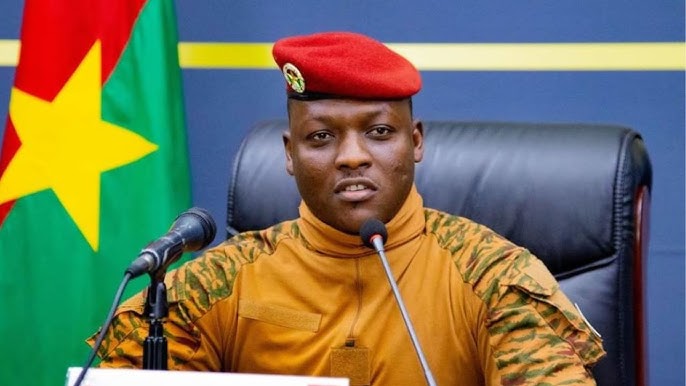
Burkina Faso’s military authorities say they intercepted a Nigerian Air Force C-130 transport aircraft on 8 December 2025, forced it to land at Bobo-Dioulasso and detained 11 Nigerian service members aboard after accusing the jet of operating in Burkinabe airspace without authorisation. The Alliance (Confederation) of Sahel States (AES) - the bloc led by the juntas in Burkina Faso, Mali and Niger - described the incident as a serious violation of its sovereignty and said an investigation was under way. TheCable
The AES statement, published by Burkina Faso’s state news agency, said the aircraft “was forced to land … following an in-flight emergency while operating in Burkinabe airspace” and that checks by Burkinabe authorities highlighted the absence of overflight clearance for the military aircraft. AES said the transport plane carried two crew and nine passengers - all military personnel - and condemned the incursion in the strongest terms.
The story emerged as a breaking and rapidly evolving situation: multiple Nigerian media outlets and regional press carried copies of the AES statement and reactions from local officials, while there was no immediate public comment from the Nigerian Air Force or Nigeria’s federal government at the time of reporting. Several Nigerian news sites flagged video and eyewitness claims that the aircraft made an emergency landing after being intercepted, but independent confirmation of the sequence of events and the reason for the flight’s course remains limited. Tribune Online
Why this matters
At first glance the episode appears to be an airspace or aviation protocol dispute - but the timing and the actors involved make it a far more delicate diplomatic incident. The AES is a new, politically assertive Sahel bloc created by the juntas in Burkina Faso, Mali and Niger, which severed or downgraded relations with ECOWAS and in recent months has shown a readiness to assert sovereignty via forceful statements and measures. For Abuja, which recently deployed jets and forces in support of Benin’s government after a failed coup, any Nigerian military movement in the region will be seen through a tense political lens. Reuters
The immediate practical consequences are clear: 11 Nigerian personnel detained on foreign soil constitute an urgent consular and military issue. If the AES concludes that a deliberate violation occurred, it may press for formal explanations, launch criminal or administrative inquiries, or seek reparations and guarantees. Conversely, if Nigeria shows evidence the landing was an authentic emergency or a navigation/communications error, that could defuse the crisis - but only if both sides can quickly agree on facts.
Possible explanations and technical questions
There are several plausible explanations that commonly arise when military aircraft make unscheduled landings across borders:
• Genuine in-flight emergency. Mechanical trouble, medical emergencies, or fuel problems sometimes force aircraft to divert; in such cases, international law permits emergency landings but requires prompt notification. AES’s statement references an “in-flight emergency,” but also says there was no prior clearance. Verification will hinge on flight logs, communications records and black-box data if available.
• Navigation or communication failure. Accidents happen - the aircraft might have strayed accidentally because of navigation errors or radio silence. However, military flights generally require strict flight plans and clearances, especially across the Sahel’s crowded and contested airspace. Businessday NG
• Provocation or strategic signalling. Given the fraught relations between Nigeria and some junta-led Sahel states - and the recent Nigerian military involvement in Benin - AES could interpret movements by Nigerian aircraft as political or security provocations. If so, the interception could be a deliberate message about control of AES airspace. Reuters
Regional and diplomatic implications
If unresolved, the incident risks escalating into a broader diplomatic rupture. Nigeria is West Africa’s largest military and economic power; a confrontation with AES states - particularly on the heels of Nigeria’s forceful actions in Benin - would complicate regional security cooperation against jihadist groups and cross-border crime. AES’s warning that air and anti-aircraft defences had been put “on maximum alert” signals a high state of readiness that could raise the stakes for any subsequent air operations in the region.
The affair also tests existing regional and continental mechanisms for de-escalation. ECOWAS, the African Union and the United Nations typically play mediation roles; their involvement (or lack thereof) will shape whether the episode becomes a contained diplomatic dispute or a protracted crisis. International partners with security interests in the Sahel - including France, the EU, and the U.S. - will watch closely and may encourage rapid, transparent fact-finding.
What to watch next
• Official Nigerian response. Abuja’s clarification - whether describing an emergency landing, a navigational error, or rejecting AES claims - will be decisive. Watch for Ministry of Defence and Nigerian Air Force briefings.
• AES follow-up and legal steps. Will AES release flight data, detain the aircraft indefinitely, or offer terms for return of the personnel?
• Mediation moves. Whether ECOWAS, the AU or a neutral party offers to mediate could determine whether tensions cool.
• Operational impact. Nigeria may reroute flights or temporarily scale back air movement in that corridor pending resolution.
Conclusion
At this stage, the Burkina Faso interception of a Nigerian military transport and the detention of 11 personnel is a developing story that mixes aviation rules, regional politics and the fragile security architecture of the Sahel. Rapid, transparent information sharing and diplomatic engagement are the only realistic paths to prevent a local airspace incident from ballooning into a far larger regional crisis.