Buratai Warns Wike-Navy Clash a “Clear and Present Danger” to National Security
Former Chief of Army Staff, Lt. Gen. Tukur Buratai (Rtd), has slammed FCT Minister Nyesom Wike over his public altercation with a naval officer in Abuja, calling it “a clear and present danger to national security” and urging President Bola Tinubu to take decisive action.
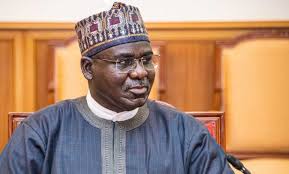
Former Chief of Army Staff and ex-Nigerian Ambassador to Benin Republic, Lieutenant General Tukur Yusuf Buratai (Rtd.), has waded into the recent controversy involving Federal Capital Territory (FCT) Minister, Nyesom Wike, and a Nigerian Navy officer, describing the incident as “a clear and present danger to national security.”
Buratai, who served as the head of the Nigerian Army between 2015 and 2021, issued a stern public rebuke of Wike’s conduct, saying it reflected “reckless indiscipline” unbecoming of a minister of the Federal Republic. The retired General, in a statement posted on his verified Facebook page, called for an immediate apology to the Armed Forces and the Commander-in-Chief, President Bola Ahmed Tinubu.
A Viral Clash in Abuja
The controversy stems from a heated confrontation between Wike and a naval officer, Lieutenant A.M. Yerima, during an enforcement visit to Plot 1946, Gaduwa District, Abuja - a parcel of land allegedly linked to a former Chief of Naval Staff, Vice Admiral Awwal Zubairu Gambo (Rtd.).
According to reports by The Guardian and Premium Times, Wike arrived at the site with officials from the FCT Development Control Department to halt what he described as “an illegal construction.” The confrontation quickly escalated when naval personnel, guarding the property, refused to grant the minister access.
Videos of the incident, which have since gone viral across social media platforms, captured the visibly angry minister shouting: “You are in uniform, and you’re telling me the Navy owns this land? Who gave you approval to build? Even if you are the Chief of Naval Staff, the law must be respected!”
Observers say the incident underscores persistent tensions between civil authorities and military institutions over land ownership and enforcement authority in the Federal Capital Territory.
Buratai’s Stinging Response
In his statement, General Buratai condemned the minister’s approach, warning that such public humiliation of a uniformed officer sends “a dangerous message” to Nigeria’s disciplined forces.
“A minister’s verbal assault on a military officer in uniform is an act of profound indiscipline that strikes at the very foundation of our national security apparatus,” Buratai said. “It is not political theatre - it is reckless endangerment of national order.”
He further argued that Wike’s actions “transcend mere misconduct,” claiming they undermine the authority of the Commander-in-Chief and the command structure that sustains discipline within the military.
“No public official, no matter how powerful, has the right to berate or humiliate a serving officer in uniform publicly. Such conduct erodes morale and weakens the chain of command that protects this nation,” he added.
Calls for Presidential Intervention
Buratai urged President Bola Tinubu to treat the confrontation not as a political squabble but as a national security concern, insisting that decisive corrective measures are necessary to protect institutional respect and inter-agency cooperation.
He demanded that Wike issue a public apology - not only to the affected officer but also to the Armed Forces of Nigeria and the Commander-in-Chief, President Tinubu.
“Barrister Nyesom Wike must tender an immediate and unequivocal public apology to President Bola Ahmed Tinubu as Commander-in-Chief, to the Armed Forces, and to the officer whose honour was violated,” Buratai declared. “Our nation’s security must come first. It is time for decisive action, not politics of military bashing.”
A Growing Debate Over Civil-Military Relations
The clash between Wike and Lt. Yerima has sparked a wider national debate about civil-military relations and executive conduct. Analysts and civil society organizations warn that public confrontations of this nature, especially when captured on video, risk emboldening disorder within the ranks and diminishing public respect for both government officials and the military.
Security analyst Kabiru Adamu told Channels Television that such incidents “could create confusion in the military hierarchy,” especially when the public perceives soldiers being insulted without recourse to disciplinary protocol.
“What we saw was not simply a minister inspecting land; it was a public altercation that risked sending mixed signals to junior officers about authority and respect. These are things that erode cohesion in security institutions,” Adamu said.
Mixed Reactions Across the Political Spectrum
While some Nigerians backed Wike’s stance - describing him as “fearless” and committed to “restoring order” in the often lawless FCT land administration system, others accused him of arrogance and disregard for due process.
Human rights lawyer Inibehe Effiong argued that Wike’s actions, though well-intentioned, were “executed in an unprofessional manner.” “There are legal procedures for reclaiming disputed land. The FCT Minister has enforcement agencies and courts at his disposal. Engaging in shouting matches with soldiers is not leadership,” Effiong noted in a social media post.
Supporters of the Armed Forces echoed Buratai’s sentiments, warning against the “public humiliation of uniformed personnel.” Others, however, accused the military of overstepping its bounds by assigning officers to guard private property - an act critics say contravenes military codes.
INEC, Governance and the Bigger Picture
The Abuja altercation also reflects broader challenges in Nigeria’s governance ecosystem, where the boundaries between political authority and institutional autonomy often blur.
Observers point out that similar frictions have occurred between ministers and security operatives in the past, often with damaging consequences for public confidence in government.
For Wike, who has cultivated a reputation as a no-nonsense administrator, the clash may bolster his populist image among supporters but could equally alienate sections of the establishment that view his approach as abrasive.
Political analyst Dr. Jide Ojo noted that while Wike’s commitment to reclaiming government lands is commendable, “leadership requires not just courage but composure.” … “Nigeria needs leaders who can enforce the law without undermining the dignity of the institutions that protect it,” Ojo said.
The Way Forward
As at press time, the Presidency has yet to issue an official statement, though sources within the Ministry of Defence have reportedly initiated internal reviews into the matter. Analysts suggest that the incident should serve as a teachable moment - one that calls for clearer protocols between civilian ministries and military formations operating within the FCT.
If properly handled, it could lead to improved cooperation and a renewed commitment to the rule of law. If ignored, it risks setting a dangerous precedent, where authority is defined by volume, not process.
As Buratai concluded in his statement: “This is not about politics. It is about safeguarding the discipline and integrity of our Armed Forces. When a civilian official undermines a soldier in uniform, he undermines the very foundation of the Republic.”
Sources
“Wike, Military Officers Clash Over Alleged Land Grabbing in Abuja."
“Wike in Heated Exchange With Naval Officers Over Abuja Land.”
“Buratai Warns Wike-Navy Clash a Threat to National Security.”