Buratai Urges Tinubu to Prepare for Possible Release of US Drug Records Ahead of 2027 Election
Former Army Chief Tukur Buratai has urged President Bola Tinubu to prepare for the possible release of old US records linked to alleged drug-trafficking investigations, warning of possible damage to Nigeria’s image and implications for the 2027 election.
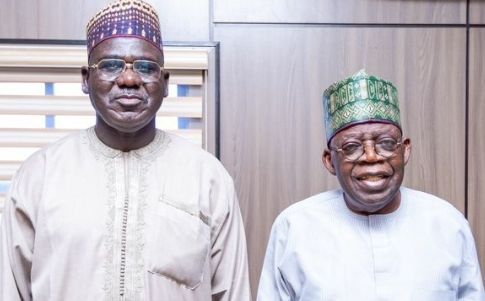
Former Chief of Army Staff, Lt. Gen. Tukur Buratai (retd.), has urged President Bola Ahmed Tinubu and Nigerians to prepare for the possible public release of historical US law-enforcement records relating to allegations of drug trafficking involving the Nigerian president.
Buratai warned that the disclosure of the documents could generate significant international attention, potentially affecting Nigeria's global image, economic interests and the country's political environment ahead of the 2027 general election.
The former Army chief made the remarks in a position paper titled “Nigeria First: A Case for Protecting National Sovereignty and Dignity - A Patriotic and Non-Partisan Perspective.” He argued that the controversy should not be viewed solely as a personal matter concerning Tinubu but as an issue capable of affecting Nigeria and its citizens. (The Sun Nigeria)
Importantly, the records at issue concern allegations and historical investigations. Tinubu has denied wrongdoing and has not been convicted of drug trafficking in the United States. (ICIR News)
US court considers release of records
The controversy stems from a Freedom of Information Act case in the United States involving American transparency activist Aaron Greenspan, who sought records from agencies including the FBI and Drug Enforcement Administration relating to investigations involving Tinubu.
The records concern investigations dating back more than three decades, including a 1990s Chicago heroin-trafficking investigation and a related civil forfeiture proceeding.
In April 2025, US District Judge Beryl Howell ruled that the FBI and DEA could no longer broadly rely on “Glomar” responses - where an agency neither confirms nor denies whether records exist - to refuse to process the requests.
The judge concluded that, because the agencies had already acknowledged investigations involving Tinubu, continuing to rely on the Glomar response was not justified. The latest stage of the case has intensified political interest in Nigeria.
Reports indicate that the FBI, Department of Justice, DEA and Tinubu have been given a court deadline of August 28, 2026, to oppose the release of records, while the FBI has sought permission to submit some sensitive material to the judge privately for review.
A private, or in-camera, review would allow the judge to examine potentially sensitive information before deciding whether any material should be publicly released.
Buratai raises national image concerns
Buratai's central argument is that whatever the eventual contents of the documents, their release could have consequences beyond the President. The retired general said international headlines connecting Nigeria's sitting president with historical drug allegations could affect how the country is perceived internationally.
He specifically cited potential consequences for Nigerians seeking education, employment and business opportunities abroad. According to Buratai, investors, international businesses and Nigerians in the diaspora could also be affected if the controversy becomes a dominant international narrative about the country. (The Sun Nigeria)
He therefore urged Nigerians to distinguish between defending an individual political leader and protecting the country's broader interests. His argument was summed up in his position that the issue should be approached from the perspective of “Nigeria First”, rather than partisan politics.
Buratai questions timing of the controversy
Another major element of Buratai's intervention is the age of the allegations. The retired general pointed out that the matters under discussion date back approximately 33 years, arguing that they should be considered within the historical context in which they occurred.
He questioned whether allegations dating from the early 1990s should be allowed to define a country or a political leader decades later.
Buratai also pointed to Tinubu's subsequent political career, including his tenure as governor of Lagos State and his eventual emergence as President of Nigeria.
His argument, however, does not determine the legal status of the records. Any allegations contained in documents released by US authorities would still need to be assessed independently against verified evidence and the findings of relevant courts.
Tinubu has not been convicted of drug trafficking
The distinction between an investigation, an allegation and a criminal conviction is particularly important in the controversy. Available reports indicate that Tinubu was involved in a US civil forfeiture case concerning money seized by American authorities. However, he has consistently denied involvement in drug trafficking and was not criminally convicted of drug trafficking in the United States.
Reports about the possible release of FBI and DEA records therefore should not automatically be interpreted as proof of criminal wrongdoing. The content and evidentiary significance of any records that are eventually made public would need to be established after their release.
Possible impact on Nigeria's 2027 election
The timing of the controversy makes it particularly politically sensitive. Nigeria is heading towards the 2027 general election, with Tinubu expected to seek another presidential term. Any substantial disclosure involving allegations concerning the President could become a major campaign issue.
Opposition parties could use the material to challenge Tinubu's credibility, while supporters of the President are likely to argue that the allegations are decades old and should not determine the country's political future.
The controversy could consequently become part of a broader political battle over Tinubu's record, credibility and eligibility for another term.
Buratai warned that foreign proceedings could potentially influence Nigeria's political conversation, particularly if the documents are released close to the election campaign.
He urged Nigerians and political leaders to avoid allowing foreign developments to deepen domestic divisions. (National Accord Newspaper)
Foreign influence and national sovereignty
For Buratai, the issue is also one of national sovereignty. He argued that Nigerians should be concerned about the possibility of foreign institutions playing an outsized role in determining the narrative surrounding Nigeria's political leadership.
He called for diplomatic engagement between Nigeria and the United States, strong legal representation, public education and preparations for any eventual release of the documents. He also urged Nigerian institutions to strengthen their capacity to address allegations involving public officials rather than allowing such matters to be driven primarily by foreign legal proceedings.
At the same time, the principle of sovereignty does not prevent foreign courts from considering cases properly within their jurisdiction, particularly where US government records are concerned.
Political implications could be significant
The possible release of the records comes at a sensitive moment for Tinubu's administration. The 2027 election is already expected to be highly competitive, with opposition forces seeking to challenge the ruling All Progressives Congress and Tinubu's bid for a second term.
A major controversy involving the President's historical records could therefore provide opposition parties with a powerful campaign narrative. However, the ultimate political impact would depend heavily on what is actually released.
If the documents contain no substantially new information, the controversy could lose momentum. If they contain significant previously unknown information, however, the political consequences could be much greater.
The same applies to Nigeria's international reputation: the impact will depend not merely on the existence of records, but on their contents, credibility and context.
Government faces a delicate balancing act
The Federal Government could therefore face a difficult communications challenge. It would need to defend the country's interests while avoiding the impression that it is attempting to suppress legitimate historical information.
Buratai's intervention suggests that the government should prepare for multiple scenarios rather than wait until potentially sensitive documents are published. That could include legal responses, diplomatic engagement and a transparent explanation of any material that becomes public.
For citizens, meanwhile, the controversy reinforces the importance of distinguishing between verified facts and political claims circulating online.
What the controversy means for Tinubu and 2027
The possible release of the US records has introduced another unpredictable factor into Nigeria's journey towards the 2027 election. Buratai believes the controversy could damage Nigeria's international image and potentially influence the country's political choices.
But the eventual impact will depend on the legal process in the United States, what documents are released, how those records are interpreted and how Nigerian voters respond.
For now, there is no basis to treat allegations contained in or associated with historical investigations as proof of criminal guilt. What is clear is that the issue has moved beyond an old US investigation and become a contemporary political and diplomatic controversy.
As the August 28 deadline approaches, attention will remain focused on the US court, the FBI, the Justice Department and President Tinubu's legal team.
Whatever happens next, Buratai's warning highlights a central reality of Nigerian politics: any development involving the President's past can have consequences not only for Tinubu personally, but potentially for Nigeria's international standing and the fiercely contested road to 2027.