Bayeux Tapestry Arrives in UK for First Time in Nearly 900 Years Under Tight Police Security
The historic Bayeux Tapestry has returned to the United Kingdom for the first time in nearly 900 years under strict police protection. The landmark loan marks a major cultural milestone in Anglo-French relations.
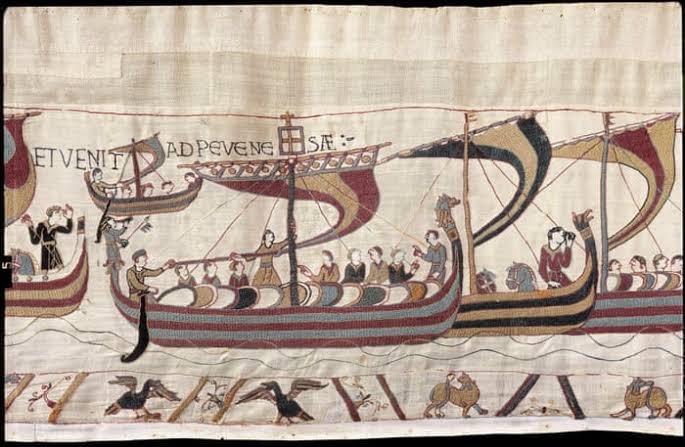
One of the world's most celebrated medieval artworks, the Bayeux Tapestry, has arrived in the United Kingdom for the first time in almost 900 years, travelling under extensive police protection ahead of what is being described as one of the most significant cultural exhibitions in British history.
The priceless embroidered masterpiece, which chronicles the events leading up to the Norman Conquest of England in 1066, was transported from France under exceptional security arrangements involving specialist conservators, armed police escorts, and climate-controlled transportation designed to preserve the fragile textile.
Its arrival marks the first time the tapestry has been displayed on British soil since it was created in the 11th century, ending centuries during which it remained one of France's most treasured historical artifacts.
The exhibition is being hailed as a landmark moment in cultural diplomacy between the United Kingdom and France, reflecting years of negotiations between both governments, museums and heritage organizations.
A Masterpiece of Medieval Europe
The Bayeux Tapestry, despite its name, is not technically a tapestry but an embroidered linen cloth stretching nearly 70 metres (230 feet) in length.
Created shortly after the Norman conquest, historians believe it was commissioned during the late 11th century, possibly by Bishop Odo of Bayeux, the half-brother of William the Conqueror.
Its detailed embroidered scenes depict the dramatic chain of events leading to the Battle of Hastings, including the death of King Edward the Confessor, the succession crisis, Harold Godwinson's coronation, William's preparations for invasion, and the decisive battle that transformed English history.
The artwork remains one of the most important surviving visual records of medieval Europe, offering historians invaluable insights into warfare, politics, architecture, clothing, ships and daily life nearly a millennium ago.
Extraordinary Security Measures
Because of its immense historical and monetary value, the Bayeux Tapestry travelled under one of the highest security operations ever mounted for an international museum loan.
Authorities employed specially designed climate-controlled containers to maintain precise humidity and temperature levels throughout the journey.
Police escorts accompanied the convoy from France to Britain, while conservation specialists continuously monitored vibrations, lighting conditions and environmental factors capable of damaging the delicate linen.
Museum officials have declined to disclose many details of the transportation arrangements for security reasons.
Experts estimate that the tapestry is effectively priceless, making comprehensive protection essential during every stage of its transfer.
Years of Diplomatic Negotiations
The historic loan follows years of discussions between British and French authorities.
Plans to bring the tapestry to Britain were first announced several years ago as part of wider cultural cooperation between the two countries.
However, conservation concerns, the COVID-19 pandemic and extensive restoration work delayed the exhibition.
French heritage authorities insisted that significant preservation assessments be completed before approving any international transport, given the artifact's age and fragile condition.
Following months of conservation work and structural analysis, experts concluded that the tapestry could safely travel under carefully controlled conditions.
Successful transfer has therefore been welcomed as both a conservation achievement and a diplomatic milestone.
Public Exhibition Expected to Draw Huge Crowds
Museum officials expect hundreds of thousands of visitors from across Britain and abroad to attend the exhibition.
Tickets have generated enormous public interest, with historians, students, tourists and art enthusiasts eager to view one of Europe's greatest medieval treasures.
Curators say visitors will have an opportunity to examine intricate embroidered scenes depicting more than 600 human figures, hundreds of animals, ships, castles and military equipment.
Interactive displays and digital installations are also expected to accompany the exhibition, providing historical context about the Norman Conquest and the tapestry's creation.
Education programmes, lectures and guided tours will further explore the political and cultural significance of the artwork.
A Symbol of Shared History
The Bayeux Tapestry occupies a unique place in both British and French history.
Although preserved in France for centuries, its narrative centres on one of the defining moments in English history - the Norman victory at the Battle of Hastings in 1066.
That victory fundamentally reshaped England's monarchy, legal system, language, architecture and aristocracy, leaving a legacy that continues to influence British society today.
Historians note that the tapestry represents a shared heritage between the two neighbouring nations rather than belonging exclusively to either country.
Its temporary display in Britain therefore symbolizes not only historical reflection but also the strengthening of cultural cooperation between London and Paris.
Conservation Remains the Priority
Despite public excitement, conservation experts emphasize that preserving the tapestry remains their foremost concern.
Strict environmental controls will govern the exhibition, including carefully regulated lighting, humidity and visitor access.
The embroidery will be displayed in specially designed protective cases intended to minimise stress on the centuries-old linen.
Curators have also confirmed that the exhibition period will be limited to reduce long-term exposure before the tapestry returns to France.
Experts hope the loan will demonstrate that even the world's oldest and most fragile cultural treasures can safely travel internationally when supported by modern conservation science.
Strengthening Anglo-French Cultural Relations
Officials on both sides of the English Channel have described the exhibition as a powerful example of international cultural partnership.
Alongside showcasing an extraordinary work of medieval art, the exhibition highlights the value of cross-border cooperation in preserving humanity's shared heritage.
For visitors, the opportunity to see the Bayeux Tapestry without travelling to Normandy represents a once-in-a-lifetime experience.
Nearly nine centuries after its creation, the remarkable embroidered chronicle has finally returned to the country whose history it immortalised, offering a rare chance for new generations to witness one of the world's greatest historical masterpieces. (UNESCO)