Barack Obama Presidential Library, Far Beyond Archiving Documents
Explore the Barack Obama Presidential Center, its purpose, symbolism, and why it redefines presidential libraries as hubs for civic engagement, culture, and future leadership.
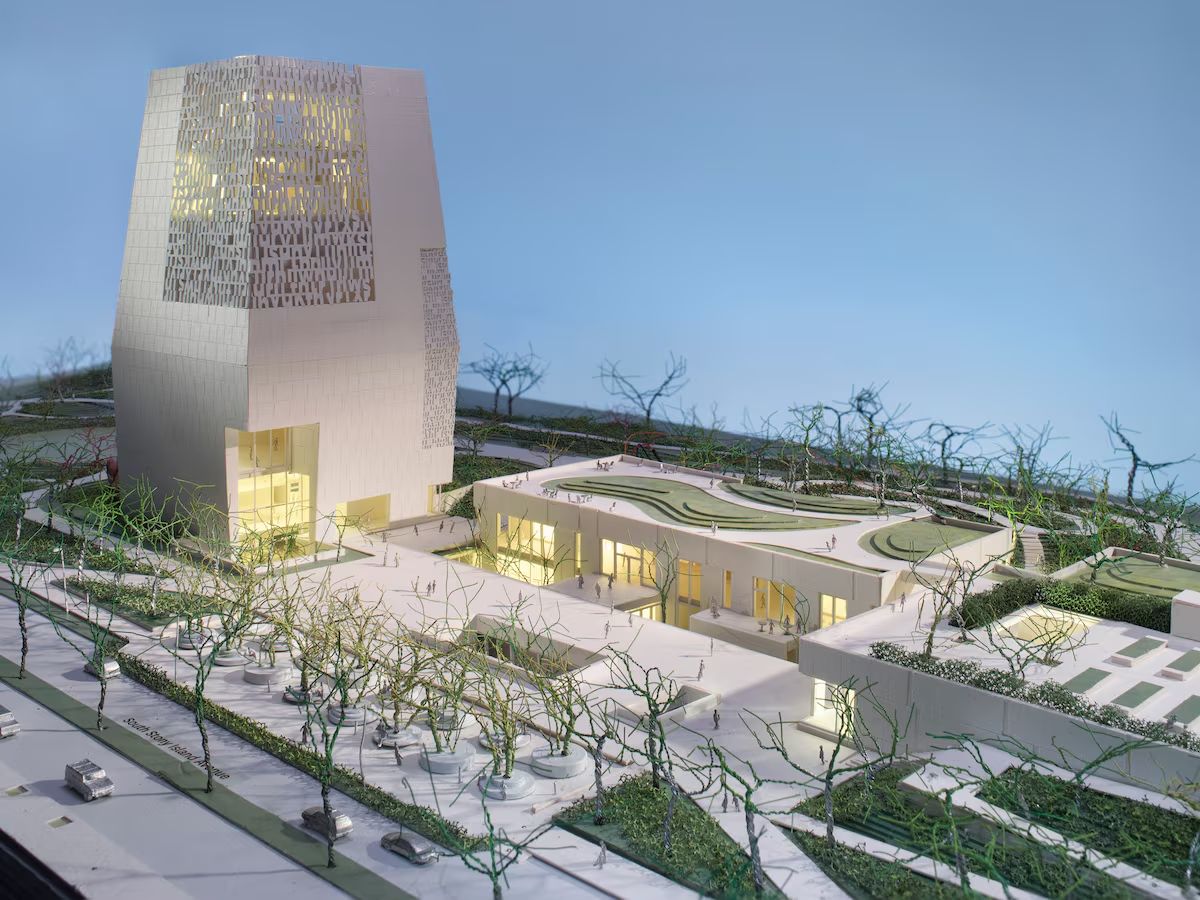
The presidential library of Barack Obama is unlike any that came before it. Officially known as the Barack Obama Presidential Center, the project is not just a repository of historical documents, it is a bold reimagining of what a presidential legacy institution should be.
Located in Chicago’s South Side, the Center represents a fusion of history, community, and forward-looking civic engagement. As it prepares to open to the public in 2026, it stands as both a symbol of Obama’s presidency and a reflection of broader shifts in how societies preserve and activate political memory.
What Is the Obama Presidential Center?
Traditionally, U.S. presidential libraries serve as archives housing documents, artifacts, and records from a president’s time in office. While the Obama library fulfills that function, it expands far beyond it.
The Center is a 19-acre campus featuring a museum, public library branch, gardens, event spaces, and community facilities.
Unlike earlier presidential libraries, much of Obama’s archival material is fully digitized, making it the first presidential library of its kind. Physical records are maintained separately by the National Archives, while digital access allows broader public interaction. (Wikipedia)
But the most striking difference lies in its purpose: it is designed not just to preserve the past but to actively shape the future.
A Shift from “Archive” to “Action”
The Obama Presidential Center deliberately breaks from the passive, museum-like tradition of presidential libraries.
Instead of focusing solely on historical preservation, it positions itself as a civic hub—a place where visitors are encouraged to engage, learn, and take action. According to its creators, the Center is meant to “inspire, empower, and connect people” to create change in their communities. (Obama Foundation)
This philosophy reflects one of Obama’s core political messages: that democracy is not a spectator sport. The Center embodies that idea by transforming a legacy project into a living, participatory space.
Architecturally and conceptually, it signals a shift from storytelling to what planners describe as “story-making,” a place where new ideas and movements can emerge. (twbta.com)
Symbolism: Why the Location Matters
The decision to build the Center in Chicago’s South Side is deeply symbolic. This is where Obama began his career as a community organizer and where his political identity was shaped.
By situating the Center in this historically significant but often underserved area, the project reflects themes of grassroots activism, inclusion, and opportunity. It is not just about honoring a presidency; it is about reconnecting that presidency to the community that helped shape it.
Supporters see the project as a major investment in the area, bringing jobs, tourism, and infrastructure. Critics, however, have raised concerns about gentrification and displacement - highlighting the complex relationship between development and community preservation.
This tension itself reflects a broader truth: the Center is not just a monument; it is part of an ongoing conversation about equity and urban transformation.
A Cultural and Educational Landmark
Beyond politics, the Obama Center is designed as a cultural institution. It will feature exhibitions, art installations, and programming that explore not only Obama’s presidency but also broader themes of democracy, civil rights, and global citizenship.
The museum aims to tell the story of the United States through the lens of its first African American president, connecting past struggles such as the civil rights movement to present-day challenges.
Even the building itself carries symbolic meaning. Inscribed on its exterior is the phrase “You are America,” a message intended to emphasize collective responsibility in shaping the nation’s future.
This framing shifts the narrative from a single leader to a shared civic identity.
Redefining Presidential Legacy
Presidential libraries have historically been about legacy, carefully curated spaces that preserve how leaders wish to be remembered.
Obama’s Center challenges that model. Rather than presenting a fixed narrative, it invites ongoing participation and reinterpretation. It suggests that a presidency is not just something to be studied but something that continues to influence and inspire action.
This approach aligns with Obama’s broader post-presidential work through the Obama Foundation, which focuses on leadership development, youth empowerment, and global civic engagement.
In essence, the Center transforms legacy from a static concept into a dynamic process.
Economic and Social Impact
The Obama Presidential Center is also expected to have significant economic implications.
Large-scale cultural projects often act as catalysts for urban development, and this Center is no exception. It is projected to attract tourists, create jobs, and stimulate local businesses. (City of Chicago)
At the same time, it raises important questions about who benefits from such development. Debates around housing affordability and neighborhood change have become central to discussions about the project.
This dual impact economic opportunity alongside social tension mirrors the broader challenges of modern urban planning.
A Global Symbol of Representation
Perhaps one of the most powerful aspects of the Obama Presidential Center is what it represents globally.
As the first African American president of the United States, Obama’s legacy carries deep symbolic weight. The Center stands as a testament to progress in representation while also acknowledging the unfinished work of equality and justice.
For visitors from around the world, it offers a narrative of possibility showing how leadership can emerge from unexpected places and how diverse voices can shape national and global discourse.
Conclusion: More Than a Library
The Barack Obama Presidential Center is not just a library; it is a statement.
It represents a new vision of leadership, one rooted in participation, community, and continuous change. It challenges traditional ideas about how history should be preserved and who gets to shape the future.
In doing so, it becomes more than a monument to one presidency. It becomes a platform for the next generation - an evolving space where history, culture, and civic responsibility intersect.
Ultimately, what the Obama library represents is simple but profound: democracy is not something we inherit; it is something we build, together.