Atiku Abubakar Slams Nyesom Wike Over Claim on Rivers Votes, Deepens PDP Post-Election Rift
Former Vice President Atiku Abubakar has dismissed claims by Nyesom Wike regarding control of Rivers State votes, reigniting tensions within Nigeria’s opposition politics and the People’s Democratic Party.
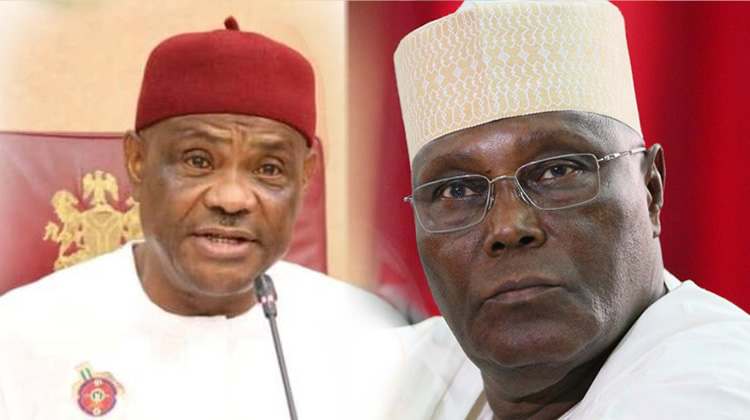
Nigeria’s former Vice President Atiku Abubakar has sharply criticized comments made by the Federal Capital Territory Minister, Nyesom Wike, over alleged claims regarding control and influence of electoral votes in Rivers State, describing the remarks as misleading and politically motivated.
The exchange has once again exposed deep divisions within the opposition landscape and the People’s Democratic Party (PDP), where internal rivalries have continued to shape post-election discourse and party realignments.
Atiku’s response comes amid renewed political debate over the outcome of previous elections and the influence of key political actors in Nigeria’s oil-rich South-South region.
Atiku Rejects Wike’s Position
Atiku Abubakar reportedly dismissed Wike’s claims, suggesting dominance or decisive control over electoral outcomes in Rivers State, arguing that such statements undermine democratic processes and the role of voters.
According to Atiku’s camp, electoral outcomes are determined by citizens at the ballot box, not by individual political figures or post-election narratives.
The former Vice President also suggested that revisiting electoral outcomes through personal political claims risks deepening divisions within the country’s already polarized political environment.
Atiku’s comments are seen as part of a broader effort by opposition figures to challenge narratives that emerged after the 2023 general elections.
Wike’s Controversial Position
Nyesom Wike, who currently serves as a minister in the federal cabinet, has remained a central and controversial figure in Nigeria’s political discourse since the 2023 elections.
Wike played a significant role in internal PDP disputes leading up to and after the elections, often clashing with party leadership and senior stakeholders, including Atiku himself.
His recent comments regarding Rivers State's voting strength and political influence sparked renewed reactions across political circles, with supporters and critics weighing in on the implications.
Political analysts note that Wike’s continued influence in Rivers State politics makes his statements particularly significant in shaping regional political narratives.
PDP Internal Divisions Resurface
The exchange between Atiku and Wike highlights ongoing fractures within the People’s Democratic Party, which has struggled with internal cohesion following its loss in the 2023 presidential election.
The party has faced sustained disagreements between key factions, particularly between supporters of Atiku and those aligned with Wike’s political bloc.
Observers say the latest disagreement could complicate ongoing reconciliation efforts within the opposition party ahead of future elections.
Party insiders have repeatedly called for unity, warning that continued internal conflict could weaken the PDP’s chances of mounting a strong challenge in upcoming electoral cycles.
Rivers State Remains Political Flashpoint
Rivers State remains one of Nigeria’s most politically strategic regions due to its large voter base and economic importance as an oil-producing state.
Political control of the state has historically been highly contested, with strong competition between major political parties and influential local figures.
The latest exchange between Atiku and Wike further underscores Rivers State’s role as a key battleground in Nigeria’s national politics.
Analysts say statements about voting strength in the state often carry broader implications for national political alliances and future election strategies.
Opposition Politics Under Strain
Nigeria’s opposition politics has remained under pressure since the 2023 elections, with disputes over leadership, strategy, and coalition-building continuing to shape political developments.
Atiku Abubakar remains one of the most prominent opposition figures, having contested multiple presidential elections and maintained a strong national political presence.
Wike, despite serving in the current administration, continues to wield significant influence within his home state and among loyal political networks.
Political observers note that overlapping loyalties and cross-party alliances have made Nigeria’s opposition landscape increasingly complex. (Premium Times)
Calls for Political Restraint
Some political commentators have urged both Atiku and Wike to exercise restraint in public statements, warning that escalating rhetoric could further divide political supporters.
Civil society groups have also called for a focus on governance issues rather than prolonged disputes over electoral narratives.
They argue that Nigeria’s pressing challenges, including inflation, unemployment, and insecurity, require collaborative political engagement rather than ongoing partisan conflict.
Analysts Weigh Implications
Political analysts believe the renewed exchange could have implications for future coalition-building efforts among opposition groups.
Some experts argue that reconciliation within the PDP and broader opposition may become more difficult if senior figures continue public disagreements.
Others suggest the dispute reflects deeper ideological and strategic differences that have yet to be resolved since the last general election. (Punch news)
Social Media Reactions
The comments by Atiku and Wike quickly generated widespread reactions on social media platforms, where supporters of both politicians engaged in heated debates.
Some users backed Atiku’s position, arguing that electoral power lies with the electorate rather than political figures.
Others defended Wike, crediting him with significant grassroots influence in Rivers State politics.
The online discourse reflects the continued polarization of Nigerian political conversations in the digital space.
Conclusion
The latest clash between Atiku Abubakar and Nyesom Wike over claims regarding Rivers State votes has once again exposed deep divisions within Nigeria’s opposition politics and the PDP.
As both figures continue to play influential roles in national and regional politics, their disagreements highlight the broader challenges facing political reconciliation and coalition-building ahead of future elections.
With Rivers State remaining a critical political battleground, the debate underscores how electoral narratives continue to shape Nigeria’s evolving democratic landscape.