At Least 25 Killed in Firecracker Factory Blast in India
At least 25 people have died after a powerful explosion ripped through a firecracker factory in Tamil Nadu, India. Read full details, causes, and reactions with verified sources.
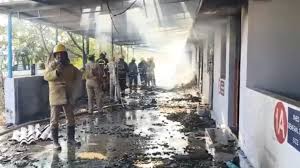
A devastating explosion at a firecracker manufacturing factory in southern India has killed at least 25 people, with several others injured, in one of the country’s latest industrial disasters. The blast occurred in Tamil Nadu’s Virudhunagar district, a region known for its cluster of fireworks production units.
The tragedy, which unfolded on April 19 - 20, 2026, has once again highlighted long-standing concerns over safety violations, poor enforcement of regulations, and hazardous working conditions in India’s firecracker industry.
How the Explosion Happened
According to initial reports from local authorities and emergency responders, the explosion took place at the Vanaja Fireworks unit near Kattanarpatti village. The blast occurred while workers were reportedly handling and mixing highly combustible chemical materials used in firecracker production.
The force of the explosion was so intense that it destroyed multiple structures within the facility and triggered a large fire that spread rapidly across the factory premises. (AOL)
At the time of the blast, around 50 to 100 workers were believed to be inside the facility, many of them engaged in production activities. (Xinhua News)
Death Toll and Casualties
Authorities confirmed that at least 25 workers were killed, while several others sustained serious injuries.
Reports indicate that most of the victims were trapped inside the factory as the explosion caused structural collapses, making escape impossible. Some bodies were severely burned, complicating identification efforts.
Early updates also suggest that most of the deceased were women, reflecting the high number of female workers employed in the firecracker manufacturing sector in the region. (Arise News)
Emergency teams continued rescue and recovery operations for hours after the blast, as secondary explosions from stored fireworks made access difficult. (The Sun)
Emergency Response and Rescue Efforts
Fire and rescue services, along with police and disaster response teams, were quickly deployed to the scene. However, the intensity of the fire and ongoing explosions significantly slowed rescue operations.
Local authorities later confirmed that recovery operations had been completed, with efforts shifting toward identifying victims and investigating the cause of the explosion.
Medical teams treated the injured at nearby hospitals, while additional ambulances were placed on standby due to fears of further casualties.
Possible Causes Under Investigation
Although the exact cause of the explosion has not yet been officially confirmed, preliminary investigations suggest that safety violations and improper handling of explosive materials may have played a role.
Officials have already noted that the factory may have been operating outside permitted safety conditions, including possible violations of operating hours and chemical storage rules.
Authorities are also examining whether regulatory breaches contributed to the scale of the disaster, as the factory reportedly held a valid license but may not have complied fully with safety protocols.
A History of Firecracker Factory Disasters in India
India’s fireworks industry, particularly in Tamil Nadu, has experienced multiple fatal incidents over the years due to similar causes, such as unsafe handling of explosives, poor ventilation, and weak enforcement of regulations.
Previous incidents have killed dozens of workers in explosions linked to improper storage of explosive chemicals, overcrowded production units, illegal or semi-legal manufacturing practices, and lack of safety equipment and training.
In many cases, investigations have revealed that factories continued operating despite known safety risks.
Government and Public Reaction
Indian national and state authorities have expressed condolences to the families of victims, while ordering immediate investigations into the incident.
Political leaders have called for stricter enforcement of safety regulations in firecracker manufacturing hubs, warning that repeated tragedies point to systemic failures oversight.
Local communities have also raised concerns, urging authorities to permanently shut down non-compliant factories and improve worker safety standards.
Wider Safety Concerns in Industrial India
The firecracker explosion adds to a series of industrial accidents across India in recent years, including chemical plant blasts, boiler explosions, and factory fires.
Experts say such incidents are often linked to weak regulatory enforcement, cost-cutting by factory owners, poor emergency preparedness, and overdependence on manual labor in hazardous environments.
Safety advocates argue that unless structural reforms are implemented, similar tragedies are likely to continue.
Impact on Workers and Local Communities
The victims of the blast were largely daily wage workers who depend on firecracker production for their livelihoods, especially in rural parts of Tamil Nadu.
The tragedy has left dozens of families devastated, many of whom have lost their primary breadwinners. Community leaders are calling for compensation, rehabilitation, and long-term support for affected families.
Conclusion
The firecracker factory explosion in Tamil Nadu, which killed at least 25 people, is yet another reminder of the dangers facing workers in India’s informal and semi-formal industrial sectors.
While investigations continue, the tragedy underscores the urgent need for stronger safety enforcement, improved working conditions, and stricter regulation of explosive manufacturing units.
Without meaningful reforms, experts warn that such preventable disasters will continue to claim lives in the future.