Anthony Fauci and His Post-Pandemic Legal Troubles: Contempt Fight Deepens
Dr. Anthony Fauci faces renewed legal and political pressure after a US Senate committee voted to hold him in contempt of Congress over his refusal to answer COVID-19 questions, escalating years of scrutiny of his pandemic role.
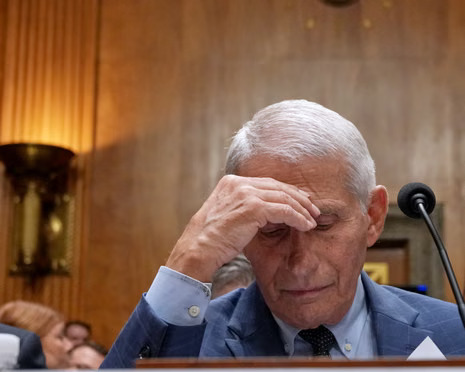
Dr. Anthony Fauci, once one of the most recognizable faces of America's response to the COVID-19 pandemic, is facing his most serious post-pandemic legal confrontation after a US Senate committee voted to hold him in contempt of Congress.
The development marks a dramatic new chapter in the years-long political and legal scrutiny surrounding Fauci's role in the US government's pandemic response, including questions over COVID-19's origins, research funding, public-health policies and his communications with other officials.
The Republican-led Senate Homeland Security and Governmental Affairs Committee voted along party lines on August 6, 2026, to hold Fauci in contempt after he repeatedly invoked his Fifth Amendment right against self-incrimination during a congressional hearing. (AP News)
The committee's action does not mean Fauci has been convicted of a crime. Rather, it creates a potential pathway for a Justice Department review and possible prosecution over alleged non-compliance with a congressional subpoena.
Why Fauci Invoked the Fifth Amendment
Fauci appeared before the Senate committee as lawmakers continued their investigation into his handling of the COVID-19 pandemic and related research.
During the hearing, he invoked the Fifth Amendment more than 100 times, declining to answer questions that he said could expose him to criminal liability.
His decision triggered an immediate clash with Republican Senator Rand Paul, the committee chairman and one of Fauci's most persistent critics.
Paul argued that Fauci should not have been able to invoke the constitutional protection because former President Joe Biden had granted him a presidential pardon in January 2025 covering conduct dating back to 2014.
Fauci's lawyers, however, argued that the pardon did not eliminate every possible source of criminal exposure and that his constitutional rights remained intact. Legal experts cited by AP also noted that the Fifth Amendment can still apply where a witness faces potential prosecution outside the scope of a particular pardon. (AP News)
Senate Committee Votes Contempt
The committee subsequently voted to hold Fauci in contempt.
Paul has asked the Justice Department to consider criminal contempt proceedings, but the legal route remains contested.
Reuters reported that Paul sent the referral directly to the Justice Department on August 6, bypassing a full Senate vote. Democrats criticized that approach, arguing that the committee's action did not follow the normal procedure required to establish a congressional contempt case. (Reuters)
The Justice Department has confirmed receipt of the referral and is reviewing it. However, a congressional referral does not automatically result in criminal charges, and prosecutors retain discretion over whether to pursue the matter.
Biden Pardon at Centre of Dispute
The 2025 pardon granted to Fauci has become central to the current confrontation.
Biden issued a broad pre-emptive pardon covering Fauci's conduct from January 1, 2014, through January 20, 2025. The measure was intended to shield Fauci from potential federal prosecution related to actions during that period.
The unprecedented nature of the pardon has itself become politically controversial.
Republicans have questioned why such protection was necessary, while Fauci's defenders argue that the pardon reflected concerns that the former public-health official could become the target of politically motivated prosecution.
The current contempt dispute has raised an important legal question: Can a witness invoke the Fifth Amendment even after receiving a presidential pardon?
Legal experts have argued that the answer is not necessarily straightforward because the constitutional protection can extend to potential criminal exposure beyond the precise conduct covered by a pardon. (AP News)
Fauci's Longstanding Political Battles
The latest confrontation is the culmination of years of political hostility between Fauci and some Republican lawmakers.
As director of the National Institute of Allergy and Infectious Diseases, Fauci became a central figure in America's COVID-19 response.
He advised multiple administrations and became particularly prominent during the Trump administration, frequently appearing at White House briefings to explain the rapidly changing scientific understanding of the virus.
His advocacy for measures such as masks, social distancing and vaccination made him highly respected among many public-health experts but also turned him into a target for critics who believed government restrictions went too far.
COVID-19 Origins Remain Contentious
One of the most politically sensitive issues surrounding Fauci is the origin of the coronavirus.
Republican lawmakers have repeatedly questioned whether US-funded research in China contributed to the emergence of COVID-19 and whether Fauci was fully transparent about the nature of that research.
Fauci has denied wrongdoing and rejected accusations that he deliberately concealed information about the pandemic's origins.
The origins debate remains unresolved, with scientists and intelligence agencies continuing to examine competing hypotheses, including natural spillover and a possible laboratory incident.
The Senate investigation has sought additional information about research funding, communications among scientists and government officials, and decisions made during the early stages of the pandemic.
Former Adviser David Morens Also Faces Charges
The renewed attention on Fauci has been intensified by a separate criminal case involving David Morens, a former senior adviser to Fauci.
Morens was indicted in 2026 on allegations involving the concealment or falsification of federal records connected to COVID-19 research. Importantly, the criminal charges are against Morens, not Fauci.
The case has nevertheless become part of the broader political argument over transparency within the agencies responsible for pandemic research. (Factually)
Fauci's Legal Position
Fauci's current situation should be distinguished from the numerous claims circulating online that he has already been arrested or convicted.
There is no indication in the latest reporting that Fauci has been convicted of a criminal offence. The immediate issue is the congressional contempt referral following his refusal to provide answers at the Senate hearing.
His legal team has described the congressional action as politically motivated and has defended his decision to invoke constitutional protections. (AP News)
What Happens Next?
The Justice Department now faces a decision over whether to pursue the contempt referral.
Even if prosecutors decide to act, the case could generate significant legal disputes over congressional subpoena powers, Fifth Amendment protections and the scope of Biden's pardon.
The controversy could also set an important precedent for future congressional investigations involving witnesses who have received presidential pardons.
For Fauci, the latest development represents another chapter in a remarkable transformation from America's leading infectious-disease adviser to a central figure in the country's bitter post-pandemic political debate.
Conclusion
Dr Anthony Fauci's post-pandemic legal troubles are increasingly moving beyond political criticism and into a serious constitutional and congressional dispute.
The Senate contempt vote does not establish that Fauci committed a crime, but it demonstrates how aggressively lawmakers are continuing to scrutinize his role in America's COVID-19 response.
With the Justice Department reviewing the referral, the dispute over Fauci's Fifth Amendment rights and the scope of his presidential pardon could become a major legal battle.
For now, the former NIAID director remains at the centre of an unresolved national argument over accountability, scientific decision-making and the lessons of the COVID-19 pandemic.